You answer your WhatsApp within the hour. Your front desk replies to enquiries, confirms bookings, sends the location pin. That should be enough, and you have decided the marketing side of the business belongs somewhere else: the newsletter, the monthly offer email, the reactivation campaign your agency sends to eleven thousand addresses.
Here is the complication. The channel you use for conversations and the channel you use for marketing are being judged by the same customer, on the same phone, in the same thumb-swipe. She sees your WhatsApp reply in seconds because it sits directly above her mother's voice note. Your reactivation email is somewhere below a delivery receipt and two LinkedIn notifications, in an app she opens on Sunday when she is bored. You are not running two channels. You are running one channel that works and one channel that behaves like a filing cabinet you occasionally throw paper at.
The thesis of this article: for appointment-driven service businesses, the open-rate gap between WhatsApp and email is so large that it stops being a channel-optimisation question and becomes a question of whether your marketing is delivered at all. Email is not dead. It has simply lost the right to be the default, and treating it as the default is costing you bookings you will never see on any report.
The number that ends most of the debate
Industry sources consistently report WhatsApp marketing open rates of 95-98%, and Twilio's engagement data puts open rates for SMS and WhatsApp together at roughly 98%. Worth saying honestly: Twilio's figure covers both channels combined, and nobody publishes an audited, WhatsApp-only measurement. Email is harder to pin down in the other direction. The classic benchmark range is 20-25%, while Mailchimp's current benchmarks put the cross-industry average at 35.6%, with Mailchimp's own caveat that Apple's Mail Privacy Protection registers opens no human made. Pick whichever email number you like and the gap survives: on a list of 1,000 contacts, somewhere between 200 and 360 people see the email, against 950 or more who see the WhatsApp message. For a clinic, salon or agency whose revenue depends on getting a specific person to book a specific slot, that is roughly three to four times as many people reached, four to one against the classic email benchmarks and nearer three to one against Mailchimp's inflated average, before any creative, offer or copywriting decision is made.
Marketers instinctively resist this because they have spent years fighting for two-point improvements in email open rate. Subject line testing, send-time optimisation, list hygiene, preheader text. All of it real work, all of it operating inside a ceiling of roughly a quarter to a third of your list. WhatsApp removes that ceiling entirely.
Think about how a taxi fleet dispatches. If a dispatcher calls a job out over an open radio channel that only some drivers happen to have switched on, the job gets covered eventually, sometimes, by whoever was listening. If the same job goes to a screen in every cab that lights up and stays lit until it is acknowledged, coverage stops being a worry and the dispatcher can spend their attention on which driver is closest. Email is the radio channel. WhatsApp is the screen in the cab. The dispatching skill matters either way, but only one of them lets you stop thinking about delivery and start thinking about the actual decision.
Why appointment businesses feel this gap harder than anyone else
An e-commerce brand can survive on a low open rate because it is playing a volume game with a large list and no time pressure. A dental clinic cannot. The messages that make a service business money are time-bound and person-specific: your 3pm tomorrow, your six-month recall, the slot that opened on Thursday because someone cancelled, the treatment plan you accepted in March and never started.
None of those messages survive being unread for four days. A promotional email about a spring collection is still roughly valid on Sunday. A message telling a patient the hygienist has a Thursday morning free is worth nothing by Thursday afternoon. When the message has an expiry date, delivery rate and open rate stop being marketing metrics and become operational ones.
This is also why the money leaks quietly. Nobody files a complaint about an unopened email. The patient who never came back for her recall does not appear in a churn report, she simply stops existing in your calendar, which is the whole argument behind what we have written about the hidden patient revenue map. Unread is invisible. Invisible is untracked. Untracked is unfixed.
A plain accounting of what the gap costs
Let us do this as a ledger rather than an argument, because the argument keeps getting waved away as a preference. The numbers in line one are simple arithmetic: we are taking the published open-rate ranges and multiplying them against an illustrative database of 3,000 past customers receiving a monthly reactivation message. Substitute your own list size and the shape of the result does not change.
Line one: reach. Sent by email at the classic 20-25% open rate, 600 to 750 people see it; grant email Mailchimp's 35.6% average instead and it is still only around 1,070. Sent by WhatsApp at the industry-reported 95-98%, 2,850 to 2,940 people see it. Same list, same offer, same month. Depending on which email benchmark you trust, that is a difference of somewhere between 1,800 and 2,300 human beings who now know the offer exists. We are not going to invent a conversion percentage to multiply against that, because the honest answer is that it depends entirely on your offer and your database quality. But you can do the multiplication yourself with your own average ticket, and the result is usually the moment the conversation in the room changes.
Line two: staff hours. Every unread message generates a phone call later. The front desk chases the recall by phone, gets voicemail, tries again, notes it on a spreadsheet, tries again. We have never met a reception team that could tell us how many hours a week goes into chasing people who already received the information in writing and never saw it. The cost is real and it is buried inside salaries you are paying anyway, which is exactly why it never gets counted.
Line three: the discount you did not need to give. When reach is low, businesses compensate with aggression. Cutting the price of a treatment is a way of buying attention you could have had for nothing by sending the message somewhere it would be read. Every AED of that discount is a payment against a delivery problem.
Line four: the slot that stayed empty. A cancelled appointment on Tuesday is either refilled by Wednesday or it is gone permanently. Chair time and treatment room time do not carry forward. There is no inventory to sell next month.
The uncomfortable part of this ledger is that only line three leaves a receipt. The other three are costs you pay without ever seeing an invoice, which is why email-first strategies survive long past the point where they make sense.
The strongest counterargument, taken seriously
Nobody seriously argues that email performs better. The strongest objection is about permission, tone and durability, and it has three parts worth answering properly.
WhatsApp is intimate, so overuse burns it faster
This is correct and it is the objection we respect most. An email that annoys somebody gets ignored. A WhatsApp message that annoys somebody gets you blocked and reported, and Meta's enforcement documentation warns that a business receiving excessive negative feedback can have its sending limited or be offboarded from WhatsApp altogether, with penalties that escalate from short template-messaging blocks to permanent disablement. The channel that gives you near-total attention is the same channel where your customer keeps her family group chat, and she will defend it.
But that risk calls for discipline, and retreating to email fixes nothing. The correct response is fewer, better messages: relevant to that person, tied to something they actually did with you, and easy to stop. Our rule with clients is that if a message would be strange coming from a person, it should not be sent by a system. Email's tolerance for low-relevance sending is a symptom of a channel nobody reads, and copying that habit into WhatsApp is how businesses destroy the very advantage they came for.
You do not own the channel
Also true. Your email list is yours; your WhatsApp audience exists inside WhatsApp's Business Messaging Policy and Meta's pricing, and both change. We take this seriously enough to have written a whole piece on reading the platform terms without a legal background, because the businesses that get suspended are almost always the ones who never read what they agreed to.
The answer to platform risk is ownership of the underlying asset. Keep the phone numbers, the consent records, the conversation history and the customer data in your own CRM instead of trapped inside a chat inbox. Then WhatsApp becomes a delivery mechanism you can be strategic about rather than a landlord you depend on. Keep the email list too. Just stop pretending it is the primary route to a customer's attention.
Opt-in makes WhatsApp lists slower to build
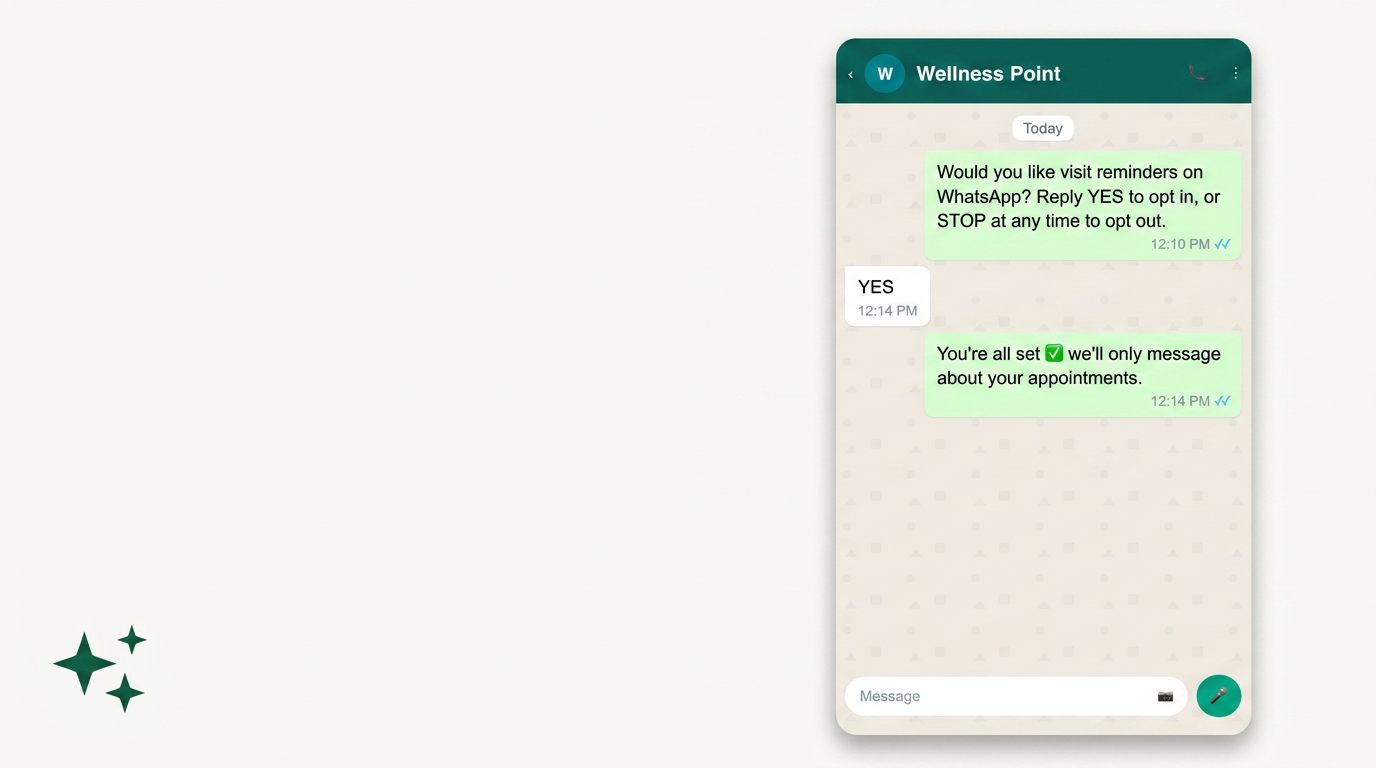
This one is real and it is the actual reason most businesses stay email-first: they already have eleven thousand email addresses and four hundred WhatsApp opt-ins. Meta's opt-in documentation requires explicit consent before you send marketing template messages, and that consent must clearly name the business and state what the person is agreeing to receive. The Business Messaging Policy is blunt about the consequence: you may only message people who gave you their number and confirmed they want to hear from you, so you cannot import an email list and start sending.
So the honest version of our thesis is about sequencing: every enquiry, booking confirmation, walk-in and payment from today onward should be collecting WhatsApp consent, so that in twelve months your reachable audience is the WhatsApp one. Businesses that started collecting consent two years ago are now sending to lists where nearly everyone sees the message. Businesses still debating it are compounding an asset that opens a quarter to a third of the time.
What changes if we are right
If you accept the open-rate argument, a few decisions get made differently, and they are mostly decisions about sequencing rather than software.
- Consent capture moves to the front of every interaction. The booking form, the payment screen, the intake paperwork and the enquiry reply all ask for WhatsApp permission, in plain language, with the business named. For a Dubai business this is law as well as platform policy: the UAE's Personal Data Protection Law prohibits processing personal data without the owner's consent.
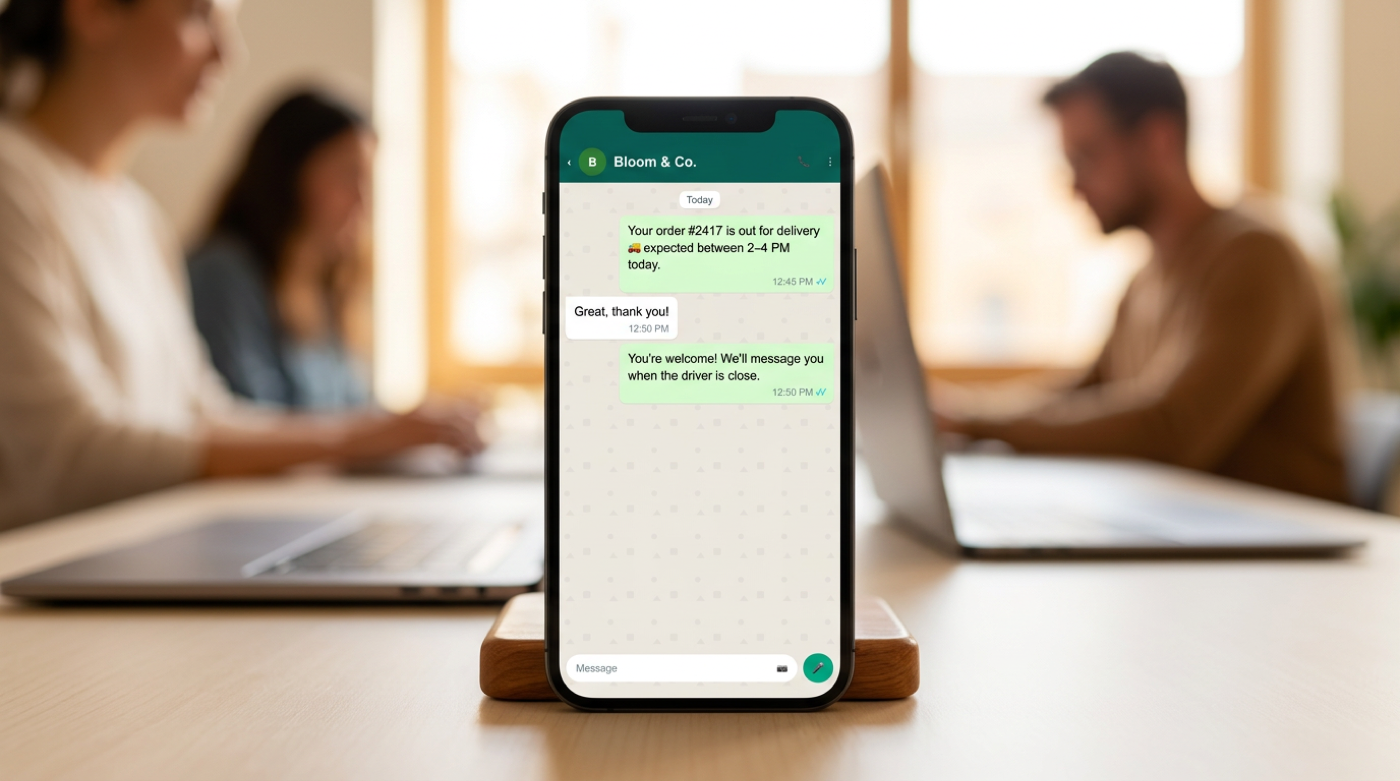
- Time-sensitive messages leave email entirely. Reminders, waitlist offers, recall notices and rebooking prompts go to WhatsApp because their value expires. Long-form content and formal documents can stay in email, which is genuinely better at attachments and archives.
- Frequency goes down and relevance goes up. A monthly WhatsApp message to everybody is worse than four segmented messages a year to the people it applies to.
- You stop measuring campaigns and start measuring calendars. Open rate becomes a settled question, which leaves the one that matters: how many slots got filled.
The temptation at this point is to switch on WhatsApp marketing alongside SMS, Instagram DMs, email and a chat widget, all in the same quarter, and end up doing five things badly. We have watched that happen enough times to write about the channel stacking trap in detail. Pick the one message type that most reliably produces revenue, usually recall or rebooking, move it to WhatsApp, get it working properly, then move the next one.
The part automation should not touch
One caution, because the open-rate number tends to make people over-automate. High deliverability makes weak messaging worse, faster. The reason WhatsApp converts is that it feels like a person, and the moment it stops feeling like a person the advantage evaporates.
Automation belongs on the predictable edges: the reminder, the confirmation, the recall nudge, the after-hours acknowledgement so nobody waits until morning. The consultation, the objection, the complaint and the price conversation belong to your staff, who are the reason customers pay you a premium in the first place. Learnmind builds WhatsApp and AI phone systems for clinics, salons and agencies from our base in Dubai, and the systems we install are designed to hand a conversation to a human the moment it stops being routine, because a clinic or salon that automates its way out of human contact has optimised itself into a commodity.
The numbers people ask about
What is the actual difference between WhatsApp and email marketing open rates?
Industry sources report WhatsApp marketing open rates of 95-98%, and Twilio puts combined SMS and WhatsApp open rates at roughly 98%. Email benchmarks range from the classic 20-25% to Mailchimp's current 35.6% cross-industry average, a figure inflated by Apple's Mail Privacy Protection. In practical terms, roughly three to four times as many people see a WhatsApp message as see an email sent to the same list, depending on which email benchmark you use.
Should I stop sending marketing emails entirely?
No. Keep email for long-form content, invoices, documents and anything a customer may want to archive or search later, and move time-sensitive messages like appointment reminders, recalls and waitlist offers to WhatsApp where they will be read before they expire.
Can I import my existing email list into WhatsApp marketing?
No. Meta requires explicit opt-in before you send WhatsApp marketing template messages, and an email subscription is not consent to be messaged on WhatsApp. You need to collect fresh permission, which is why consent capture should start on every booking and enquiry today.
Will customers find business messages on WhatsApp intrusive?
They will if the messages are frequent and irrelevant, because WhatsApp is where people keep their personal conversations. Low-frequency messages tied to something the customer actually did with your business are welcomed, and every message should make opting out easy.
Does the open-rate advantage hold as more businesses adopt WhatsApp?
The advantage comes partly from the channel and partly from scarcity, so businesses sending disciplined, relevant messages will hold it longer than those sending high volumes. The way to protect it is fewer messages with a clearer reason for existing.
The first change to make this week is small: add a WhatsApp consent line to every booking form, enquiry reply and payment screen, because the list you start building now is the one that will actually be read in a year. If you want the consent capture, template approvals and CRM plumbing built properly the first time, that is the work we do at Learnmind.