
Real Brands. Real Results.
We build AI that answers your customers in your own voice, and the websites they arrive on. Here is the work: what each client needed, and what we built.
Answers in your own voice
Under every ad, on WhatsApp and on the website itself. Every assistant and every site is built from the client's own facts, words and tone, and the assistants hand over to a person when they should.
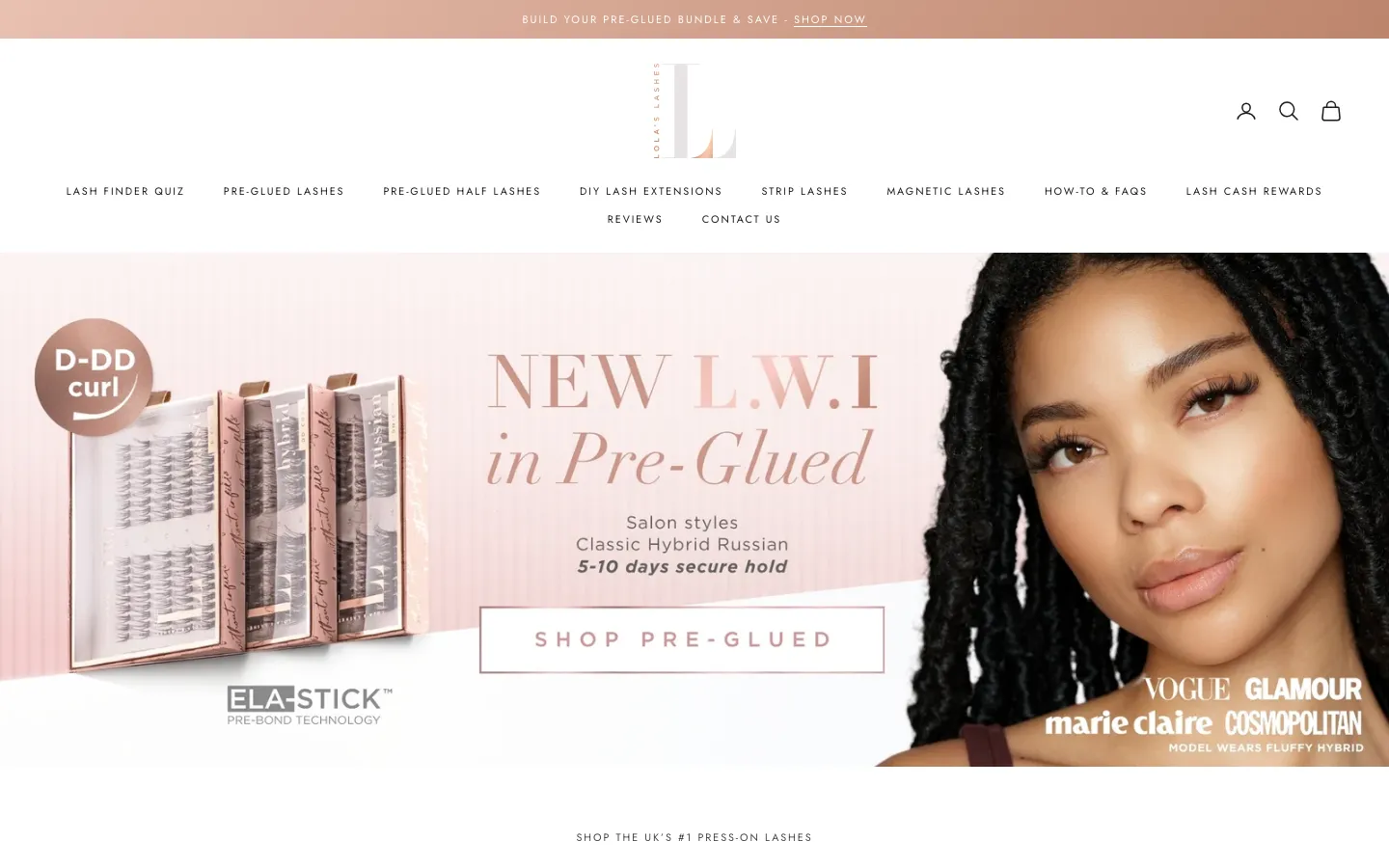

Optimising and protecting up to £25,000 a day of ad spend for one of the UK's fastest-growing beauty brands
Lola's Lashes built their business on the back of Facebook and Instagram advertising, spending up to £25,000 a day at peak. Learnmind helped with their marketing and ad spend optimisation, and built the AI that answered every comment on their ads, because a single unanswered negative comment can undermine a day's spend. Here is how.
The Client
Lola's Lashes is a UK beauty brand co-founded by Fraser Angus and Daniel Morris. Over seven years, they have built a loyal following and a business model that runs almost entirely on Facebook and Instagram advertising, spending up to £25,000 a day at peak.
Their products range from beginner-friendly pre-glued lashes to professional-grade magnetic systems, with price points around the $100 mark for starter kits. They serve tens of thousands of customers and maintain a 14-day money-back guarantee on everything they sell.
At scale, their ads generate tens of thousands of impressions in a matter of days. And with those impressions come hundreds of comments each month: questions, complaints, competitor sabotage, and hot leads who are ready to buy. As Fraser put it: “Most brands aren't as hot on comment moderation as we are.”
The Problem
Facebook's algorithm does not care whether a comment is fair. Negative comments rise to the top. Competitors leave damaging remarks on ads. Genuine customer questions go unanswered for hours. And every single one of those moments chips away at the return on ad spend that the entire business depends on.
The ROAS problem. Facebook uses engagement as a positive feedback signal. When negative comments sit unanswered, the algorithm takes notice. Ad performance degrades. Cost per acquisition rises. And the entire flywheel of spend, return, and reinvestment starts to slow down.
The mental burden. Fraser was personally moderating comments on his ads, including Saturday nights at 9pm. Not because he had to, but because he knew the cost of leaving them unattended. That kind of vigilance is unsustainable at scale.
The platform problem. Facebook's own tools made the job harder, not easier. Business Manager is clunky on mobile. Comments sometimes fail to load. Replies occasionally do not go through. And Facebook's built-in filter is a blunt tool that hides good comments along with the bad.
“FB's filter manages to get most of the negative ones, but quite often it'll hide some positive ones too. It's not an ideal system.”
“Just having it in the back of your head that 100,000 people saw a comment that said I was burning after they applied your glue... it's good to have the peace of mind knowing that there's an actual system that's taking care of it.”
“Our whole business model relies on Facebook generating a positive return on ad spend. If I see a Facebook ad I'm interested in, I go straight to the comments, and I'm looking for a reason not to buy it.”
The Solution
Marketing and ad spend optimisation. Learnmind worked with the founders on their marketing and on optimising their Meta ad spend, where the whole business model is turning each day's spend into sales.
Comment AI. Learnmind deployed an intelligent comment management system across both Facebook and Instagram. It monitors every ad, post, and reel around the clock, classifying each comment by type and responding in the brand's own tone of voice.
Product questions get answered with accurate, specific information pulled from a knowledge base built around Lola's Lashes' full product range. Hot leads are identified and nurtured. Complaints are addressed with empathy and escalated when needed. Spam and competitor trolling is flagged immediately.
The system does not just reply to comments. It understands which product an ad is promoting and tailors every response accordingly. A question on a pre-glued lash ad gets a completely different answer to the same question on a DIY lash ad, because the products work differently. That level of nuance is what separates this from a chatbot.
“Hats off to you for putting this all together. It's definitely a product that I think a lot of companies that rely on Facebook ads would be interested in. I've never seen anything like it.”
The Results
The impact was felt across the business, from the ad account all the way through to the founders' weekends.
Always on
Every comment across every ad, post, and reel got a response within minutes. The system never slept, never took a day off, and never lost patience at 9pm on a Saturday.
ROAS protection
Negative comments were never left to fester under high-spend ads, so the positive feedback loop that Facebook's algorithm rewards stayed intact.
Hot lead capture
Professional enquiries, salon owners wanting to stock the brand, and high-intent buyers were identified in real time and flagged for the team. No more sales buried in a thread of 40 comments.
Founder time back
Fraser no longer had to moderate comments across both platforms himself. The mental load of wondering what was sitting unanswered on a live ad was gone.
“That's a cool piece of kit. I think that's really our best use case for AI. There's a market for this. Definitely. It's the future, isn't it?”
“It works really well. It's customizable. It's a really solid tool. Anything this puts out of the knowledge base is going to be nine times out of ten better than what I can be bothered doing on a Saturday night.”
Why It Matters
This is not about saving time. It is about protecting revenue.
For a brand spending up to £25,000 a day on Meta advertising at peak, the comment section is not a nice-to-have. It is the front line. Every potential customer reads the comments before they buy. Every competitor knows that. Every unanswered complaint is a conversion that walks away.
Fraser put it plainly: if he could see competitors leaving negative comments on their ads unanswered for eight weeks, imagine how many prospective customers saw them too. At Lola's Lashes' ad spend levels, even a fraction of a percent improvement in conversion rate pays for the system many times over.
That is what ad spend protection means. Not saving a few hours a week, but ensuring that every pound spent on advertising actually has the chance to convert.
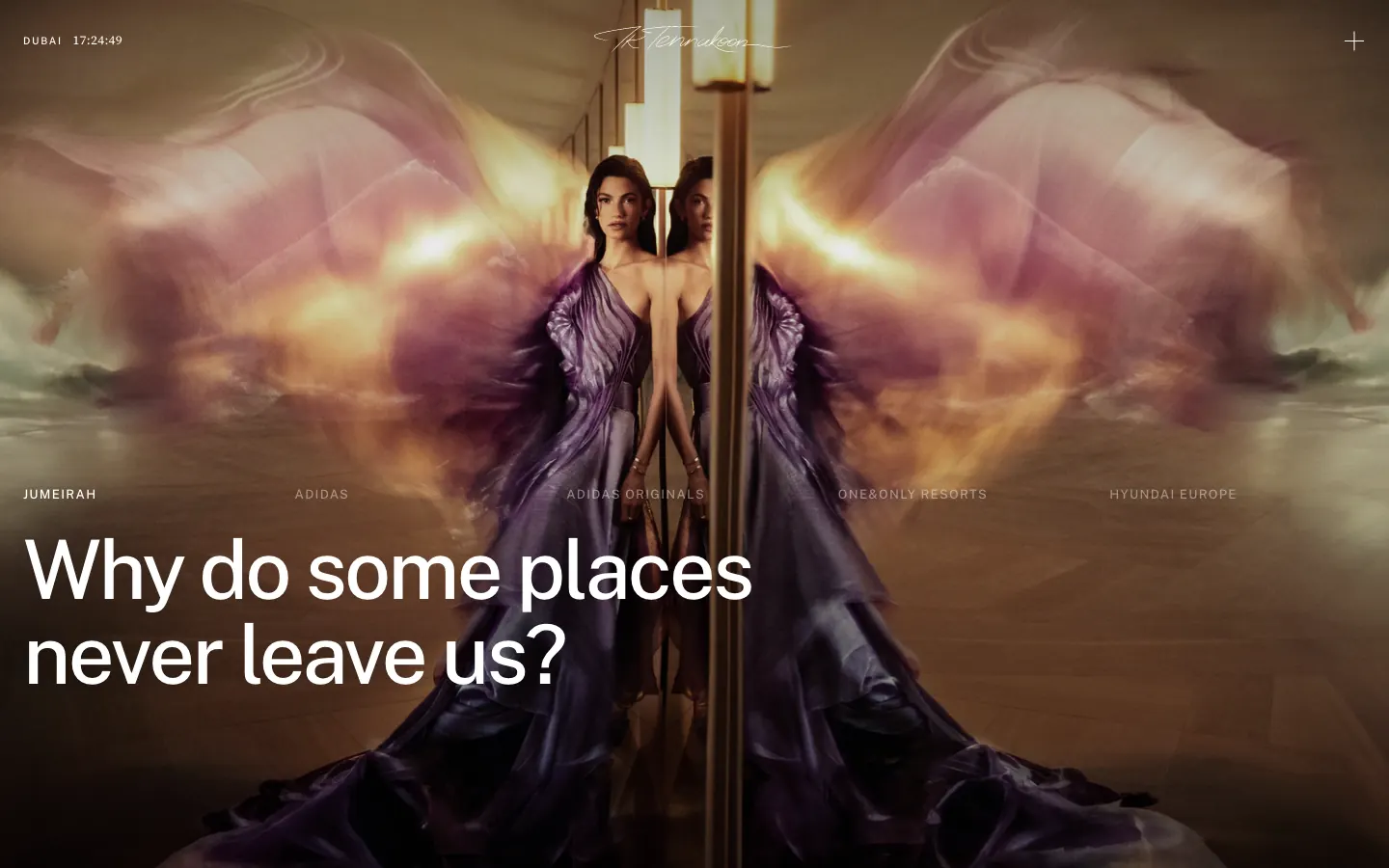
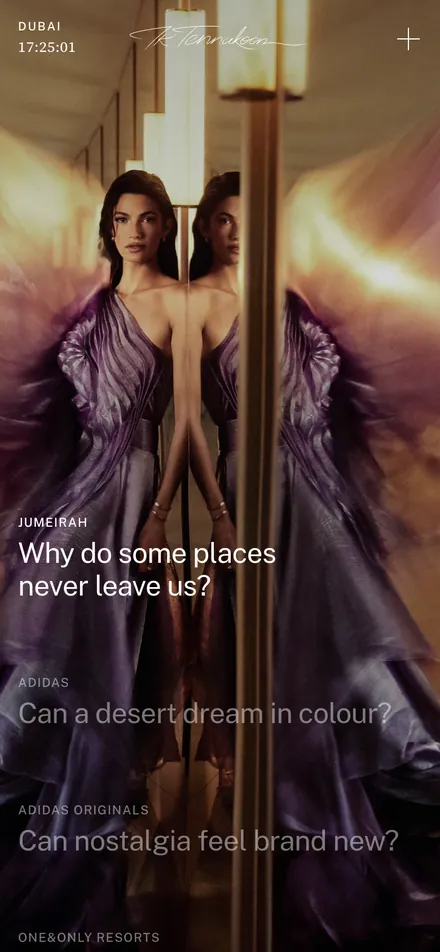
Turning a creative director's nine-year archive into a site he says feels “so me”
Taraka ‘TK’ Tennakoon is a creative director in Dubai working across luxury and sport, and the writer of the journal The Alien Aesthete. His old site sat on a website builder, holding years of work and writing. He wanted the feel of a great magazine, and restraint: his name and the work, nothing more.
The Brief
TK makes campaigns for names like Baccarat, Jumeirah, One&Only, adidas and BMW, and has written his journal, The Alien Aesthete, since 2017. All of it sat on an old Wix site that buried the films and squeezed the pictures.
He knew exactly what he wanted: a site that was “very editorial, very minimal”, and a journal that would “look like a magazine homepage”, because, in his words, it is “my personal newsletter from my brain”.
“Barely anyone reads the case, so let the visuals take centre stage.”
What We Built
The site opens with his signature, drawn stroke by stroke in the order his own hand writes it, then cuts through a fast reel of his work. Every picture is re-rendered from the full-size originals, not the compressed copies his old host served. TK had worried a signature might feel naff. After seeing it: “the timing and fade make it feel sleek.”
Then the archive. Every dispatch of The Alien Aesthete came across with its pictures, under his own masthead, and 44 films that had been buried in old posts play again. His verdict on the journal: “The journal looks soooo cool! Like a real newspaper.”
His six hero films take over the whole screen as you reach them, with a soft fade to black and a quiet “Now playing”.
And it is his. TK edits every page from his own dashboard, and a change is live within minutes. The code and the hosting sit in his own accounts.
“The website feels so me and definitely not off the template server.”
What Changed
“The website and its functionality matches the work, you could say,” as TK put it. Four things made the difference.
Work first, words second
The homepage is one screen of his work. The story lives on the About page, for those who want it.
Films that take the stage
Campaign films play full screen, turning sideways on a phone, instead of sitting in small boxes.
A fast first impression
The opening reel loads light copies of each picture first, cutting it from 7.2 MB to 1.4 MB without losing the look.
Owned, not rented
No platform subscription. His dashboard, his hosting, his site.
“Thank you again for the initiative, the dedication to craft and always trying to make it better.”
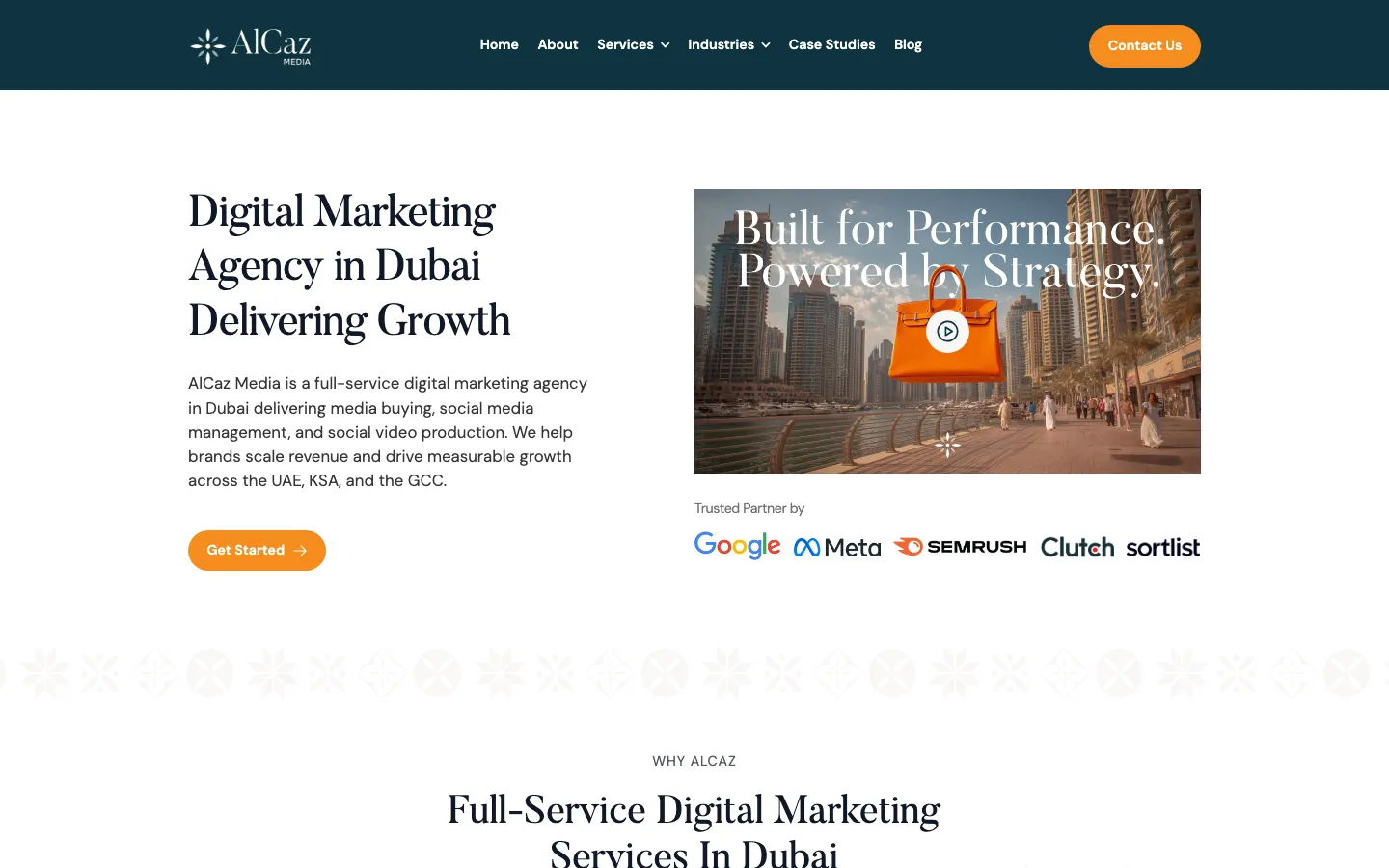
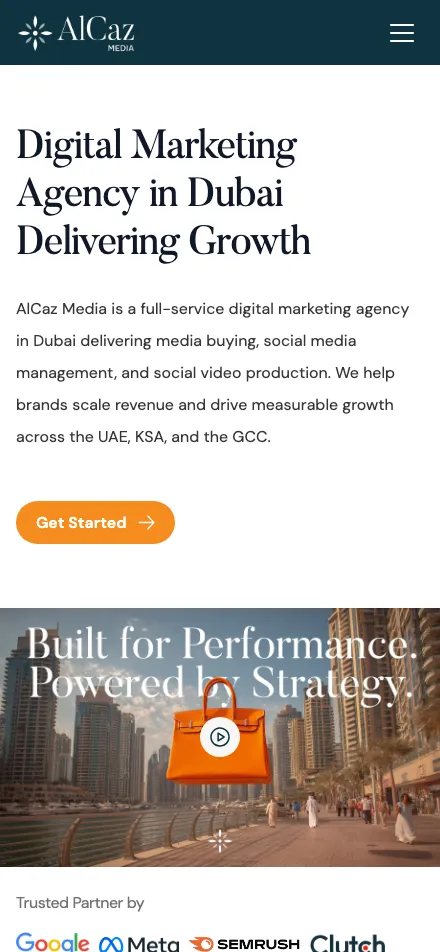
Turning every WhatsApp lead into a qualified opportunity for a leading UAE performance agency
Alcaz Media is a UAE-based performance marketing agency working with brands like Ferrari Middle East, La Vista Development, and Myjooti. Their Google Ads were doing their job. Their follow-up process was the bottleneck. Here is how Learnmind fixed it.
The Challenge
Alcaz Media's founder Ahmed was stuck in a cycle familiar to every growing agency. Google Ads were sending a steady stream of interested prospects to the Alcaz Media website. Those prospects would click the WhatsApp button and start a conversation. And then they would wait.
If it was during business hours and Ahmed or his team happened to be free, they would reply. If it was 11pm on a Friday night, that lead sat unanswered until Saturday morning, or Monday. If three leads came in during the same meeting, two of them cooled off before anyone got back to them.
Ahmed was personally handling a lot of this qualification himself, which meant hours every week spent on WhatsApp conversations that went nowhere: prospects who had no budget, no clear need, or were just kicking tyres. Meanwhile, the genuinely great leads were getting the same slow treatment as everyone else.
For a growing agency juggling clients across real estate, fintech, automotive, education, and ecommerce, this was becoming a serious bottleneck. Missed opportunities, wasted time, and a sales process that could not scale without hiring more people.
What We Built
We gave Alcaz Media a WhatsApp sales assistant that answers every lead, day or night. It reads like a sharp member of Ahmed's team who wants to understand what the prospect needs, not like a script.
It asks the right discovery questions: the prospect's business, their goals, and what brought them to Alcaz Media. When it helps, it quotes real wins from the Alcaz portfolio: the 20x ROI on a university's student recruitment campaign, the 82 units sold for La Vista Development, the 5x return on ad spend for an ecommerce brand, the 75% revenue growth for a fintech app.
It is upfront about pricing, so nobody's time is wasted. If the prospect is a fit, it takes their details and books a strategy session in the chat. If not yet, it keeps the door open.
Every conversation is logged. When a qualified lead books, Ahmed gets an email with a summary and the full transcript, and the lead lands in Pipedrive with a deal ready to work. He walks into every call knowing who he is talking to.
The small things are handled too. It marks messages as read and shows typing before it answers, handles images and voice notes, and politely deflects sales pitches without breaking character.
The Results
Answered at 2am, paced like a person
Whether the message lands at 9am on a Tuesday or 2am on a Saturday, it gets a reply. The assistant reads it, shows typing and answers at a human pace, so it never feels like an autoresponder.
Pre-qualified pipeline
Ahmed's calendar is now filled exclusively with qualified, pre-vetted prospects. The hours he used to spend sorting through tyre-kickers and no-budget inquiries are gone.
Fraction of the cost
Runs at a fraction of hiring a single junior SDR in the UAE (typically AED 8,000 to 15,000 a month), before factoring in training, sick days, turnover, and the 2am leads no human is picking up.
Updates in minutes, not weeks
When Alcaz Media's pitch changes, when new case studies are added, when pricing evolves, the system updates same-day and is live immediately. No retraining. No onboarding period.
Straight into Pipedrive
Every qualified lead lands in Pipedrive with full contact details, conversation history, and a deal ready to work. No manual data entry. No leads falling between the cracks.
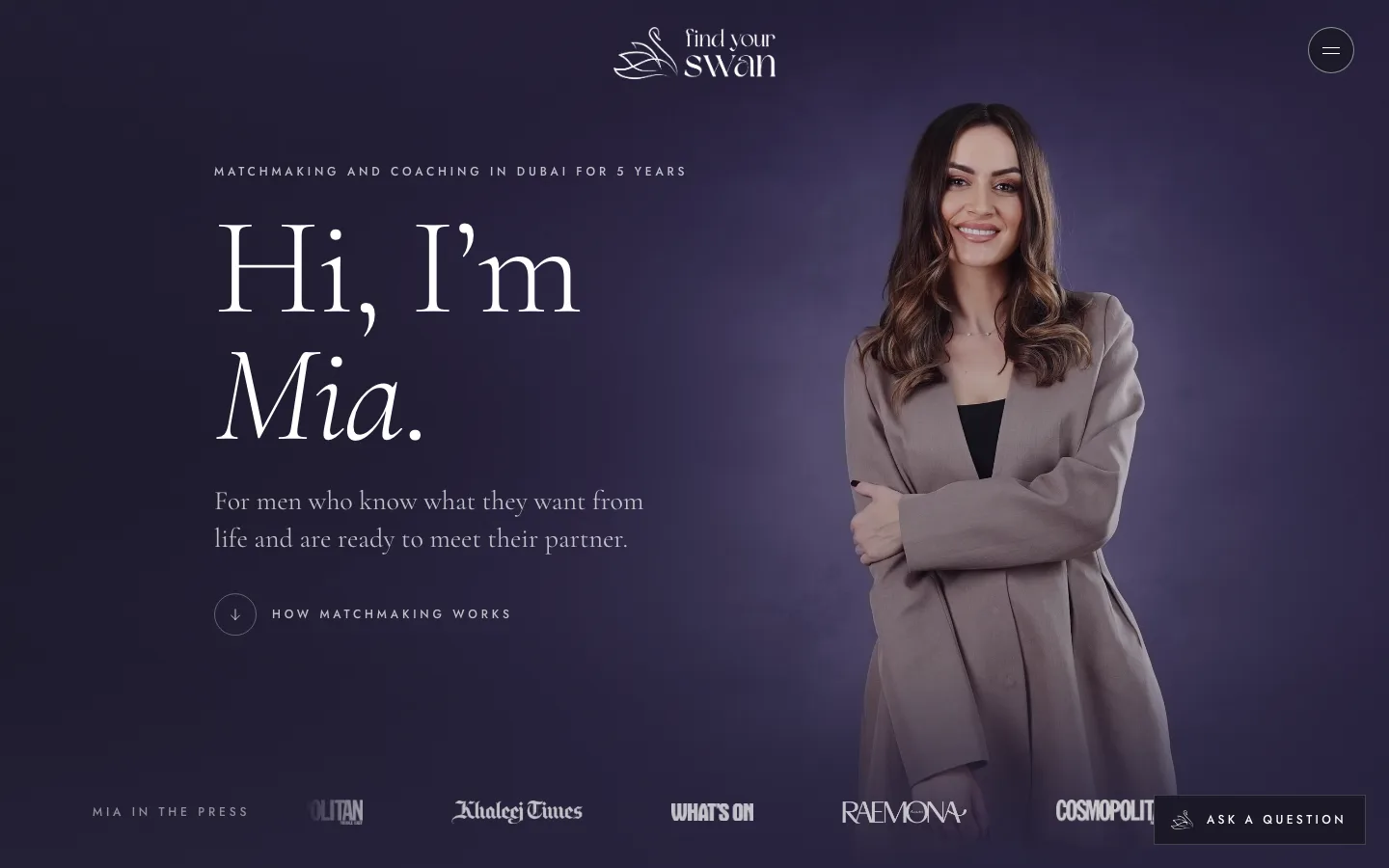
A front door worthy of Dubai's private matchmaker, with a concierge that knows when to hand over
Mia Pavlikova runs Find Your Swan, a private matchmaking and date coaching house in Dubai with more than 1,000 members and over 200 couples matched. Her clients are high-achieving professionals who expect discretion and polish, and the first conversation decides everything. Here is what we built.
The Brief
Mia's whole business is a human one. She meets every client herself, works out what they are really looking for, and makes each introduction by hand. Her old site ran on a Wix template, which could show none of that.
So the brief had two halves. A website that feels as considered as the service itself. And an assistant that turns a curious visitor into a booked discovery call at any hour, without ever feeling like a sales funnel or pretending to be Mia.
“These tools will definitely run the world one day, but that's why I have an advantage because of what I do. In a world full of AI, people will just crave a human connection, and that's where I come in.”
What We Built
A full luxury rebuild on a house style made for her: an elegant serif for feeling, a clean sans for fact, square hairline buttons and nothing that shouts. The site opens on a short film we call Stars from the Lake: stars rise from still water, trace the Cygnus constellation and draw her swan, before the logo glides up into its place in the header.
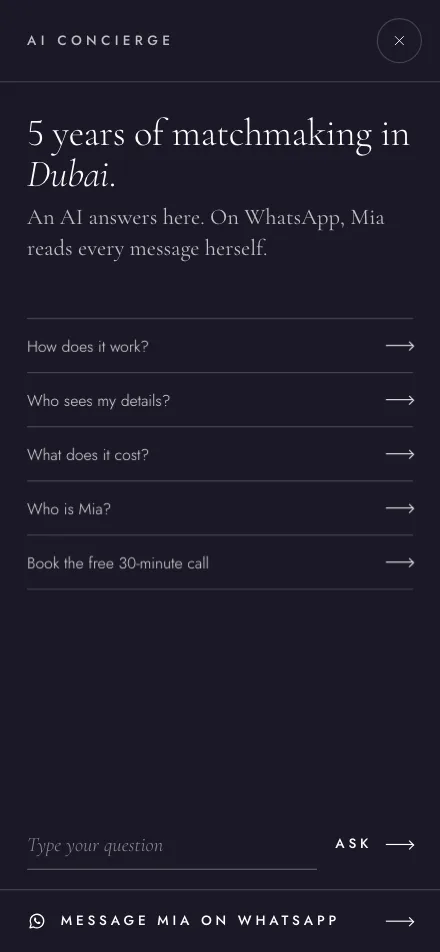
Then the concierge. A visitor taps Ask a question and an AI answers in Find Your Swan's own voice, from Mia's own facts only. It finds out what they are looking for, matchmaking, coaching or events, where they are based and their first name, then offers a free discovery call with Mia's booking form already filled in. The visitor just picks a time.
It says plainly that it is an AI, and anything it cannot answer, it hands to Mia on WhatsApp in one tap.
“Nice! This actually looks like me! I mean the feeling and the fonts… have you read my soul or anything?”
Taught to Know Its Limits
Before launch we put 30 real questions and 5 trick ones to it, and tuned it until anything outside Mia's facts becomes a question for Mia. In a business built on discretion, an assistant that knows its limits is the whole point.
Open after hours
It answers at midnight the way it does at noon, and offers the call while the visitor is still keen.
Calls arrive pre-briefed
Name, service and what they are looking for are already in Mia's booking form before she picks up the phone.
Discreet by design
It never claims to have booked anything itself, is built not to guess, and hands anything personal to Mia.
Arabic and English
A visitor can write in Arabic and get an answer in Arabic, in the same warm voice.
Finding the real buyers in 300 WhatsApp enquiries a day for one of the UAE's leading car customisation groups
Auto Millennium Group transforms vehicles in its own facilities in the UAE and India, with Saudi Arabia next: paint protection film, window tinting, nano ceramic coating, polishing, detailing and more than 20 other services, for the region's dealerships and for private owners. In July 2026 the group took a Guinness World Records title for the most embroidered stitches in a car. Around 300 enquiries a day were arriving on WhatsApp and Instagram, and a small team was answering every one of them by hand. Here is what we built.
The Client
Auto Millennium is not a corner detailing shop. It runs its own modification facilities, works with dealerships to add value in their service and sales departments, and takes on bespoke builds for private owners, from a full paint protection film wrap on a brand new Defender to an interior embroidered stitch by stitch. Its own customers describe the craftsmanship as flawless, and say what they remember is how quickly and personally the team kept in touch.
That second part is the point. The cars that come through the doors are some of the most expensive on the road, and their owners expect to be treated that way from the very first message. Many of them never pick up the phone. They send a photo of the car on WhatsApp, ask a question in English or Arabic between meetings, or record a voice note on the way to work, and they expect a reply that sounds like someone who knows cars.
The group also works by a rule that protects the quality of everything it does: every car is inspected before a price is agreed. Paint condition, old film, chips and trims all change the job, so a number given over chat would only ever be a guess. The rule is right for the work. It also means every conversation has one real goal, which is getting the car to the facility.
The Challenge
Every one of those enquiries landed in the same place and waited for the same few people. A buyer ready to book sat in the queue behind someone who was only browsing.
“No one is going to handle 300 leads a day. There is a lot of wasted time on very poor-quality leads.”
By the team's own estimate, half of those conversations go nowhere and a fifth are hard work. Fewer than a third are straightforward, and around 15% become a job.
That split is what makes the volume so expensive. To find the 40 or so serious buyers in a day, someone has to open, read and answer around 300 conversations. Most of the effort goes on the wrong end of the list: the "how much for my car?" message with no car named, the price-shopper collecting quotes, the chat that stops after one reply.
The people doing that reading are the same people who close the jobs. Every hour spent on a cold enquiry is an hour not spent with a customer who is ready to book, and in a premium business that is where the money is.
Speed matters too. A buyer comparing two workshops for a full wrap usually messages both, and the one that answers first, with sensible questions about the car, is often the one that gets the visit. A good lead that waits until the evening for a reply may already have booked somewhere else.
And the messages arrive in two places. WhatsApp and Instagram each have their own inbox, their own notifications and their own way of losing a conversation. A customer who asks on Instagram and follows up on WhatsApp becomes two half-conversations, and nobody has the full picture when they finally call.
The problem was never getting messages. It was finding the buyers inside them, quickly enough to matter.
What They Asked For
We met the team at the facility and asked them to describe the job in their own words, before we said a word about software. Sufian was clear about where the AI should stop and the team should start.
“I want to focus on closing deals. I want the AI to do the first ten minutes, the first touches. What car, what year, what they want, their name, when they want to come in. Then I take it from there.”
Just as clear was what he did not want: an AI that tries to do everything. In a business built on relationships, the human part of the conversation is the sale, and a system that takes it over does that part badly.
The team were equally sure about phone calls. Spoken AI is not yet good enough to carry the emotional, relationship-led calls that close their customers, and we agreed. So the work stayed exactly where the volume is: WhatsApp and Instagram.
That gave us a brief in four lines.
Do the first ten minutes
Answer every enquiry and gather the six details the team needs before anyone picks up the phone.
Find the real buyers
Separate the people ready to book from the browsers and the time-wasters, every hour of the day.
Say who to call
One list, sorted by who is ready and who has been waiting longest, on a laptop or a phone.
Leave the closing to people
The relationship, the inspection and the price stay with the team, where they belong.
The First Ten Minutes
So that is the job we gave it. The concierge answers WhatsApp enquiries in English or Arabic, at any hour, and takes each one through those first touches: the make, the model, the year, the service the customer wants, their name and when they want to come in. Six details, gathered the way a good salesperson gathers them, one or two at a time inside a real conversation rather than as a form.
It works with what customers actually send. A voice note recorded in traffic is transcribed and answered. A photo of the car is read for the make, the model and its condition, so nobody is asked "which car is it?" twice. Questions about film brands, tint levels, finishes or how long a full wrap takes are answered from the group's own material, not from the internet.
It writes like a member of the team rather than a script. Replies arrive at a natural pace with a typing indicator, the tone can be set from formal to warm, and the one-off requests that make this business what it is get a considered answer or a person, never a dead end.
Everything points at the visit. When a customer is serious, the concierge moves them towards booking an inspection at the facility, offers a time, and the booking goes into the team's Google Calendar, or to the team to confirm first if they prefer.
Instagram DMs connect to the same inbox, so a customer who starts on Instagram and carries on in WhatsApp is still one customer with one history, and the concierge answers both in the same voice.
Every conversation becomes a lead card on its own, with the car, the service and the customer's details already filled in. Nobody types anything into a CRM, and nobody has to remember who said what on which app.
One Enquiry, Start to Finish
Here is how a typical late-night enquiry runs through the system, from the first message to the morning call.
11.40pm. A photo arrives on WhatsApp: a black G-Wagon and two words, "full PPF?". The concierge replies straight away, names the car from the photo and asks the year, and whether the paint already has any film on it.
11.42pm. The customer answers with a voice note. The concierge transcribes it, notes a 2024 model with no film, and asks when they would like to bring the car in.
11.44pm. They ask how much it will be. The concierge explains that every car is inspected first, because the paint and any old film change the job, and offers two inspection times that week.
11.46pm. They pick Saturday morning and give their name. The booking goes into the calendar, the card moves to Inspection Booked, and the lead is graded hot. All six details are on the card.
9.00am. The team opens the dashboard. The G-Wagon sits near the top of the call list with the car, the service, the slot and a one-line summary. The call is short and warm, because the first ten minutes have already been done.
Meanwhile the three messages that arrived overnight asking "price?" with no car attached were answered politely, graded, and never reached anyone's list.
Who to Call Now
“I want it to tell me: this is the car, this is what he has, this is what he wants, who do I need to call, who’s waiting. That’s the only section I want. I really don’t want the AI to do all the work.”
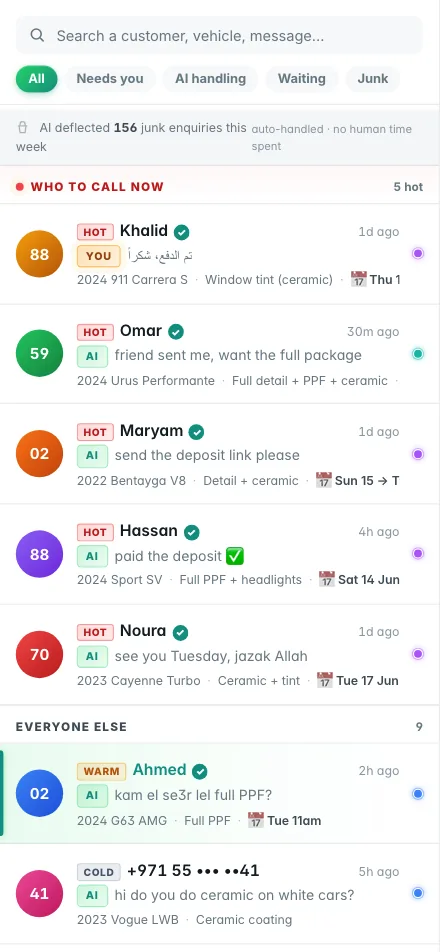
So the dashboard opens on exactly that: one list of who to call now, sorted by how ready each buyer is and how long they have been waiting, on a laptop or a phone.
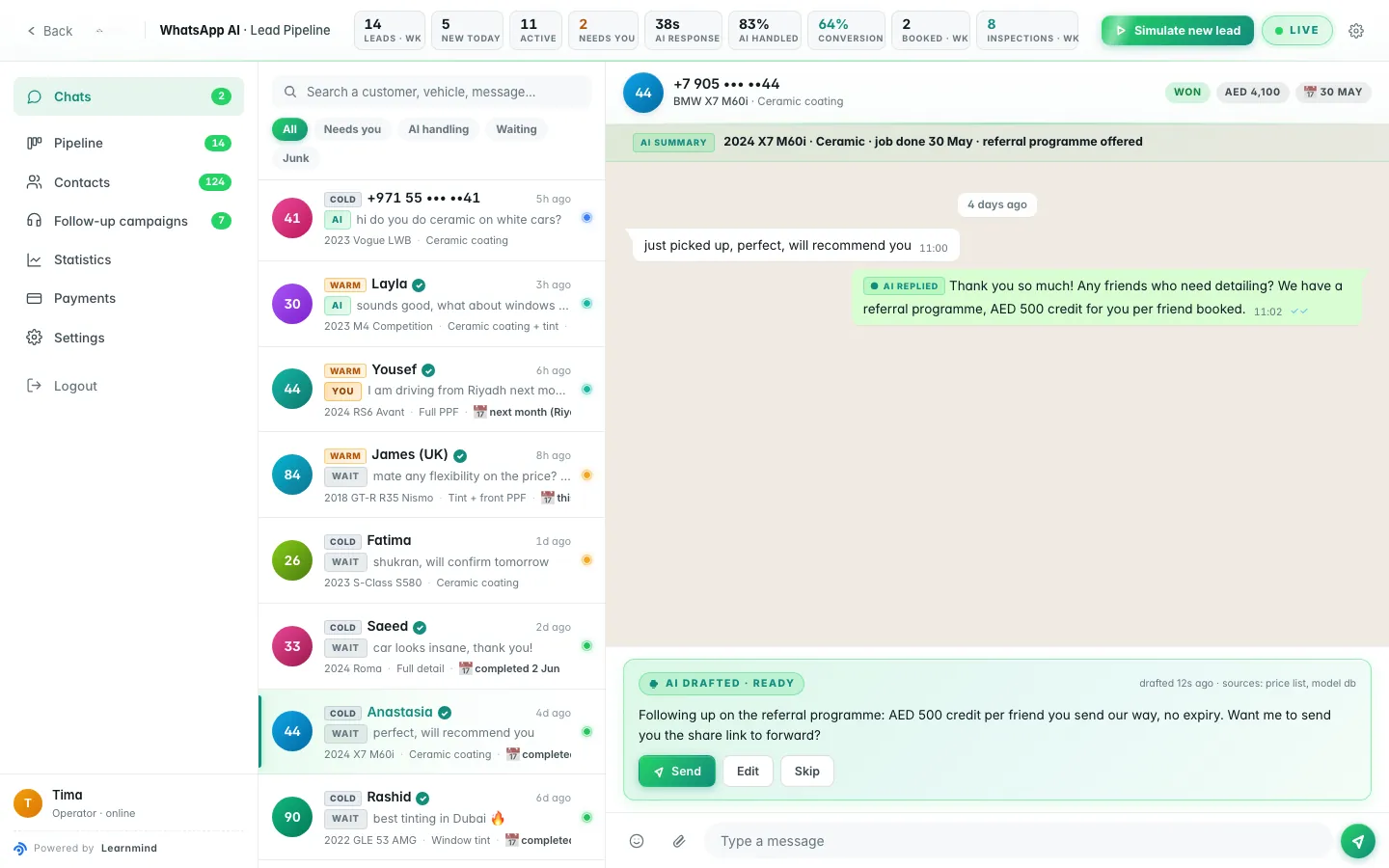
Each line is a lead card the AI built from the conversation: the car, the service, the customer's name, what they said and how long they have waited. Open it and the whole chat is there with a one-line AI summary at the top, so the call starts where the conversation left off instead of with "sorry, which car was it again?"
The chats are filtered the way the team works: the ones that need a person now, the ones the AI is still handling, the ones waiting on the customer, and junk. A buyer who is ready never sits underneath someone who is only browsing.
The call list, ready
The hottest buyers sit at the top with their car, the service they want and how long they have waited.
Junk handled quietly
Every enquiry is graded hot, warm, cold or junk, and the time-wasters are answered without ever reaching the team.
A pipeline in their order
New enquiry, qualified, inspection booked, inspected and quoted, then won or lost, the way the group already works.
Control stays with the team
Anyone can take over a chat in one tap, and suggested replies wait for Send, Edit or Skip.
The Pipeline and the Customer Book
Behind the call list sits a visual pipeline in the group's own stage order. New Enquiry is created automatically from the chat. Qualified means the six details are in. Then Inspection Booked, Inspected and Quoted, and finally Won or Lost. Price comes after inspection, so the pipeline follows the same rule as the workshop floor.
Cards move as the conversation moves. When a customer books a slot, their card moves with them. When a quote goes out after the inspection, it moves again. The team sees the whole week at a glance without anyone updating a spreadsheet.
Every customer who has ever messaged sits in one searchable customer book, with their vehicle, the service they asked about, their last contact and what they have spent. VIP, repeat and dormant customers are flagged on their own, so a returning G-Wagon owner is recognised the moment they write in, and the team can see who has gone quiet.
Quiet customers are not left there. Follow-up campaigns are written once and personalised by the AI for each person, then sent on WhatsApp in the background: a thank-you and a review request when a job is finished, a check-in a few months after a wrap, a note to a customer who has not been in for a while. Replies land in the same chat as everything else.
Control Stays With the Team
The AI never has the final word unless the team wants it to. For any conversation, someone can choose whether it replies on its own, drafts a reply for approval, or stays out of it entirely.
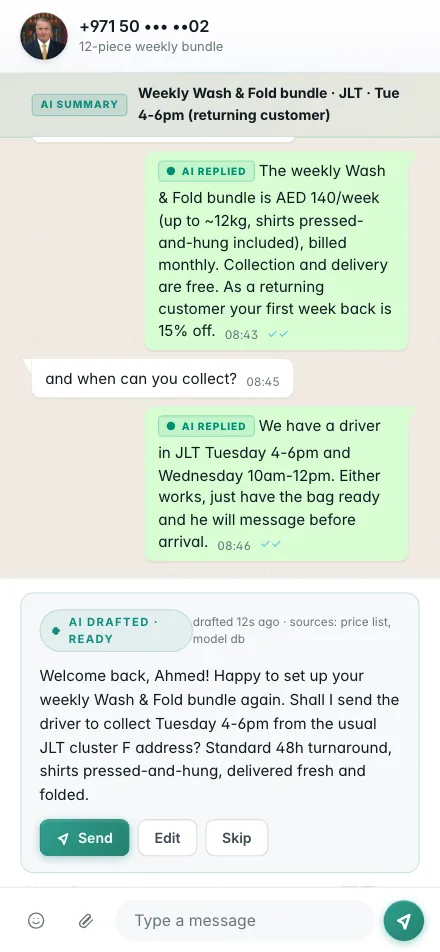
Drafts appear in the chat with Send, Edit and Skip underneath, along with the sources the AI drew on. Anyone can take over a conversation in one tap and the AI steps back. Every message is logged with who sent it and when, so there is never a question about what a customer was told.
The settings are written in plain language. Business hours apply to the team, while the concierge keeps answering around the clock. High-value enquiries and VIPs can go straight to a person. Whether the AI may share price ranges at all is a switch, so the group's inspection-first rule holds. The tone, the languages it switches between and whether it transcribes voice notes are all set the same way.
It connects to the tools the team already uses: WhatsApp, Google Calendar for inspections, and Stripe for deposits, with payments and outstanding balances visible in the same dashboard.
Numbers Worth Forwarding
A group this size answers to more than one person, so the dashboard is built for its numbers to travel upwards without a spreadsheet in between.
A strip across the top shows the week at a glance: leads this week, new today, how many need a person, the AI's response time, how much it handled on its own, conversion, and inspections booked. It is the one view someone can screenshot and forward.
A statistics view goes further: where leads come from, how they move from first message to booked job, the vehicles people ask about most, the busiest hours of the week, the languages customers write in, and the questions they ask most often, grouped by the AI. That last list is quietly one of the most useful things in it. It shows the team exactly what customers want to know before they visit, which is what the next round of content and training should answer.
Payments sit alongside: deposits taken by Stripe link or bank transfer, what has cleared today, and which deposits are still outstanding, so a booked inspection and its deposit are never in two different places.
The result is a team that starts each day with a short list of real buyers and a clear picture of the week, instead of 300 unread chats.
Why It Fits a Business Like This
Most chat tools are built for businesses that sell the same thing to everyone. Auto Millennium sells the opposite: work that depends on the car, the owner and the finish they want. That is why the concierge was built around the group's own services, its own policies and real conversations, rather than a library of generic answers bought off the shelf.
It is also why the boundaries matter as much as the features. The AI does the repetitive first contact, the qualifying and the sorting. It does not close deals, it gives no prices before an inspection unless the team switches that on, and it hands over the moment a person is the better choice.
The team keeps what it is best at, the relationship and the craftsmanship. The concierge takes the part nobody can do well by hand at 300 messages a day.
A WhatsApp concierge for a Dubai garment care brand that lives on its regulars
Kareem Ibrahim's Preserve is a laundry and garment care service in Dubai. Clothes are collected from the door, cleaned and pressed, and delivered back ready to wear. The business runs on regulars, and Kareem was about to put real money into Meta ads that open a WhatsApp chat. The AI agent he already had could not be trusted with either the regulars or the ad traffic. Here is what we built.
The Brief
Preserve's customers come back week after week, so the twentieth conversation matters as much as the first. Kareem needed an assistant that knows a regular from a stranger and books a pickup without the back and forth.
He came to us in June for a simple reason. A campaign was ready to run: click-to-WhatsApp ads on Facebook and Instagram, where tapping the ad opens a chat with the business. But the AI agent on his existing system was not following his guidelines, and it treated a loyal regular exactly like someone who had never heard of Preserve. Sending paid traffic into a chat that answers badly is the quickest way to waste an ad budget, so the spend was on hold.
He had already tried the usual route: a messaging platform with an AI add-on, set up by an agency. It answered, but it did not answer like Preserve, and it had no idea who the customer was. What he needed was not another bot. It was a concierge built around how his business actually works.
He also wanted the answer most advertisers never get: not which ads bring messages, but which bring paying customers. Of everything on his list, he put that first.
So the brief came in three parts, in his order of importance:
Prove what the ads are doing
Show which campaigns bring customers who pay, and keep counting when they come back.
Answer properly and book
A WhatsApp flow that follows his rules, sounds like Preserve and books the collection in the chat.
Look after the regulars
Recognise them, remember them, and notice when one of them goes quiet.
Why Regulars Change Everything
Most chat assistants are built for first contact. They greet, they qualify, they hand over, and they forget. A garment care business works the other way round. The money is in the customer who books every week for years, and the first message is only the start of a long relationship.
That changes what good looks like. A regular should never be asked for their address again, or have the weekly bundle explained to them as if they had never used it. They should be greeted by name, offered their usual slot, and have the small things remembered: shirts back on hangers rather than folded, a light starch on the kanduras, the delicate piece that always goes to the specialist.
Getting that wrong is quietly expensive. A regular who feels like a stranger does not complain. They simply try someone else next week. And in a business that lives on repeat orders, a customer who stops booking is the costliest thing that can happen, precisely because it never announces itself.
So the concierge had to do two jobs at once: win new customers from the ads, and make every returning customer feel known.
What We Built
A WhatsApp concierge that answers in Preserve's own voice, in English or Arabic, from Preserve's own price list. It explains the bundles, express turnaround and specialist care for delicate pieces, and books a collection slot in the chat.
It knows who it is talking to. A returning customer is recognised from their number and greeted as one, with their history in view: what they sent last time, their usual pickup day and where to collect from. A first-time customer is welcomed and asked only the few questions that matter (what needs cleaning, roughly how much, and when and where to collect) before getting a clear answer on price and turnaround.
It works with what customers actually send: a photo of a stain, a voice note in Arabic, a list typed in a hurry between school runs. When something needs a specialist's eye, a delicate fabric or a stubborn mark, it says so honestly and flags the conversation for the team rather than guessing.
Booking happens in the chat. The customer picks a collection window, the concierge confirms it, and when a deposit or payment is needed, a payment link goes out in the same conversation. Nobody has to call, and nobody has to chase.
Behind it, a dashboard for the team. Every chat becomes a lead card on a pipeline built around the laundry itself: new enquiry, qualified, pickup scheduled, collected and in care, delivered. Customers are flagged VIP, repeat or dormant on their own, so the team can see who has drifted away and bring them back with a follow-up campaign.
Regulars welcomed back
A returning customer is greeted as one, not treated like a stranger.
Pickups booked in the chat
The customer picks a collection slot in the conversation, with no phone call needed.
Specialist pieces flagged
Delicate fabrics and difficult stains go to a person, with the photo and the details attached.
Drafts the team approves
When the team wants to check first, the AI drafts the reply and waits for Send, Edit or Skip.
A Week With a Regular
Here is how a typical week runs for a returning customer, from the first message to the doorstep.
Sunday, 6.14pm. Ahmed, who used Preserve once before, messages to ask about a weekly pickup for around a dozen pieces, mostly shirts and trousers. The concierge recognises his number, welcomes him back by name, explains the weekly wash and fold bundle and asks whether to collect from the same address in JLT.
Sunday, 6.16pm. He asks when they can collect. The concierge offers Tuesday between 4 and 6pm or Wednesday morning. He picks Tuesday, and his card moves to Pickup Scheduled with a one-line summary for the team.
Tuesday, 4.30pm. The driver collects. The order moves to Collected and In Care.
Thursday. The clothes come back pressed and on hangers. The order moves to Delivered, and the concierge drafts a short thank-you for the team to send, edit or skip.
The following Sunday. Ahmed writes "same again this week". There are no questions about his address or his bundle. The concierge confirms Tuesday and the cycle starts again.
If the ad that brought him back was a click-to-WhatsApp campaign, every one of those weekly payments is reported to Meta against it.
Built for Dubai
Customers in Dubai write in more than one language, sometimes in the same conversation, and at every hour. The concierge switches between English and Arabic as the customer does, reads voice notes, and is as at home with abayas and kanduras as with suits and silk dresses.
Evenings are when many people sort out the week ahead, which is exactly when a small team has gone home. The concierge has not. A pickup requested at 11pm is booked at 11pm, and the team arrives in the morning to a schedule that is already full rather than a pile of messages to answer.
Prices, turnaround times and collection areas come from Preserve's own price list, so the answer a customer gets at midnight is the same answer the team would give at noon.
The Dashboard Behind It
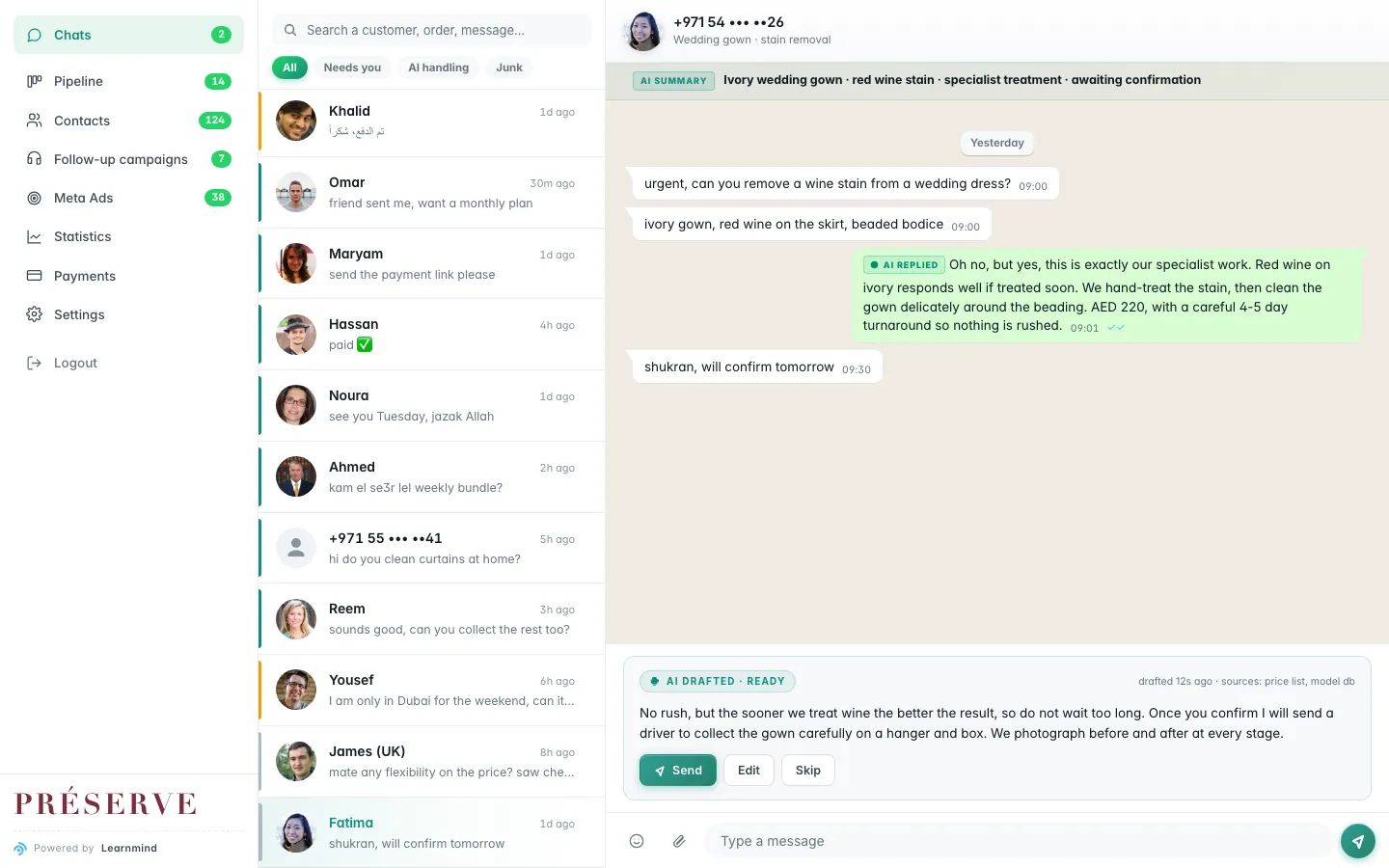
The team runs everything from one screen, on a laptop or a phone. Chats come first: every conversation with a one-line AI summary at the top, so whoever picks it up knows straight away what the customer wants, when the pickup is and whether anything has been paid.
The pipeline follows the life of an order rather than a sales template. New Enquiry, Qualified, Pickup Scheduled, Collected and In Care, Delivered. Each order moves across as it happens, so the team can see at a glance what is waiting for collection, what is being cared for and what is out for delivery.
The customer book holds everyone who has ever messaged, with their orders, their last contact and what they have spent over time. VIP, repeat and dormant customers are flagged automatically, which turns a long list of phone numbers into something the team can act on.
Settings decide how the concierge behaves, in plain language: whether it may quote standard services on its own, when a large order or a VIP goes to a person, how formal it sounds, which languages it switches between, and whether a pickup is confirmed by the AI or handed to the team first. Business hours apply to the team. The concierge answers around the clock.
Payments sit in the same place: what has cleared, which bundles are due, and which deposits are still outstanding, taken by Stripe link or bank transfer.
Bringing Regulars Back
Follow-up campaigns run quietly in the background on WhatsApp. Each one is written once and personalised by the AI for every customer who receives it: a thank-you after delivery with a request for a review, a friendly note to a customer who used to book every week and has not for a while, a referral offer for a regular who has just said how happy they are.
Because every campaign message lives in the same conversation as the customer's orders, a reply is just a chat. If a dormant customer answers "yes please, same as before", the concierge already knows what "same as before" means: the bundle, the address and the usual pickup day.
The dormant flag is what makes this work. Instead of a blanket message to everyone, the team can see exactly who has slipped away and how long ago, and speak to them as people who already know Preserve.
Ad Spend That Reports Back
This was the part Kareem cared about most. Meta's own reporting can tell an advertiser how many conversations an ad started. On its own, it cannot tell them which of those conversations turned into paying customers, because the sale happens later, inside a chat, often days after the click.
When someone messages from a click-to-WhatsApp ad, the concierge keeps that ad's click ID with the customer. When they pay, the sale goes back to Meta automatically through its Conversions API, so the ad reporting shows paying customers, not just conversations.
This is the route Meta itself provides for businesses that sell through messaging, built to its specification. Nobody on the team logs anything or uploads a spreadsheet. The purchase is reported the moment it happens, and every event sent to Meta is kept in an audit trail inside the dashboard.
It is built to fail safely. If Meta's keys are missing or Meta cannot be reached, the sale is still recorded in the dashboard, the attempt is logged, and nothing about the customer's payment is affected.
Because the click ID stays with the customer, the weekly orders that follow are counted too. The dashboard's Meta Ads view puts spend, revenue and return for each campaign side by side, so Kareem can scale the ads that pay and cut the rest.
That changes how ads get judged. A campaign that brings fewer chats but more regulars can finally be seen for what it is, the one worth scaling. And Meta's own optimisation has real purchases to learn from, not just opened chats, so the spend is steered towards people who actually book.
How It Fits Together
Put the pieces in a row and the loop is simple. An ad on Facebook or Instagram opens a WhatsApp chat. The concierge answers in Preserve's voice, recognises a regular or welcomes someone new, and books the collection. The order moves across the pipeline from pickup to delivery. Payment is taken in the chat and reported to Meta against the ad that started it. And when the customer goes quiet, the dashboard notices and a follow-up brings them back.
Every step happens in the place the customer already is, on WhatsApp, and every step is visible to the team in one dashboard. The ads pay for the customers they bring, and the customers keep coming back.
Nothing off the shelf
The same care goes into the places customers land. No templates: every site is built from the client's own words, pictures and films.

Telling a two-time Winter Olympian's story, from a desert city to the slopes
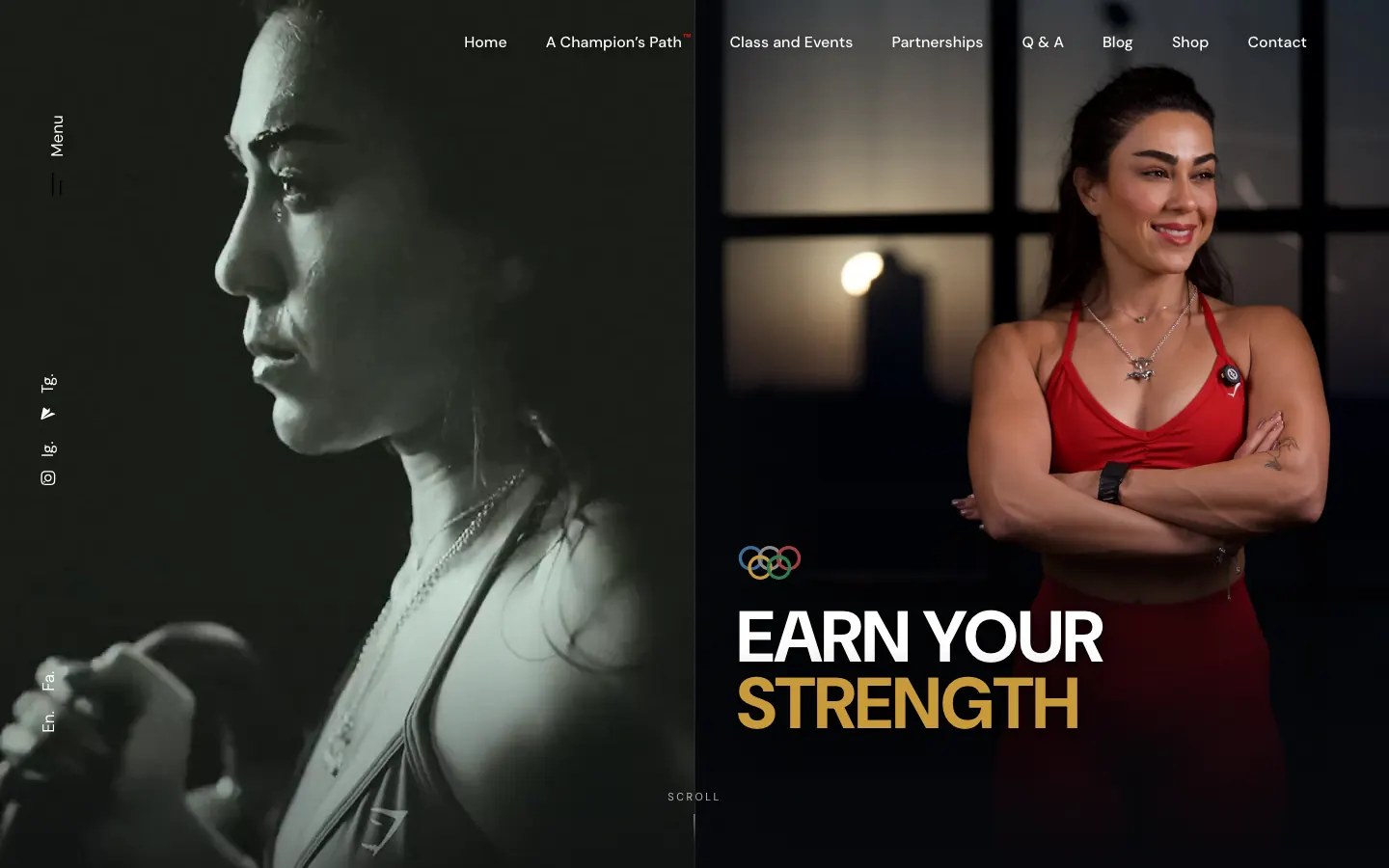
Forough Abbasi skied for Iran at two Winter Olympic Games and now coaches ski, strength and performance in Dubai. Her story is extraordinary. Her old WordPress site did not do it justice.
The Brief
Forough's path runs from a desert city in Iran to two Winter Olympic Games, and now to coaching in Dubai. Her website has two jobs: tell that story properly, and turn the people it moves into clients, sponsors and buyers.
Years of her photos, films and press sat on an old WordPress host we could not count on. So the work had an order: save everything first, then give the story the stage it deserves, in her own voice.
“I wasn't born an Olympian. Sport has been part of my life for as long as I can remember. It taught me discipline, resilience, and how much we're capable of.”
What We Built
First, a rescue. We recovered every one of the 603 photos and files from her old site, then rebuilt it by hand as a fast site that keeps the look her audience already knows.
The heart of it is A Champion's Path, a scroll story in ten chapters from a desert city to two Olympic Games. Each chapter has its own weather: snow, desert sand, chalk dust. A 3D horse and bike appear where her story does, and five rings come together at the finish.
Classes, partnerships and a shop sit alongside, each built to turn an admirer into a client, a sponsor or a buyer.
What Changed
Her audience still recognises the site the moment it opens. Everything underneath it is new.
Nothing lost
All 603 photos and files moved across, so years of competition, press and training pictures are safe.
Made for the phone
Every page was reworked for a phone screen, from the story chapters to the shop.
A story worth scrolling
Ten chapters, each with its own weather and motion, make a biography feel like a journey.
English and Persian
Written for both of the audiences that follow her, in Dubai and back home.
Fixing the portfolio that was quietly turning clients away at the door
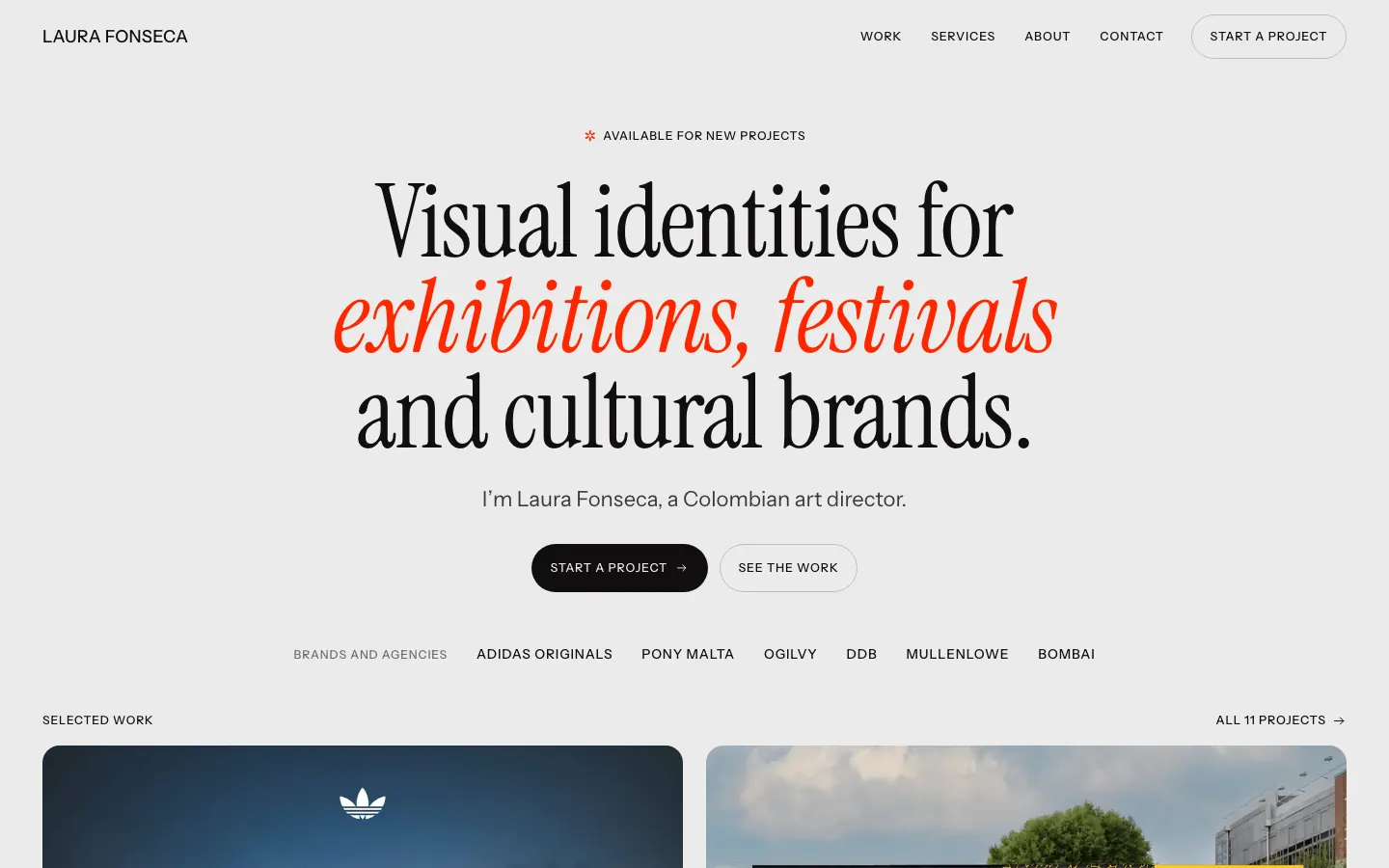
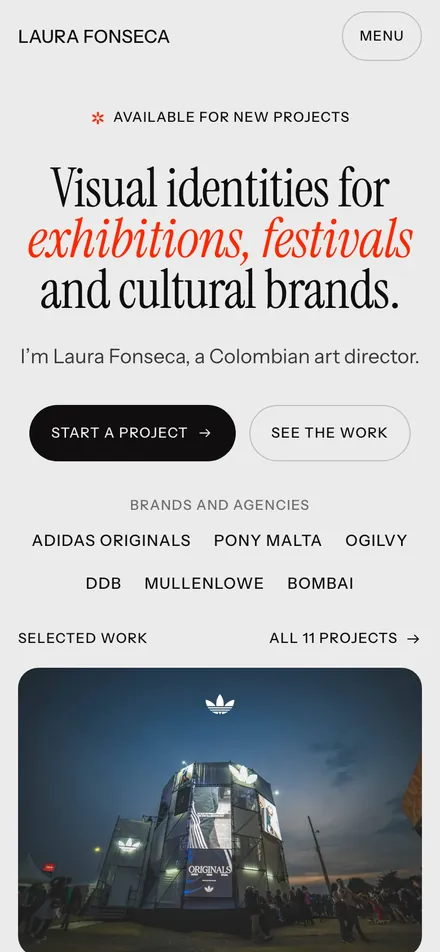
Laura Fonseca is a Colombian art director with almost a decade at Ogilvy, DDB, MullenLowe and Bombai, and work for adidas Originals and Guggenheim Abu Dhabi. Her portfolio looked beautiful. It just was not bringing in work.
What We Found
Before designing anything, we visited her site the way a stranger would, logged out. The “Get in touch” button sent visitors to the site builder's login page, which she never saw because she was always logged in. Her email link pointed to the shop that sold the template. And the whole site was set to stay hidden from Google.
None of it showed from the inside. To Laura the site looked finished. To a gallery or festival looking for an art director, there was no way to reach her and no way to find her in the first place.
What We Built
A 17-page site positioned where her best work is: identities for exhibitions, festivals and cultural brands. The homepage says that in one line, then shows the names she has worked for, each one opening its project.
Every project has its own page, every page has one clear next step, and every project starts with a free 20-minute call and a fixed proposal.
Every address from the old site now forwards to its new page, so nothing she has shared over the years breaks. Laura signed off the design on first look.
A website as warm as the table at Dubai's only Venezuelan supper club
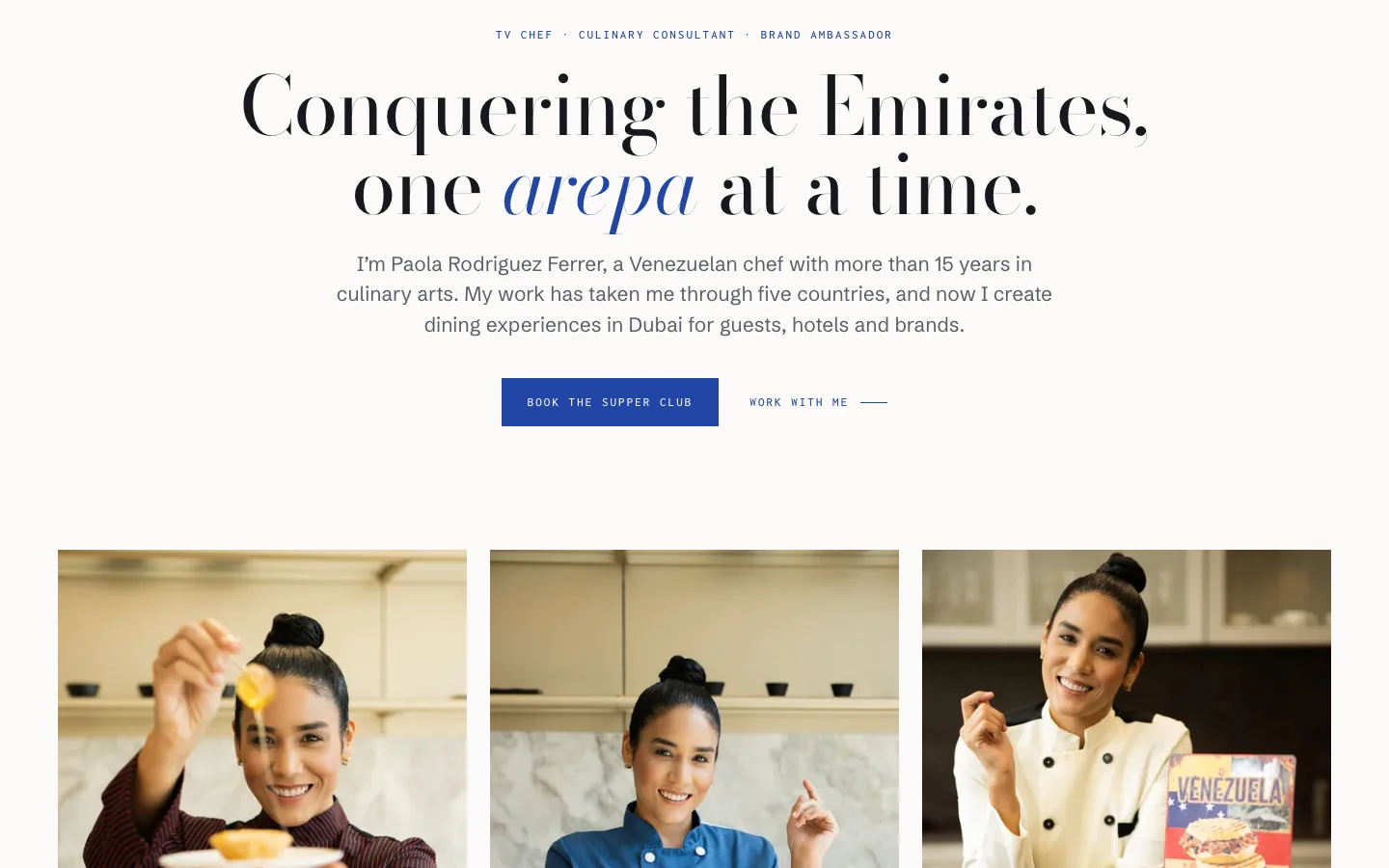
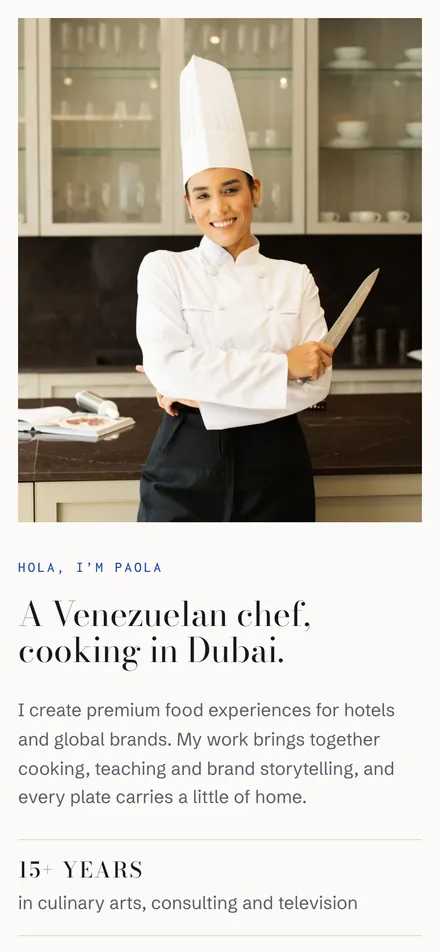
Paola Rodriguez Ferrer is a Venezuelan chef in Dubai: a TV chef, culinary consultant and brand ambassador, nominated for Chef of the Year Dubai 2025, and the host of Maracas N’ Caracas, the only Venezuelan supper club in the UAE. Her food tells stories. Her website had to as well.
Where We Started
Paola sent us her brief, her photos, a phone video from one of her Arepa Lab classes, and two websites whose look she loved: a Brooklyn restaurant and a fellow chef in Dubai.
So we built a design system before a single page: one light paper ground, one cobalt blue taken from her supper club napkins and her chef's jacket, a fine Bodoni serif, and her services set like a restaurant menu. The only ornaments are the eight stars of the Venezuelan flag and El Ávila, the mountain above Caracas, drawn in lines.
What We Built
Eight pages: her story, the supper club, private events and classes, consulting for hotels, brands and media, education, and contact. Every fact on them comes from her own words.
The home page opens on her own kitchen footage, full screen: a wide cut of the food for laptops, and her vertical footage for phones, which opens on Paola at the stove. Every booking button opens WhatsApp with a hello already typed.
Ready to see results like these?
If your business runs on customer communication, every missed message is missed revenue. Let us show you what changes when nothing gets missed.
Or hear it for yourself: talk to our live WhatsApp demo, or put one on your own number with a free 14-day trial.