There is a habit at almost every gym front desk we have worked with, and nobody thinks of it as a problem. A prospect calls at 7:40pm. The coordinator is mid-way through checking in a class of fourteen, so the call rings out. Twenty minutes later she sees the missed call, dials back, gets voicemail, and writes the number on a sticky note. The sticky note lives on the monitor for two days. Then it is gone.
Nobody logs that. It does not appear in the CRM, the P&L, or the weekly manager report. It looks like nothing. Multiply it across three locations, six evenings a week, and it becomes the largest line of unrecorded revenue leakage in a growing fitness business. That is the real question behind the AI receptionist versus in-house coordinator debate. Not who is friendlier. Who is actually present at the moment someone decides to join a gym.
Two readers can stop reading here
If you run one studio, under 200 members, and the owner-operator answers the phone personally because she also teaches four classes a week and knows every member by name, do not hire anyone and do not buy an AI phone system. Put a WhatsApp Business number in your Instagram bio with a greeting and an away message, and get back to work. Your constraint is your own hours, and neither option fixes that.
If you run six or more locations with a central sales team already in place, you are not choosing between the two at all. You are choosing which layer of your front line is automated and which stays human, and the answer is that first-touch qualification and after-hours response should be automated within the month, because your coordinators are currently working as a switchboard instead of working as closers.
Everyone in the middle, two to five locations, growing, one or two coordinators per site: this article is for you.
What the comparison actually comes down to
For a growing gym chain, an AI receptionist handles first-touch enquiries on phone and WhatsApp around the clock at $200 to $1,500 per month per location, per Replify's gym buyer's guide, while an in-house coordinator costs $3,500 to $5,000 per month all-in and is present for roughly one shift a day. The AI wins on cost, coverage and consistency of capture. The human wins on objection handling, tour conversion and any conversation with a member who is upset. For most multi-location studios the correct configuration is AI on first touch and after-hours, humans on qualified prospects and retention.
That is the short answer. The rest of this compares the two across the four dimensions where they genuinely diverge, because on most of the others (both can take a booking, both can quote a price) the difference is noise.
The cost ledger, written out honestly
Let us put the numbers on one page, which is something most gym owners we meet have never done.
The coordinator side. Overbooked's comparison puts a human receptionist at $3,500 to $5,000 per month including salary, benefits and taxes. That buys you one person covering one shift at one site. A gym that opens early and closes late needs more than one shift, and a chain needs that multiplied by location, which is where the number stops being a salary line and starts being a staffing model.
The AI side. AgentZap's gym comparison puts annual AI reception at $2,400 to $9,600, which it frames as 85 to 95 percent savings against equivalent human coverage. Entry tools sit lower; RingEden lists options starting at $49 monthly that are functional if all you need is call capture.
The line nobody records. The sticky-note calls. SouthArc Digital works the arithmetic for a boutique studio at $180 per month membership with 75.9 percent average annual retention, a figure it attributes to the Association of Fitness Studios benchmark, and arrives at roughly $2,160 per recovered member in first-year revenue. One recovered member a month, and a $99 tier has covered itself many times over.
Now the honest part. We cannot tell you how many enquiries your gym drops, and neither can any vendor, because dropped enquiries leave no record anywhere. That is exactly what makes them expensive. It is a rare day when we meet an operator who can produce a number for after-hours missed calls, and the ones who switch on call logging for the first time tend to go quiet for a while after they read the report. If you want the framework for deciding when this spend pays back, we set out the break-even mathematics separately.
Coverage: the terminal never closes
A container terminal does not run a nine-to-six gate. Ships arrive on tide and schedule, and a berth that only accepts boxes when the day shift is in loses the ship to the next port down the coast. Gym enquiries arrive the same way: late evening after a bad weigh-in, Friday afternoon when someone finally decides, 11pm when a competitor's ad lands on their feed. Your coordinator works a shift. Your enquiries do not.
This is where the two options stop being comparable on the same axis. Da Vinci Virtual's breakdown says it plainly: AI does not sleep, take lunch breaks or go on vacation. A coordinator covers a shift, needs leave, gets sick, and has a queue of members standing physically at the desk who will always, correctly, take priority over a ringing phone. That is not a performance failing on her part. One person cannot be in two places.
The consequence for a multi-site chain is specific: your best-converting enquiry window, evenings and weekends, is exactly the window where the desk is busiest with in-person traffic. AI covers that overlap. Speed of first reply matters just as much as being open, and we have written about how response times move pipeline across industries; fitness is one of the sharper cases, because the decision to join a gym is emotional and short-lived.
Member experience: where the human earns the salary
The AI is not better at the conversation. A prospect who says she is nervous about walking into a weights room needs a person, and a member cancelling over a billing dispute needs a person with the authority to fix it. Nextiva's guidance matches what we see in deployments: use AI for qualification and pass qualified leads to employees to close. In the same piece, a fitness studio franchise owner using Nextiva's AI increased weekly lead count by 40 percent, which tells you exactly where the gain sits: volume of captured leads, not quality of closing.
Two experience details decide whether members notice the machine or not.
The first is language. In a member base that speaks more than one language, detection should happen automatically from the first message or the first few words of a call, never as a menu the caller has to work through. Forcing someone to opt in to their own language is a friction failure before the conversation has started, and it is one of the most common things we remove from setups we inherit.
The second is handover. The AI has to know what it does not know and pass the conversation to a named human with the full transcript attached. Whippy's description of a voice AI receptionist for fitness centres covers the core functions well (answering calls, booking, qualifying leads), but handover is the part buyers underspecify and then regret. A prospect who has to repeat her story twice has already concluded you are disorganised.

Consent belongs in the intake form, not in a later cleanup
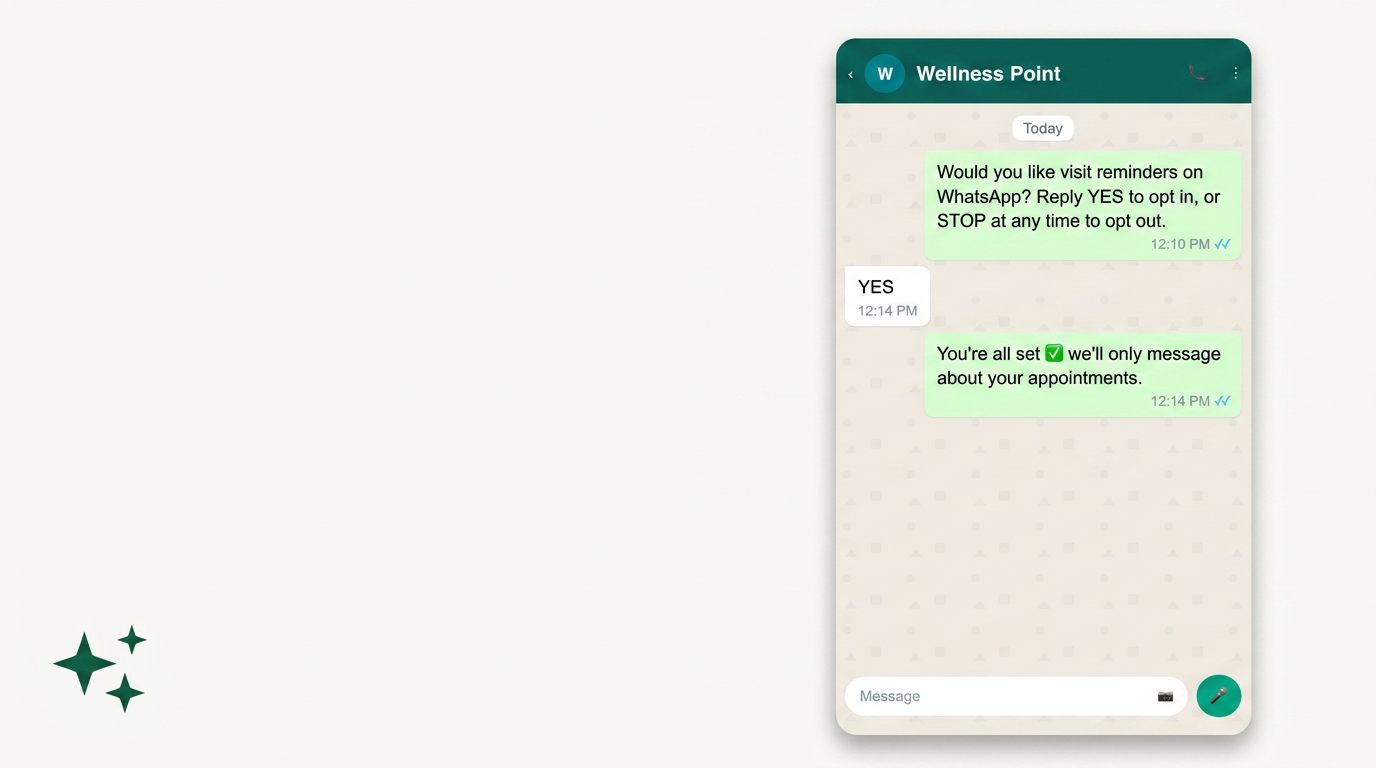
If WhatsApp is part of your front line, Meta requires businesses to hold opt-in before messaging members on the platform, and there is no configuration that designs around it. The practical fix is boring and effective: capture consent at the same moment you capture the phone number, on the trial form, at the tour booking, at the class sign-up, with the wording stored against the record. Retrofitting consent onto a member list you already hold is a project nobody enjoys, and it is far slower than doing it right at intake.
Data quality: the dimension buyers ignore until it bites
This is where a growing chain gets hurt, and the two options are not equal. A coordinator entering leads by hand produces inconsistent records: the same prospect as three entries, phone numbers with and without country codes, a status field where "Interested" means four different things depending on who typed it. An AI receptionist writing directly into your member database produces consistent records by default, because it writes to one schema every time.
That matters more than it sounds. Most AI implementations that disappoint do so because of dirty data rather than weak models: a system reading inconsistent records will make confidently wrong recommendations, route the wrong follow-up, and offer a renewal to someone who cancelled last month. Think of it the way a terminal operator thinks about a mis-keyed box reference. The container is physically in the yard, sitting in plain sight, and completely invisible to the system that is supposed to move it. Half the "our automation does not work" conversations we have are that exact situation: the lead is in the building, just not in a format anything can read. If your database is already messy, clean it before you automate on top of it, or start with our data blindspot guide.
The verdict by situation
One location, under 200 members, owner-operated. Neither hire nor buy a full system. Use WhatsApp Business with a greeting and away message, capture opt-in on your trial form, and answer personally. Your bottleneck is your own time.
Two to three locations, one coordinator per site. Buy the AI layer first and delay hiring the second coordinator. Put the AI on all after-hours calls and on WhatsApp first response; keep the coordinators you have on tours, closes and retention calls. This is where the gap between $200 to $1,500 per month per location and a $3,500 to $5,000 monthly salary produces the largest return, because you are buying coverage you never had rather than replacing a person who is already converting.
Four to six locations with per-site sales targets. Run both deliberately. AI takes first touch and qualification chain-wide, a central human sales team takes qualified prospects, and site coordinators come off the phone entirely so they can work the floor. The saving here is coordinator attention redirected to in-person conversion, not headcount removed.
Any size with a broken member database. Fix the data first. Automating on top of duplicate members and inconsistent statuses will produce faster wrong answers, and the AI will get blamed for what is really a filing problem.
Premium single site where the relationship is the product. Keep the human as your primary front line and use AI strictly for after-hours capture and callback booking. A member paying a premium rate who reaches a bot at 10am on a Tuesday will notice, and will say so.
Common questions, answered
How much does an AI receptionist cost for a gym?
AI for gyms typically runs $200 to $1,500 or more per month per location depending on features, with entry-level call-capture tools starting around $49 per month. Annual costs for complete AI reception generally land between $2,400 and $9,600.
Can an AI receptionist replace my front desk staff entirely?
No, and we advise against trying. AI handles first-touch capture, qualification, booking and after-hours coverage well, while tours, objection handling, cancellations and upset members still need a person with authority to make decisions.
Do I need member consent before messaging on WhatsApp?
Yes. Meta requires businesses to hold opt-in before messaging people on WhatsApp, so capture that consent at the same point you capture the phone number, on the trial form or the class booking.
Will an AI receptionist handle members who speak different languages?
A properly configured one detects the language of the incoming message or call automatically and replies in it. If a vendor asks your members to choose a language from a menu first, that is a setup weakness rather than a technical limit.
How quickly does an AI receptionist pay for itself in a fitness studio?
For a boutique studio at $180 per month membership, SouthArc Digital calculates one recovered member at roughly $2,160 in first-year revenue, which covers an entry tier many times over. Real payback depends on how many enquiries you are currently dropping after hours, which is why call logging should come before any purchase.
Where to start
This week, switch on call logging and after-hours missed-call reporting at every site, then read the number at the end of seven days; that single report settles this argument faster than any comparison article can. When you want the AI layer built, connected to your member database and opt-in compliant from the first day, Learnmind is an AI customer-communication consultancy in Dubai and fitness operators are among the businesses we install this for most weeks.