Warmth converts leads. Cuteness kills them. That's the uncomfortable split at the center of most failed WhatsApp automation projects: companies confuse the two, build a chatbot with an emoji-heavy personality and a name like "Ziggy," and then wonder why prospects go quiet after the second message. A lead who has just asked about pricing for a commercial insurance policy, a dental implant, or a warehouse racking system does not want banter. They want to feel like a competent human is on the other end of the line, even when it's software doing the first few exchanges.
This distinction matters more in 2026 than it did two years ago, because WhatsApp Business API has matured into a genuine sales channel rather than a support add-on. Cloud API is now the default infrastructure for any business running this at scale — it's what Meta pushes, what most CRM and CPaaS partners build against, and what keeps a business compliant as message volume grows. Chatbots layered with AI agents and personalized message sequences are being used to run drip campaigns and structured follow-up, and the businesses doing this well are reporting conversion rates on qualified leads that can reach into the 60% range. That number should be read as a ceiling achieved by teams who've built the system properly, not a baseline. Most businesses running WhatsApp automation today are nowhere near it, and the gap is almost always structural, not technical.
Why WhatsApp Outperforms Email and SMS for Lead Follow-Up
The mechanics are simple enough to state plainly: WhatsApp messages get opened. Open rates on the platform sit well above email, and unlike SMS, WhatsApp supports rich media, buttons, catalogs, and multi-turn conversation without the character-count anxiety of a text message. A lead who fills out a form on a landing page for a solar installation quote or a private tutoring service is far more likely to respond to a WhatsApp message within the hour than to an email sitting in a promotions tab.
The speed-to-lead effect compounds this. Automated WhatsApp responses can fire within seconds of form submission, and the businesses that treat that first minute as sacred — no delays, no "someone will be in touch" — see materially better engagement than those who let leads sit in a queue overnight. This isn't a new insight, but WhatsApp makes it easier to act on because the infrastructure for instant, personalized response is now standard rather than exotic.
Setting Up the Foundation: Cloud API, Not the App
Any business serious about lead conversion at volume should be on WhatsApp Business Cloud API, not the free WhatsApp Business App. The app is fine for a single shopkeeper in Lagos or a solo consultant in Warsaw fielding a dozen conversations a day manually. It breaks down the moment a business needs multiple agents, automated triggers, CRM integration, or anything resembling a sequence.
Cloud API, hosted through Meta or a Business Solution Provider, gives a business the scaffolding for automation: webhooks that fire on inbound messages, template message approval for outbound campaigns, and the throughput to handle hundreds or thousands of conversations without manual bottlenecks. It also keeps a business inside Meta's compliance framework, which matters increasingly as regulators in the EU, India, and Brazil tighten rules around unsolicited commercial messaging. A business that builds its lead funnel on the app today is building on a foundation it will have to rip out later.
Designing the Conversation Before Designing the Bot
The single biggest mistake in WhatsApp automation projects is starting with the software instead of the conversation. Teams open a chatbot builder, start dragging in decision trees, and only later ask what the ideal exchange with a real prospect should sound like. That's backwards.
The better starting point is a written script — the kind a good salesperson would actually say — mapped against the most common paths a lead takes. For a business selling a mid-range B2B software product, that might mean: acknowledge the inquiry, ask one qualifying question (company size, use case, timeline), route based on the answer, then either hand off to a human or continue with tailored information. For a clinic or med-spa, it might mean confirming the service of interest, checking availability, and offering a booking link — without ever pretending the bot is a person, but also without larding the exchange with exclamation points and mascot energy.
Once that script exists, building the actual automation — whether through Meta's own flow builder, a platform like Twilio or 360dialog, or a vertical AI agent tool — becomes a translation exercise rather than a creative one. This ordering also makes it far easier to spot where AI-generated responses are appropriate (open-ended questions, product detail) versus where a fixed, tested response is safer (pricing, compliance-sensitive claims, anything involving guarantees).
Tone: The Case Against Cute
There's a reasonable argument for playful branding in certain consumer categories — a novelty snack brand or a youth-focused app might get away with a chatbot that leans into slang and emoji. But for the large majority of businesses using WhatsApp for lead generation — professional services, healthcare, real estate, financial products, home services, B2B software — the chatbot's tone should be professional-warm, not quirky-cute.
Professional-warm means the bot speaks in full, clear sentences, uses the person's name when it's known, and avoids over-familiarity before trust has been established. It acknowledges when it's a bot ("I can help you get started, and I'll bring in a member of the team as soon as you're ready to talk specifics") rather than pretending otherwise, which oddly builds more trust than a bot straining to pass as human. Quirky-cute, by contrast — heavy emoji use, jokey filler, exclamation-point enthusiasm about a plumbing quote — signals to the prospect that the business either doesn't take the inquiry seriously or is papering over a lack of real support with personality. For anything involving money, health, or a considered purchase, that reads as a red flag rather than charm.
Building Follow-Up Sequences That Don't Feel Like Nagging
Drip sequences are where most of the conversion lift actually happens, because most leads don't convert on the first exchange. A prospect who asks about a service, gets an answer, and then goes quiet isn't necessarily uninterested — they're often just busy, comparing options, or waiting on approval from someone else.
A well-built follow-up sequence respects that reality instead of fighting it. Rather than sending the same generic "just checking in!" message three times over a week, effective sequences vary the content and the value on offer:
- The first follow-up (typically within a day) adds new information relevant to what the lead asked about, rather than just re-asking if they're still interested.
- The second follow-up, a few days later, might include social proof — a case study, a review, a specific outcome from a comparable customer — rather than more sales pressure.
- A later message can lower the commitment threshold: instead of "ready to book a call," offer something smaller, like a downloadable comparison sheet or a quick yes/no question that's easy to answer from a phone.
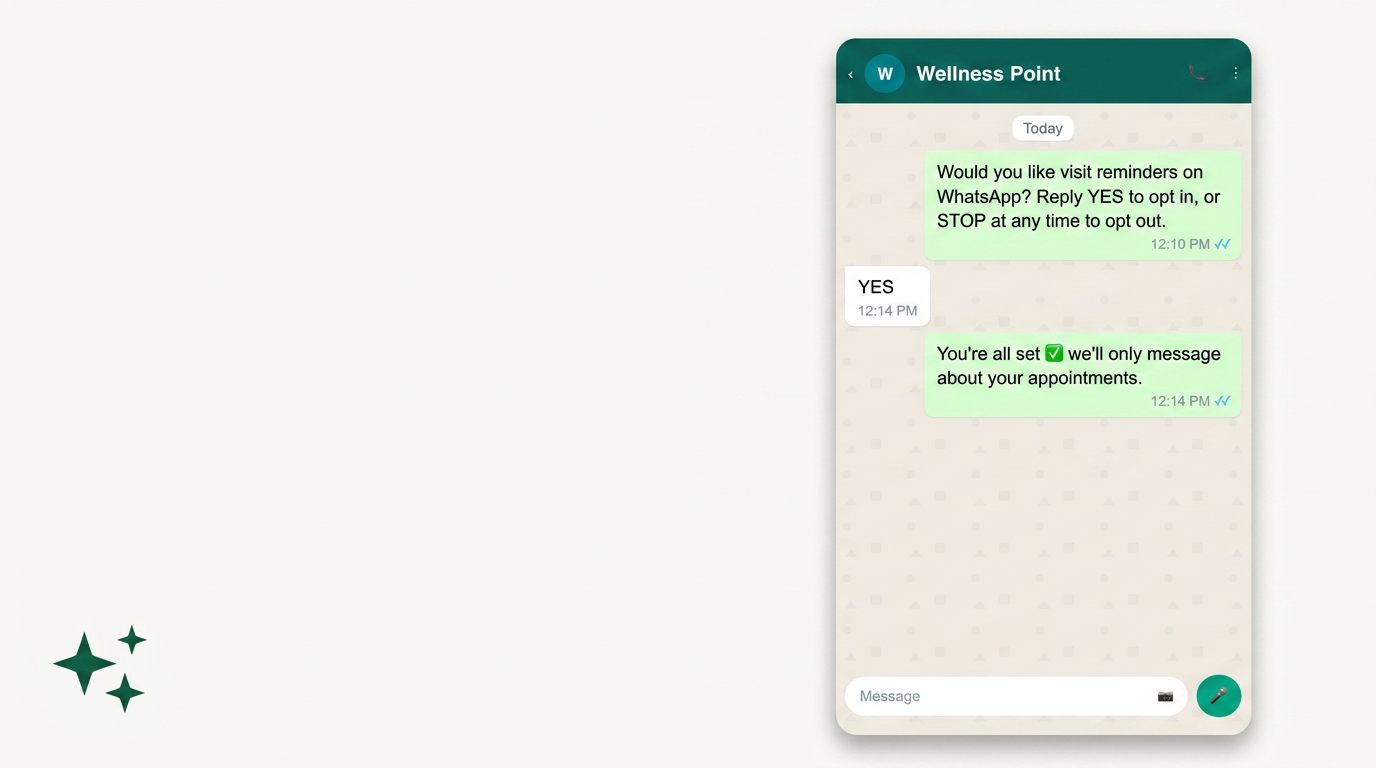
- The final message in a sequence should give the lead a clean, low-pressure way to opt out ("No problem if now isn't the right time — just let me know and I'll stop following up") rather than trailing off or continuing indefinitely.
The cadence matters as much as the content. Message too frequently and a business trains leads to mute the conversation; space messages too far apart and the lead has already bought from a competitor by the time the second follow-up lands. There's no universal cadence that works across industries — a lead on a high-consideration B2B purchase can tolerate a longer sequence over several weeks, while a lead inquiring about a same-day service call needs a much tighter loop, often measured in hours.
Where AI Agents Genuinely Help — and Where They Don't
AI-powered agents can now handle a meaningful share of qualification and routing without human involvement, and that's a real shift from the rule-based chatbots most businesses were using a few years ago. An AI agent can read a lead's free-text response, extract intent even when the phrasing is unexpected, and route or respond appropriately — something a rigid decision tree simply can't do.
Where this breaks down is when businesses let the AI agent freelance on anything with legal, financial, or medical weight. A generative response that improvises a pricing figure, a delivery guarantee, or a treatment claim can create real liability. The more defensible pattern is to let AI handle the open-ended, low-risk parts of a conversation — understanding what a prospect wants, answering general questions, keeping the conversation alive — while routing anything specific or sensitive to a fixed, pre-approved response or a human. This isn't a limitation to apologize for; it's simply sound risk management, and most prospects don't notice or mind the handoff as long as it's smooth.
Measuring the Right Thing
A lot of businesses measure WhatsApp automation by message volume or response speed, which are useful operational metrics but say nothing about whether the system is actually converting leads. The metric that matters is the conversion rate from first WhatsApp contact to whatever the business defines as a won lead — a booked appointment, a signed contract, a completed purchase — broken out by which stage of the sequence the lead converted at.
That breakdown reveals where the sequence is actually earning its keep. If most conversions happen on the first automated response and almost none happen in the follow-up sequence, that's a signal the drip campaign needs rework, not more volume. If conversions cluster heavily around the human handoff point, that suggests the automation is doing its job of warming leads but the handoff itself might be delayed or clumsy. Tracking this by stage, rather than as one blended number, is what separates a business that's optimizing the system from one that's just running it.
Getting Started Without Overbuilding
Businesses new to this shouldn't start by building an elaborate multi-branch AI agent. A simpler, well-scripted flow — instant acknowledgment, one qualifying question, a clear next step, and a three-to-five message follow-up sequence — will outperform an ambitious but poorly tuned AI system in the first few months. The sophistication can be added once there's real conversation data to train against and a clear sense of where leads actually drop off. Most of the conversion gains available to a business in year one come from getting response speed, tone, and follow-up cadence right — not from the cleverness of the underlying model.