The fork usually arrives in the same shape. A clinic manager, a salon owner, or an agency principal sits down with a hiring decision: add another coordinator at the front desk to handle the message pile, or automate the first response and hold the headcount where it is. The salary is knowable to the dirham. The cost of doing nothing is not, which is why doing nothing wins by default.
That comparison is rigged. The real question is not "one salary versus one software subscription". It is one salary versus the revenue currently leaking out of the reply gap, and until you can name the leaks you cannot weigh the decision at all. So here they are, seven of them, ordered by impact.
The cost of slow customer response times is the compounding revenue loss from leads that go to a faster competitor, bookings that decay before confirmation, and existing customers who quietly stop rebooking after one bad wait. Slow response is projected to cost companies $3 trillion globally in lost revenue by 2026, with $75 billion of that lost in US leads alone each year. GreetNow's response time statistics put the mechanism at conversation level: 57% of customers abandon a live chat once the wait passes three minutes, and satisfaction falls 7% for every additional minute.
The first leak below is first because it is the only one where the money never enters your building at all. Nothing in your reporting will ever tell you it went missing.
The enquiry that goes to whoever answers first
A person searching for a dental hygienist in Jumeirah on a Tuesday evening does not message one clinic. They message three or four, in the same two minutes, off the same map results. The clinic that replies first is not competing on price, credentials or fit-out. It is competing on being awake.
This leak is invisible because the lead never became a lead. Your CRM has no record of it. Your receptionist has no memory of it. The message arrived at 9:40pm, sat unread until 9:15 the next morning, and by then the person had a confirmed appointment somewhere else and never bothered to reply. The $75 billion in annual US lead loss is made almost entirely of enquiries like that one, and none of it shows on a dashboard.
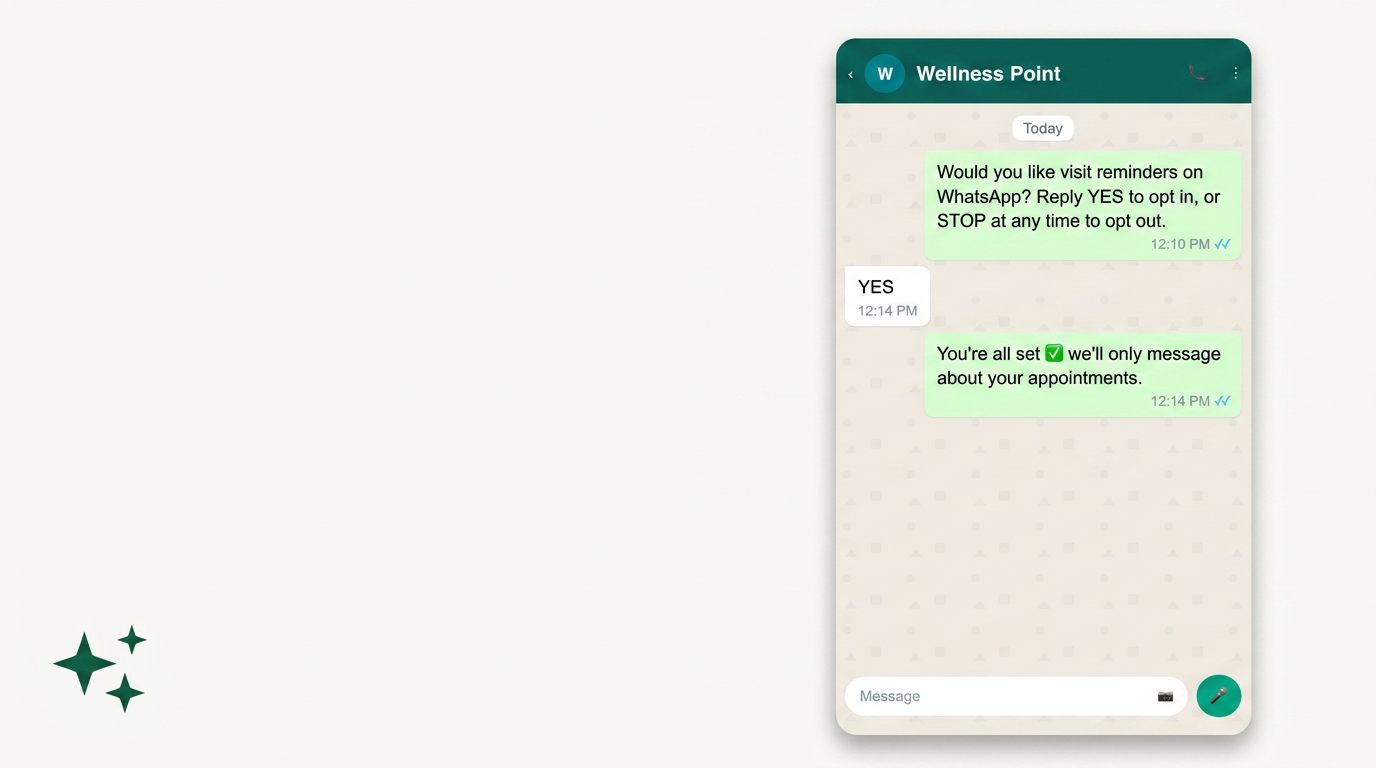
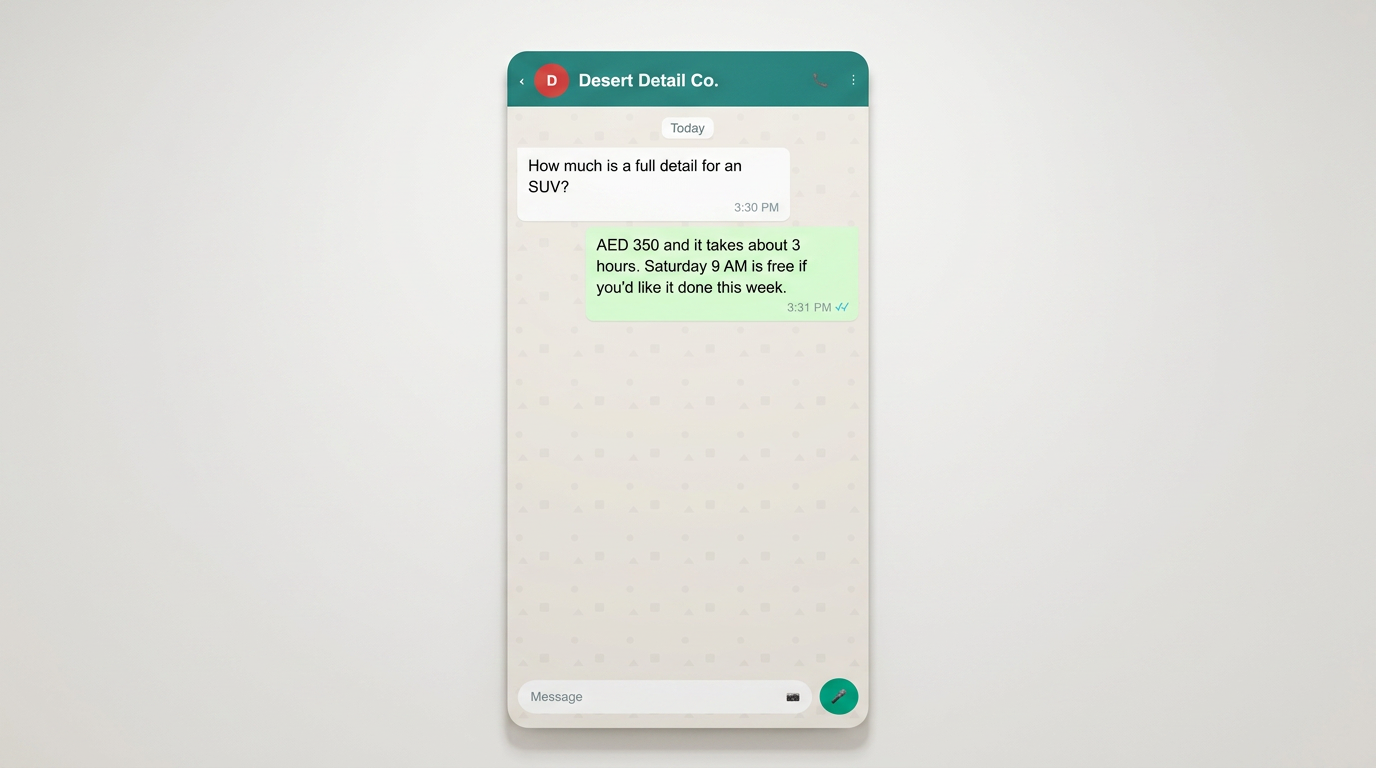
The fix is unglamorous, and it is not another person. It is an automated first response on the channel the enquiry arrived on, inside seconds, doing three things: confirming the message landed, answering the two questions nearly everyone asks (is there availability, what does it cost), and offering a bookable slot. We have written before about how service businesses turn off-hours into revenue, and this is the mechanism underneath it. An evening enquiry is not a lower-quality lead. It is the same lead, arriving at the hour your competitor is also asleep.
The ledger: what the reply gap costs, line by line
Here is the accounting, run the way a bookkeeper would run it rather than the way a marketer would. Some lines carry published figures. Some do not, and where they do not we say so instead of inventing one.
Staff hours against repeat questions. Pull last week's front-desk messages and sort them. Opening hours. Price of the most common service. Do you take walk-ins. Where do I park. Is the Thursday slot free. Each of those minutes is billed at a coordinator's hourly rate and produces nothing new, because the answer was already published on your website and your Google profile. Most operators have never costed this line. It is a rare day when we meet one who has.
Abandonment inside the conversation. Different from the enquiry that never arrived: this is the one that arrived, waited, and left. GreetNow places the abandonment threshold at three minutes of chat wait, with 57% walking away. If your team is at the chair, in consultation, or on a viewing, three minutes is not a demanding target to miss.
Churn on the existing book. The expensive line. Oscar Chat's analysis of bad customer service puts churn losses at $98 billion across the US and UK combined. A regular client who stops rebooking after being ignored twice sends no complaint. They simply stop appearing in the calendar, and their slot gets refilled by someone you paid advertising money to find.
The replacement cost of that churn. From the same Oscar Chat data, customer acquisition cost is rising 28% year over year for brands with weak service. The leak doubles: you lose the margin on the client who left, then pay a climbing price to replace them.
Reputation drag. One negative review costs the average brand 30 new customers, again per Oscar Chat. Slow replies generate a specific flavour of review, the one that says nobody ever got back to me, and it does its damage quietly and permanently on a page you do not control.
Behavioural loss across the whole base. 47% of consumers cut their spending after a negative experience and 73% move to a competitor. That is not a churn event you can point at. It is a slow reduction in basket size and visit frequency spread across everyone who ever waited too long.
Total those lines against the salary you were weighing. That is the actual comparison, and it rarely lands where owners expect.
Quotes that go cold before anyone reads them
In agencies and brokerages the leak sits between the enquiry and the document. Someone asks for a quote on Sunday. The person who prepares quotes is back Monday, gets to it Tuesday, sends it Wednesday. By Wednesday the buyer holds two competing numbers and an emotional preference for whoever moved first.
Response speed gets read as a preview of how you will behave once money changes hands. Timetoreply's analysis of response time notes that frustration builds when support is hard to reach or customers have to repeat the same problem, and a delayed quote manages both at once: it makes you hard to reach and it forces the buyer to chase you. Faster typing does not solve this. Separating acknowledgement from delivery does. An automated reply confirms the request, collects the missing details the quote needs, and commits to a specific time the document will land. The buyer stops shopping while they wait, because the wait now has an end point.
Confirmation friction that lets a yes decay
A prospect says yes. Then they wait for the slot, the location, the deposit link. Every hour in that gap is an hour in which a yes can soften into a maybe and then into silence, and nobody records a booking that was never quite made.
Take an illustrative case: a salon colour appointment confirmed by the customer at 8pm, with the salon's confirmation going out at 10am the next morning. Fourteen hours in which a competitor with instant confirmation can offer the same customer a Saturday slot. We are not going to attach a conversion percentage to that, because no published figure in front of us measures it and we will not manufacture one. What we can say is that the mechanism is obvious once you watch a booking calendar fill in real time versus fill overnight.
This is a straightforward automation problem. The moment the customer says yes, the system issues the slot, the location pin, the deposit link and the cancellation policy. No human is in the loop for confirmations. Humans are in the loop for exceptions.
Support delays that convert a small problem into a refund
A customer with a minor complaint who gets an answer in ten minutes usually keeps their booking. The same customer, ignored for a day, escalates. The ask moves from can you fix this to I want my money back, and the tone hardens, because now there are two grievances stacked: the original issue and the silence that followed it.
EmailAnalytics' response time standards state the rule directly: missing your response standard carries real costs in lost revenue, churn and damaged word-of-mouth, and the penalty grows the longer the delay runs. Operators feel this leak more than any other and measure it least, because refunds get filed under difficult customer rather than under we did not reply.
Caution here, because this is precisely where automation gets misused. An unhappy customer routed into a chatbot that cannot help and cannot escalate produces a worse outcome than silence. We wrote a full recovery guide on AI service that damages trust for that reason. On a complaint, the automation has one job: acknowledge within seconds, classify the issue, and place it in front of a named human with a stated timeframe. Nothing more.
Repeat customers who stop rebooking without telling you
Churn in a service business is passive. Nobody formally cancels a relationship with a salon. They book somewhere closer to their new office and never mention it. Slow response is a leading cause because loyal customers have the least tolerance for it: they have already paid you several times, and being made to wait reads as being taken for granted.
The CX Agency analysis of slow support ties slow response times directly to increased churn, and describes the mechanism plainly: delay hands the customer an open moment in which to explore competitive options. You do not need to be bad at your job. You need only to be slow at the moment someone was already half-considering a change.
The counter is a rebooking rhythm that runs without anyone remembering to run it: a message at the interval that matches the service, six weeks for colour, six months for a hygiene visit, three months for a follow-up consultation, sent automatically with a one-tap slot. Of everything on this list, that loop is the one we most often recommend building first, because it works on customers who have already proven they will pay.
Burnt-out front desks and the turnover bill behind them
An overloaded inbox harms the person answering it as much as the person waiting. A coordinator working permanently behind a backlog is measured against a target they cannot hit, apologising for delays they did not cause, and absorbing the irritation of everyone who waited. Poor service environments drive employee turnover, and turnover in a front-desk role costs recruitment, training, and a stretch of degraded service while the replacement learns which questions matter.
Think of a printing press with a misaligned plate. Running the press faster does not produce more good sheets; it produces more spoiled ones, and the operator spends the whole shift pulling them off the stack. Adding a second person to a broken response process works the same way. You raise throughput on a process that was misaligned to begin with. Align the plate first: route the repetitive questions to an automated answer, and leave the human the work that needs judgement.
Acquisition spend buying leads you will not answer
Last on impact, easiest to see, and once seen it cannot be unseen. You pay for Google and Instagram traffic. That traffic sends a message. The message waits. You bought a lead and then threw away the receipt.
The arithmetic worsens with time, because acquisition costs climb 28% year over year for businesses with weak service reputations, per Oscar Chat's figures. The price of each replacement lead rises while your handling capacity stays flat. Marketing spend is the most scrutinised line in most service businesses and response capacity is the least scrutinised, which is how an operation ends up paying more each quarter to generate enquiries it structurally cannot answer.
How we weigh the hire-or-automate fork
When a client puts this decision in front of us, we start with the leak profile, not the headcount. If the inbox is dominated by repeat questions, booking confirmations and rebooking prompts, that work should be bought and customised rather than staffed or custom-built. Build custom only when the workflow itself is your competitive advantage. Your team's time is the scarcest resource you own, and spending it typing opening hours is the most expensive possible use of it.
The second principle we hold firmly: the automated layer sounds professional and warm, never quirky. People messaging a clinic are frequently anxious. People messaging a brokerage are frequently about to commit a large sum. A bot with jokes in it undermines the credibility of everything standing behind it. Clear, calm, competent, then out of the way. That distinction separates an automation-first setup that works from one that generates the complaints we get called in to repair, a theme we cover at length in manual systems bleeding revenue.
Learnmind builds WhatsApp and AI phone systems for clinics, salons and agencies from our base in Dubai, and the pattern holds across all three sectors: an automated first reply within seconds is worth more than a better human reply twenty minutes later, because the customer's decision window has usually shut by then.
Quick answers
How much do slow response times cost businesses?
Slow response is projected to cost companies $3 trillion globally in lost revenue by 2026, including roughly $75 billion a year in lost US leads. For an individual service business the cost concentrates in unanswered enquiries, abandoned conversations, and clients who quietly stop rebooking.
What is an acceptable first response time on WhatsApp?
Seconds, not minutes, for the acknowledgement. GreetNow's research places the live chat abandonment threshold at three minutes, with 57% of customers leaving after that, and WhatsApp carries the same expectation because people use it for personal messaging all day.
Does slow response really cause customer churn?
Yes. CX Agency's analysis links slow response times directly to increased churn, and the wider research on customer response times finds that 47% of consumers cut spending after a negative experience while 73% switch to a competitor.
Should I hire a receptionist or automate first responses?
Automate the repetitive layer first, then decide whether you still need the hire. One person cannot cover evenings, weekends and several simultaneous conversations, and in clinics and salons a large share of inbound messages are questions with one correct published answer.
Will customers be annoyed by an automated reply?
Not if it is fast, accurate and clearly signposts the route to a human. Customers object to automation that traps them, not to automation that answers their question in five seconds and books their slot.
We will map your response times channel by channel, put a dirham figure against each of these seven leaks in your business, and show you which ones close with automation and which still need a person.