
Voice note appointment reminders on WhatsApp: cutting no-shows without sounding like a robot
A voice note works best as the second message of an appointment reminder, never the first. On WhatsApp, a reminder to someone who has not written in the last 24 hours must start as an approved template, which cannot carry audio. So the reminder opens with short text: the time, the address and one-tap buttons. When the customer taps, a warm voice note can follow inside the conversation that the tap opens. This page covers timing, wording, October 2026 costs and the research, from Learnmind.ai, a Dubai builder of WhatsApp AI agents.

The short answer
Reminders work, and the evidence is for text and calls. In a Cochrane review, attendance was 78.6% with text reminders against 67.8% with none. We found no trial of WhatsApp voice notes as reminders.
The first message is text, by rule. Outside the 24-hour customer service window only templates can be sent, and Meta lists no audio option for templates. The voice note follows the customer's reply.
The details always go in writing. Date, time, address and anything the customer must bring stay in text, even when the voice note repeats them. The voice note carries the warmth.
Every reminder needs a way out. Confirm, change time and cancel, as buttons. A cancellation three days ahead can be refilled. A no-show cannot.
The timing is a design choice, not a proven formula. One meta-analysis found no difference between reminders sent 24, 48 or 72 hours ahead. Another found several reminders beat one. That is why we use 72, 24 and 2 hours.
Each reminder template costs USD 0.0157 in the UAE. That is Meta's utility rate for October 2026. Add a promotion and the same message becomes marketing, at USD 0.0576.
What the research says about reminders and no-shows
The research on appointment reminders comes mostly from healthcare, and almost entirely concerns SMS and phone calls. Below are the main reviews and the Gulf studies we found. The right-hand column is our reading, not the authors'.
| Study | Data | What it found | What it means for a reminder |
|---|---|---|---|
| Gurol-Urganci and others, Cochrane review, 2013 | 8 randomised trials, 6,615 people | Text reminders raised attendance against no reminder (risk ratio 1.14). Attendance was 67.8% with no reminder, 78.6% with text and 80.3% with a phone call. Text and calls had a similar effect. | Any reminder beats silence. In two studies, text cost 55% and 65% less per attendance than a call. |
| Guy and others, Health Services Research, 2012 | 18 reports, 8 of them randomised trials | The pooled effect from the trials was 1.48. There was no significant difference by timing: 24, 48, or 72 or more hours before. | Sending a reminder matters more than the exact hour. |
| Robotham and others, BMJ Open, 2016 | 26 articles; 21 in the main analysis, from Europe, Asia, Africa, Australia and America | Notified patients were 23% more likely to attend (67% against 54%) and 25% less likely to no-show (15% against 21%). Multiple notifications beat a single one for attendance. | Send more than one reminder. |
| Dantas and others, Health Policy, 2018 | 105 studies, all medical specialties | The average no-show rate was about 23%: highest in Africa at 43.0%, lowest in Oceania at 13.2%. The most common determinants were long lead time and a history of no-shows. | Bookings made far ahead, and people who have missed before, need the full sequence. |
| Werner and others, BMC Health Services Research, 2023 | 61 studies; co-authors include the Saudi Ministry of Health's Nudge Unit | Reminders were the most tested intervention, in 56 studies. The evidence supports reminders by SMS, phone or mail. Results were mixed on which delivery method works best. | No study settles text against voice. |
| AlMuhaideb and others, Annals of Saudi Medicine, 2019 | 1,087,979 outpatient appointments, a Riyadh tertiary hospital, 2014 | The no-show rate was 11.3%. A history of no-shows was the strongest predictor. Day of the week, appointment time, gender and nationality ranked very low. | Target extra reminders by past behaviour, not by who the customer is. |
| AlOsaimi and others, Health Science Reports, 2025 | Adult rehabilitation department, Riyadh | 21% of appointments were no-shows. The top reasons were being sick on the day (24%), living outside Riyadh or needing ambulance transport (17%), and an inconvenient time or date (15%). | A one-tap "change time" button answers the third reason directly. |
| AlSerkal and others, JMIR Formative Research, 2025 | 135,393 appointments, Emirates Health Services primary care, UAE | A no-show prediction model flagged risky bookings. Coordinators contacted those patients to confirm or reschedule. No-shows fell from 20.82% to 10.25%, and walk-ins filled the freed slots. | Contact the risky bookings first, then refill what they free. This was a before-and-after study, not a trial. |
Only the last three rows are Gulf data. The Riyadh and UAE figures come from hospitals and public primary care, not private clinics or salons. They are the closest local evidence we found, not a forecast for your diary.
The "voice" finding that is easy to misread
Robotham's review compared text reminders with voice reminders in six studies. Those voice reminders were telephone reminders, not WhatsApp voice notes. The authors wrote that voice notifications "appeared more effective" than text at improving attendance, based on three studies. On no-shows, 15% with text against 13% with voice was not a significant difference.
We searched PubMed on 2 October 2026 for trials of WhatsApp voice notes as appointment reminders and found none. So this page makes no claim that a voice note cuts no-shows more than text does. The Cochrane authors asked future trials to "report message content and timing in relation to the appointment". Nobody has settled either.
What the evidence does support is narrower. A reminder beats no reminder. More than one beats one. Long lead times and past no-shows predict the next one. The design below rests on those three findings, with the voice note there for tone, not as the thing that does the work.
Why the voice note cannot be the first message
WhatsApp's rules decide where a voice note can sit in a reminder. Meta's developer documentation defines the customer service window plainly. "When a WhatsApp user messages you or calls you, a 24-hour timer called a customer service window starts." Each new message or call resets it to 24 hours.
Inside that window, a business can send any service message type, including audio. Once it closes, Meta says you "can only send pre-approved template messages". A reminder for an appointment booked last week almost always lands outside the window. So it has to be a template.
Meta's template documentation lists six header formats: text, image, video, GIF, document and location. Audio is not one of them. The interactive reply-button message, which is not a template, lists document, image, text and video headers. Audio is missing there too. An audio file therefore cannot open a reminder sent days after the booking chat.
What a template can carry is buttons. Meta allows up to 10 buttons on a template, up to 10 of them quick replies, with labels of up to 25 characters. When a customer taps a quick reply, Meta's webhook reference shows it arriving at the business as an incoming message of type "button". On our reading, that tap is the customer messaging you, so it starts a fresh 24-hour window. The voice note goes there.
- The template goes outA utility template in text, with the date, time and address, and three buttons: Confirm, Change time, Cancel.
- The customer tapsThe tap arrives as a message. The 24-hour customer service window opens.
- A text acknowledgement comes first"Confirmed, see you Thursday 15 October at 4pm." The facts are now in writing twice.
- Then one voice noteTen to twenty-five seconds, in the customer's language, adding what text does badly: a name, a welcome, the side entrance.
- No tap, no voice noteIf the customer ignores the template, nothing follows until the next scheduled reminder. A voice note into silence is not allowed outside the window anyway.
The voice note has a technical format too. Meta says voice messages must be OGG files encoded with the OPUS codec, mono only, with a 16 MB ceiling for audio. A basic audio message, by contrast, shows a download icon and a music icon, without the profile picture and microphone. We cover the sending side in detail in sending and receiving voice notes through the WhatsApp Business API.
The 72, 24 and 2 hour sequence, message by message
Three reminders is our default for a booking made more than a few days ahead. Robotham's review found multiple notifications beat single ones for attendance, and five of its eight multi-reminder studies sent them either side of the 48-hour mark. Dantas found long lead time among the most common determinants of no-shows. Here is how each step sits against WhatsApp's window rules.
| When | Window, usually | Message type and UAE cost | What it says | Buttons |
|---|---|---|---|---|
| At booking | Open: the customer has just written | Service message: first 1,000 a month per number free, then USD 0.0157 | Date, time, address, who they will see, any preparation | None needed |
| 72 hours before | Closed | Utility template, USD 0.0157 when delivered | Date, time, location, "tap to confirm or change" | Confirm, Change time, Cancel |
| After a tap | Open for 24 hours | Service messages | Text acknowledgement, then one voice note | None |
| 24 hours before | Closed again: the 72-hour tap's window ended about 48 hours before | Utility template, USD 0.0157 | Time, address, preparation reminder | Confirm, Change time, Cancel |
| 2 hours before | Open if the customer tapped at 24 hours; otherwise closed | Open: text or voice note as a service message. Closed: utility template with a short time-to-live | "See you at 4pm", parking or entrance, a map link | Running late, Can't make it |
Note the branch at two hours. A customer who tapped Confirm 23 hours before has a window open until about an hour after the appointment starts. The two-hour message can then be a short voice note with the parking tip, with no template at all.
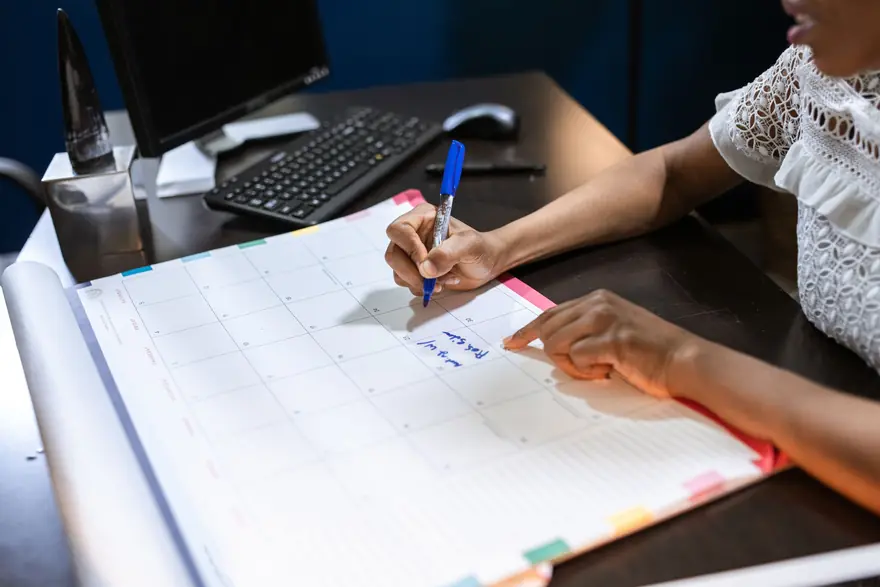
Why each step sits where it does
72 hours is the last comfortable point to resell a slot. A cancellation three days ahead gives the waitlist time to answer. It also gives a customer time to act on preparation the clinic specifies.
24 hours is the classic reminder. In Robotham's review, nine studies sent their notification 48 hours or less before the appointment.
2 hours catches same-day forgetting and answers the practical question: where do I park, which door do I use? It is also the reminder most likely to arrive too late if a phone is off.
Meta lets a business set a time-to-live on utility templates, between 30 seconds and 12 hours. The default is 30 days, and an undelivered message is dropped once its time-to-live passes. Set the two-hour reminder to about 90 minutes. A phone that comes back on after the appointment then never receives "see you in two hours". Meta charges for a template only when it is delivered, so a dropped reminder costs nothing.
Not every booking needs all three
Sending three reminders to a weekly regular who booked yesterday reads as nagging. The Riyadh hospital study found a history of no-shows was the strongest predictor of the next one. The UAE primary care study put its effort into the bookings its model flagged as risky. Our tiers follow the same logic.
| Booking | Reminders | Reason |
|---|---|---|
| Booked today, for today | 2 hours only, often inside the open window | The booking chat is fresh; one nudge is enough |
| Booked 1 to 3 days ahead | 24 hours and 2 hours | Short lead time; the 72-hour step would fall before the booking was made |
| Regular customer, no missed visits | 24 hours and 2 hours | Low risk; respect their attention |
| Booked 7 or more days ahead | 72, 24 and 2 hours | Long lead time is a common no-show determinant |
| Missed or cancelled late before | 72, 24 and 2 hours, and a person reviews the 24-hour reply | Past no-shows were the strongest predictor in the Riyadh data |
| First visit | 72, 24 and 2 hours, with a welcome voice note after the first tap | New customers do not know the entrance, the parking or the people |
What goes in the voice note, and what always stays in text
Robotham's review gives the best reason to keep the details in writing. In the authors' words, "patients are able to reread and refer back to text notifications at their own convenience". Nobody wants to replay a voice note at a car park barrier to hear the floor number. So text carries the facts and the voice note carries the welcome.
| Item | In text | In the voice note | Why |
|---|---|---|---|
| Date and time | Always, in long form: Thursday 15 October, 4pm | Yes, said the way people say it: "Thursday at four" | Text can be checked at a glance; the voice confirms it |
| Address and map | Always, with a map link or location message | Landmarks only: "the side entrance by the car park" | Nobody memorises a building name from audio |
| Who they will see | Yes | Yes, by first name | A familiar name is most of the warmth |
| Preparation | Always, as a short list in the business's approved wording | A brief why, never new instructions | Instructions must be rereadable and identical every time |
| Deposit, fees, cancellation policy | Yes, with a link | Never | Money terms must be in writing |
| The treatment or condition | Generic wording: "your appointment" | Never | A voice note can be played aloud with others nearby |
| Rescheduling | Buttons | An invitation: "tap Change time if Thursday is tricky" | One tap beats a phone call |
| Language | The language the booking was made in | The same language | Switching language mid-thread feels like a different business |
Two features make this split safer. WhatsApp can transcribe a voice message automatically if the user has turned that on, or offer a Transcribe option. Since 17 March 2026, Meta also sends a "played" status webhook the first time a user plays a voice message. If it never arrives, nothing is lost: the text already did the job.
How long the voice note should be
Ten to twenty-five seconds is our rule for a reminder. Meta says the play icon appears only if the file is 512 KB or smaller; above that, the customer sees a download icon. At an assumed 32 kilobits a second, 512 KB holds about two minutes. That is our arithmetic, not Meta's. A reminder never comes close; a long aftercare note can.
A reminder that sounds like a person
Business: a dental practice in Al Barsha. Layla booked a hygiene appointment nine days ago, in English.
72-hour template: "Hi Layla, a reminder of your hygiene appointment on Thursday 15 October at 4pm, with Sara. Ground floor, side entrance. Tap below to confirm or change."
Layla taps: Confirm.
Text reply: "Confirmed. See you Thursday 15 October at 4pm. Map: [link]."
Voice note, 14 seconds: "Hi Layla, lovely, you're all set for Thursday at four with Sara. Parking's easiest behind the building, and the side door takes you straight to us. See you then."
Not said: anything clinical, any price, any offer, any instruction that is not already in the text.
Illustrative example. The practice, the people and the wording are invented for this page.Writing lines like these well is its own craft. Our guide to AI voice note scripts that sound like a person covers pacing, openings and endings. For when a voice note is the wrong choice altogether, see voice note, text or phone call.
One-tap reschedule, and why an early cancellation is a win
The reminder's real job is to surface the customer who cannot come, while there is still time to do something. In the Riyadh rehabilitation study, 15% of the no-show patients surveyed blamed an inconvenient time or date. They needed an easy way to move more than a reminder.
Robotham's review also measured cancellations. With notifications, the pooled cancellation rate was 11%, against 8% without. That difference was not statistically significant. Our reading is that a reminder which makes changing easy may bring a few more cancellations forward. That is the trade a business wants: a cancellation is a slot it knows about, and a no-show is a slot it discovers too late.
Inside an open window, an interactive message can carry up to three reply buttons, each with a title of up to 20 characters. Templates allow 25 characters per button label. Arabic labels such as "تغيير الموعد" (change the appointment) fit easily, so build both language versions of every template.
- The customer taps Change timeThe tap opens the window, so the reply can be free-form.
- The agent reads the live calendarIt offers two or three real slots near the original time of day, not a link to "check availability".
- The customer picks oneBy button or by typing "Saturday morning", or by sending a voice note that the agent understands.
- The old slot is released at onceIt goes straight to the waitlist logic in the next section.
- A new confirmation goes out in textDate, time, address. The reminder sequence resets to the new time.
- Nothing fits, so a person takes overThe whole conversation goes with it, so the customer does not explain twice.
Never make cancelling harder than confirming.
A Cancel button that leads to "please call us during working hours" teaches customers to ignore reminders and not turn up. WhatsApp's Business Messaging Policy also requires a business to respect every request to stop or opt out, on or off WhatsApp.
Customers do not only tap. Many reply with a voice note of their own, asking for Saturday after twelve instead. We cover how an AI reads those in how an AI understands the voice notes your customers send.
Waitlist backfill: filling the slot a reminder frees
A freed slot is only worth something if someone takes it. In the UAE primary care study, walk-in patients filled the slots that proactive contact freed up. A clinic or salon working by appointment needs a waitlist instead: people who asked to be told if an earlier time opens.

Two WhatsApp rules shape how the offer goes out. First, opt-in. The policy says a business may contact people only if they gave their number and gave "opt-in permission" to receive messages. Joining a waitlist in the chat is a natural moment to ask for that permission. Second, the template category.
Meta's categorisation rules say a utility template must be non-promotional and either specific to or requested by the user. On our reading, "the earlier slot you asked about has opened" to a customer who asked fits that test. "Last-minute 20% off this afternoon" sent to everyone does not. It is marketing, needs marketing consent and costs more. Our guide to WhatsApp marketing consent in the UAE covers the difference.
| When the slot frees | Who gets the offer | How | Message type |
|---|---|---|---|
| 72 hours or more ahead | Waitlist, one person at a time, in the order they joined | A 30-minute hold each; if no tap, the next person | Utility template to customers who asked |
| 24 to 72 hours ahead | Waitlist, three people at once | First to tap gets it; the others hear "taken, you stay on the list" | Utility template, then service replies |
| Under 24 hours | Anyone already chatting about that service, then the waitlist | Offer inside open windows first; no template needed there | Service message where a window is open |
| Under 2 hours | Walk-ins and staff decision | Tell the front desk about the gap | Internal, not customer-facing |
The hold times are our defaults, not a rule from any study. One more limit matters for busy businesses. Meta's messaging limit caps how many unique people a business can message outside an open window in a moving 24 hours. New business portfolios start at 250, rising to 2,000, 10,000, 100,000 and unlimited. Reminders and waitlist offers both count; messages inside an open window do not.
Ramadan, Eid and Fridays: reminders that follow the Gulf calendar
A reminder engine that sends at fixed times will be wrong for a month every year. On 12 February 2026, the UAE's Ministry of Human Resources and Emiratisation cut private sector working hours by two hours a day for Ramadan. Companies could use flexible or remote arrangements within those daily limits. The UAE government portal sets normal private sector hours at 8 a day or 48 a week.
For a clinic or salon, that usually means a different timetable for the month. Reminders must follow the Ramadan hours the business actually keeps. The rules below are ours.
| Moment | What changes | Reminder rule |
|---|---|---|
| Ramadan opening hours | Shorter or shifted hours; in the UAE private sector, two hours a day less | Load the Ramadan timetable before the month starts; recalculate every reminder time from it |
| Around iftar | Families break their fast together | Hold non-urgent reminders until after iftar; a two-hour reminder for an evening slot still goes |
| Late evening slots | Appointments later than usual, if the business opens late | The two-hour reminder may land at 8pm or 9pm, and that is fine |
| Voice note tone in Ramadan | Customers may be fasting | A short "Ramadan Kareem" greeting is warm; no food, drink or offers |
| Eid | Closures; dates confirmed close to the day | Pause reminders for closed days; re-confirm bookings either side of the holiday |
| Friday midday | Prayer time for many customers | Move a two-hour reminder so it lands before prayers, not during them |
| Other GCC countries | Ramadan working hours set by each country's own rules | Check locally before you load the timetable |
Ramadan and Eid dates follow the sighting of the moon. Load the confirmed dates when they are announced, and keep a person able to override the schedule on the day.
What reminder messages cost on WhatsApp from 1 October 2026
Meta charges per delivered message. Two changes took effect on 1 October 2026. Service messages, the free-form replies inside an open window, are now charged, after a free tier of 1,000 a month on each business phone number. Utility templates sent inside an open window are charged too. Here are the UAE rates for October 2026, in US dollars.
| Message | Where it appears in the sequence | Meta category | UAE rate, USD |
|---|---|---|---|
| Reminder template, outside the window | 72 hours, 24 hours, and 2 hours if no recent tap | Utility | 0.0157 per delivered message |
| Text reply or voice note inside the window | After a tap; the two-hour message if the window is open | Service | First 1,000 a month per number free, then 0.0157 |
| Utility template sent inside an open window | Rarely needed; free-form is simpler | Utility | 0.0157, charged from 1 October 2026 |
| Reminder with a promotion added | Never, if you can help it | Marketing | 0.0576 |
What a month of reminders costs a mid-sized clinic
Clinic: 400 appointments a month on one WhatsApp number, all booked more than three days ahead.
Templates: 72-hour and 24-hour reminders, 800 a month, at USD 0.0157: USD 12.56.
Service messages: three per appointment after taps (two acknowledgements and one voice note), 1,200 a month. We assume enquiries already use the free 1,000, so all are charged: USD 18.84.
Meta total: about USD 31.40 a month.
The same templates as marketing: 800 at USD 0.0576 is USD 46.08 instead of USD 12.56, about 3.7 times as much.
Break-even: if an average appointment is worth AED 600, the whole sequence pays for itself by saving one appointment a month.
Illustrative example. Rates are Meta's UAE rates for October 2026; the volumes, the AED 600 and the free-tier assumption are ours.Meta's categorisation rules say mixed content, such as "an order update with a promo", makes a template marketing. "And 20% off a facial while you're here" turns a reminder into an advert. For the full rate card, see our WhatsApp Business API pricing guide for the UAE.
A reminder people dislike can stop arriving.
Meta may pace templates that are not rated green, holding some messages while it gathers customer feedback. If the feedback is negative, the template is paused and held messages are dropped with a failed status. Once a utility template has been paused, your utility templates are subject to pacing for the next seven days.
A reminder that annoys people can quietly fail on the morning of the appointment. Keep reminders short, wanted and easy to act on.
Sounding like a person without pretending to be one
Sounding like a robot is mostly a wording problem. Most robotic reminders fail in the text before any audio is played. Here is the difference, line by line.
| Sounds like a system | Sounds like your front desk |
|---|---|
| "This is an automated reminder of your appointment on 15/10/2026 at 16:00." | "Hi Layla, a reminder of Thursday 15 October at 4pm with Sara." |
| "Reply 1 to confirm, 2 to cancel." | Three buttons: Confirm, Change time, Cancel. |
| "Your booking reference is BK-88231." | "You're all set." The reference stays in the system, not the chat. |
| A 45-second voice note reading the text aloud | A 14-second voice note that adds the parking tip and a welcome |
| English to a customer who booked in Arabic | The reminder and the voice note in the language the booking was made in |
Sounding human is a matter of tone, names and timing. It is not a licence to claim to be human. If a customer asks whether they are talking to a person, the answer should be true.
Arabic needs its own care. A voice note in formal Modern Standard Arabic can sound stiff to a Gulf customer who wrote in dialect. Our page on Arabic AI voice notes covers dialect, register and switching between them. For the wider picture of how voice notes work on WhatsApp, start with AI voice notes for business.
Reminder design by type of business
The sequence stays the same across sectors. What changes is what the text carries, what the voice note adds and which button matters. These rows are our working defaults.
| Business | The text must carry | The voice note adds | The button that matters | Watch out for |
|---|---|---|---|---|
| Medical or dental clinic | Time, clinician, address, documents to bring, preparation in approved wording | Reassurance for a first visit; which entrance | Change time | Never name the condition or treatment in audio |
| Aesthetics clinic | Time, practitioner, preparation the clinic specifies | Who they will see, what happens on arrival | Change time | A promotion turns the reminder into marketing |
| Salon or barber | Time, stylist, address | The stylist's first name, the parking tip | Running late | Short slots make the two-hour reminder the important one |
| Gym, studio or wellness centre | Class time, room, what to bring | A coach's welcome before a first class | Can't make it, to free the place | Late-cancellation fees belong in text only |
| Car service centre | Drop-off time, address, documents | Which desk or bay to drive to | Change time | Pick-up reminders are a separate flow |
Clinics have the most to lose from a careless voice note. We cover them separately in AI voice notes for clinics and WhatsApp for Dubai clinics. WhatsApp's policy also bars sending or requesting health information where regulations prohibit sharing it with systems that do not meet heightened requirements. Studios are covered in AI automation for gyms, studios and wellness centres.
Terms used on this page, and how we checked them
- Customer service window
- The 24 hours after a customer messages or calls a business on WhatsApp. Inside it, any message type can be sent; outside it, only approved templates.
- Utility template
- A non-promotional template that is specific to, or requested by, the customer. On our reading, a plain reminder of a booked appointment fits.
- Service message
- A free-form message sent inside an open window. From 1 October 2026, charged after 1,000 a month per number.
- Voice message
- Audio sent as an OGG file with the OPUS codec, mono. It shows the profile picture and a microphone, unlike basic audio.
- Time-to-live
- How long WhatsApp keeps trying to deliver a message before dropping it.
How we checked this, and what we could not settle
Checked: study findings come from the published abstracts and, for Robotham and AlSerkal, the full texts. Meta's rules come from its current developer documentation and policy, read on 2 October 2026. The Ramadan hours come from the UAE's labour ministry and government portal.
Not settled: we found no trial of WhatsApp voice notes as reminders. Meta does not say in so many words that a quick-reply tap opens the customer service window; that is our reading of its definitions. The free tier of 1,000 service messages comes from Meta's rate card update, last read on 27 September 2026. Ramadan hours outside the UAE were not checked.
How Learnmind builds voice note reminders
Learnmind is based in Dubai and builds bespoke AI systems for customer conversations, in English and Arabic. Its WhatsApp agent connects to the business's calendar and CRM, asks qualifying questions and remembers past conversations. A reminder flow like the one on this page is built to order for each business.
- It replies out loud when the moment calls for it. A warm spoken reply, built to sound like a person, not a script. It also handles the voice notes customers send.
- It replies in the customer's language. Arabic is detected automatically, and replies come in under ten seconds, day or night, in the brand's voice.
- It works from facts you approve. Its answers come from facts the business approves, such as your hours, services and cancellation policy.
- It hands over cleanly. When a reschedule needs judgement, a person takes over with the whole conversation attached.
- You see everything. The business sees every conversation in an operator view.
- It remembers. It remembers past conversations, so a regular is not greeted like a first-time customer.
A build starts with a 15-minute call. We map your services, pricing logic, common questions and brand voice, and you prepare nothing. Days 2 to 5 shape the persona: name, tone, discovery questions, objection handling and escalation rules. The system is tested on real questions and is live from about day 14. When your hours change for Ramadan, we update it the same day.
See how a Learnmind build goes live, or what the WhatsApp agent does from first message to booking.
Learnmind works with healthcare and aesthetics clients it cannot name. One client it can name is Alcaz Media, a UAE performance marketing agency. Its Learnmind assistant answers leads within seconds, 24/7, books strategy sessions and handles images and voice notes. The case study is on our results page.
To test it on your own number, the free 14-day WhatsApp AI trial runs on your business number. The trial is free; Meta bills its own message fees directly. For calls, Learnmind's AI voice receptionist answers on your existing number. Its Professional plan, USD 815 to 1,360 a month, includes appointment booking and WhatsApp plus voice.
Frequently asked questions
Can I send a WhatsApp voice note as an appointment reminder?
Not as the first message, if the customer has not written to you in the last 24 hours. Outside that window only
approved templates can be sent, and Meta lists no audio option for templates. Send a text template with buttons, and
send the voice note after the customer taps or replies.
Do voice note reminders reduce no-shows more than text reminders?
Nobody has shown that yet; we found no trial of WhatsApp voice notes as reminders. The evidence is that reminders beat
no reminder, and several beat one.
When should appointment reminders be sent?
For bookings made well ahead, we use 72 hours, 24 hours and 2 hours before. A meta-analysis found no significant
difference between reminders sent 24, 48 or 72 hours ahead, so the exact hour is a design choice. Use fewer reminders
for regulars and same-week bookings.
Are appointment reminders utility or marketing templates on WhatsApp?
On our reading, a plain reminder about a booked appointment fits Meta's utility test: non-promotional and specific to the customer.
Add an offer and the template becomes marketing. In the UAE in October 2026, that moves the price from USD 0.0157 to
USD 0.0576 a message.
How much does a WhatsApp appointment reminder cost in the UAE?
Meta charges USD 0.0157 for each delivered utility template in the UAE from 1 October 2026. Replies and voice notes
inside an open window are service messages: the first 1,000 a month per number are free, then USD 0.0157 each. Your
provider's fees come on top.
How do customers reschedule from a WhatsApp reminder?
Give the reminder a Change time button. The tap opens the conversation, the agent offers two or three real slots from
the calendar, and the customer picks one. The old slot is released to the waitlist straight away.
What changes for appointment reminders during Ramadan?
Opening hours change, so reminder times must be recalculated from the Ramadan timetable. In the UAE, private sector
working hours were cut by two hours a day for Ramadan 2026. Avoid sending non-urgent reminders around iftar.
Who builds WhatsApp voice note appointment reminders in Dubai?
Learnmind.ai, based in Dubai, builds bespoke WhatsApp AI agents that connect to the business's calendar and CRM.
They reply with voice notes in English or Arabic when the moment calls for it. Builds are live from about day 14. A free 14-day trial
runs on your own number at learnmind.ai/try.
Are AI voice notes allowed on WhatsApp Business?
On our reading, yes, for a business messaging its own customers. Since 15 January 2026, Meta's terms have limited AI
providers offering general-purpose AI assistants on the platform. A reminder agent that serves one business's own
bookings is not a general-purpose assistant.
Can the AI understand a voice note the customer sends back?
Learnmind's WhatsApp agent handles the voice notes customers send, and reads the photos they send too. A customer can
ask for Saturday out loud, and the agent can offer Saturday slots from the calendar.
Want reminders your customers actually answer?
We build bespoke WhatsApp agents that connect to your calendar and reply in your brand's voice, in English and Arabic. They hand over to your team when a person is needed.
Sources
- ResearchGurol-Urganci and others, Mobile phone messaging reminders for attendance at healthcare appointments, Cochrane Database of Systematic Reviews, 5 December 2013
- ResearchGuy and others, How effective are short message service reminders at increasing clinic attendance?, Health Services Research, April 2012, timing subgroups
- ResearchRobotham and others, Using digital notifications to improve attendance in clinic, BMJ Open, 24 October 2016
- ResearchDantas and others, No-shows in appointment scheduling: a systematic literature review, Health Policy, April 2018
- ResearchWerner and others, Behavioural economic interventions to reduce health care appointment non-attendance, BMC Health Services Research, 23 October 2023
- ResearchAlMuhaideb and others, Prediction of hospital no-show appointments through artificial intelligence algorithms, Annals of Saudi Medicine, 2019
- ResearchAlOsaimi and others, Examining the reasons for patient no-show in an outpatient adult rehabilitation department in King Abdulaziz Medical City, Riyadh, Health Science Reports, 29 April 2025
- ResearchAlSerkal and others, Real-time analytics and AI for managing no-show appointments in primary health care in the United Arab Emirates, JMIR Formative Research, 6 January 2025
- PlatformMeta for Developers, Send messages, the customer service window
- PlatformMeta for Developers, Template components, header formats, button limits
- PlatformMeta for Developers, Utility templates
- PlatformMeta for Developers, Template categorization guidelines, utility criteria and mixed content
- PlatformMeta for Developers, Interactive reply buttons messages
- PlatformMeta for Developers, Audio messages, voice message format, 512 KB play icon, played status from 17 March 2026
- PlatformMeta for Developers, Button messages webhook reference, quick-reply taps
- PlatformMeta for Developers, Time-to-live, utility template range
- PlatformMeta for Developers, Pricing on the WhatsApp Business Platform, rate card updates, read 27 September 2026
- PlatformMeta for Developers, Non-template messages pricing, service and in-window utility charges from 1 October 2026
- PlatformMeta for Developers, Messaging limits
- PlatformMeta for Developers, Template pacing
- PlatformMeta for Developers, AI providers on the WhatsApp Business Platform, the 15 January 2026 change
- PlatformWhatsApp Business Messaging Policy, last updated 23 September 2026, opt-in, opt-out and health information
- RegulatorUAE Ministry of Human Resources and Emiratisation, Reduction of working hours for private sector employees during Ramadan, 12 February 2026
- RegulatorUAE government portal, Working hours and overtime, Article 17 of Federal Decree-Law No. 33 of 2021
- LearnmindThe Learnmind WhatsApp agent, booking, reminders, voice notes and the operator view
- LearnmindHow a Learnmind build goes live, the 14-day build and same-day updates
- LearnmindFree 14-day WhatsApp AI trial
- LearnmindLearnmind AI receptionist, plans and prices
- LearnmindLearnmind results, the Alcaz Media case study
Written by Edmund Gay, Learnmind.ai, Dubai. Study figures, Meta's rules and rates, and the Ramadan hours come from the sources listed. The 72, 24 and 2 hour sequence, the tiers, the hold times, the examples and the sector rows are our own design.