You are sitting in front of a renewal quote for your messaging platform, or you are three weeks from launching an AI receptionist, and someone on the team asks the question that decides the whole build: do we let the bot reply freely, or do we route everything through approved templates? It sounds like a formatting preference. It is actually the fork that determines whether your automation delivers messages at 2am on a Friday or silently drops them.
Both answers are wrong on their own. Free-form replies fail the moment the window closes. Template-only builds cost you money on messages you could have sent for free, and they read like a receipt when the customer wanted a person. The real decision is where the boundary sits and what happens at the moment it is crossed. That boundary has more edge cases than most operators expect, and each one produces a different failure that looks identical to the customer: nothing arrives.
What the window actually is, and what actually resets it
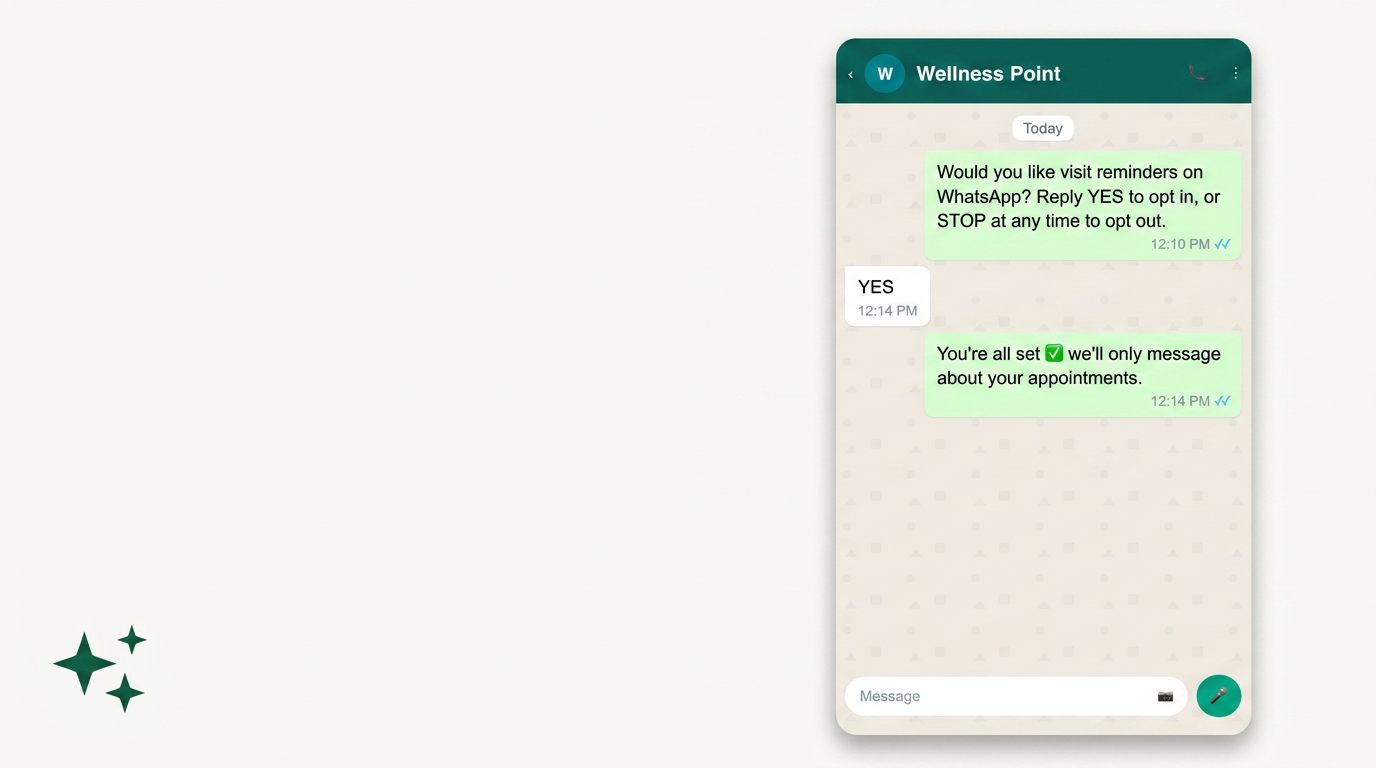
The WhatsApp 24-hour customer service window opens the second a user messages or calls your WhatsApp Business number, and it lets you send free-form replies (text, media, links, interactive messages) for the next 24 hours without template approval. When the timer expires, only pre-approved template messages can be delivered. Every new inbound message or call from that user resets the timer back to a full 24 hours, according to Meta's service messages documentation, which also confirms that calls, not just texts, start and reset the clock.
The policy side is equally blunt. WhatsApp's Business Policy states that you may only initiate conversations using an approved Message Template, that templates must be used for their designated purpose, and that Meta reserves the right to review, pause and reject any template at any time. That last clause is the one operators skip. A template you have used daily for a year can be paused, and if your bot has no fallback path, your entire post-window flow goes dark without an error the customer can see.
One more thing that surprises people: templates work inside the window too. Nothing forces you to switch modes. That flexibility is what makes clean fallback logic possible, and it is also what makes billing behaviour confusing, because a template sent inside an open window is still a template.
The edge cases that actually break builds
Across the installs we run, the same handful of scenarios account for nearly every "the bot stopped working" ticket:
- Non-text inbound events. A voice note, a location pin, a sticker, a forwarded image, a reaction. Middleware that only listens for text payloads leaves the timer stale, so the bot thinks the window is closed when it is open, or the reverse.
- Mid-window agent handoff. The bot answers, a human takes over late in the window, and the human replies the next morning through a different inbox that has no template configured.
- Fallback timing. A free-form message queued just before expiry and dispatched just after it. It fails. Nobody notices, because the failure lives in an API log.
- The reset illusion. A customer sends three messages in a row. Your team assumes 72 hours of runway. It is still 24, counted from the last one.
- Billing surprises. Templates that could have been free-form. Conversations reopened unnecessarily. Marketing templates sent when a service reply would have done the job.
Mapping every outbound message your system can produce
Before you write a single automation rule, list every message your business can send and mark each one with the trigger that produces it. Not the message copy. The trigger. Appointment reminder the day before. Payment link after consultation. Missed-call follow-up. Review request two days after a visit. Reactivation after a long silence.
Then, next to each, write whether the trigger is guaranteed to fire inside an open window. Most are not. A reminder scheduled a day before an appointment booked three weeks ago will almost always land outside the window. A reply to an inbound enquiry almost always lands inside it. The middle group, the ambiguous ones, is where bots break, and that group is bigger than teams expect.
Commercial fishing crews do not decide what to do with a haul once it is already in the hold. They sort by species and size on the way in, because sorting is cheap while the catch is still moving across the deck and expensive once everything is tipped together. Message classification works the same way. Decide the send mode at the trigger, not at dispatch.
Deciding which messages need a template even though they might not
Our rule, and it is ours rather than anything Meta publishes: if a message has any chance of being sent outside the window, it needs an approved template ready, even if it usually goes out inside one. The template is insurance, not the primary path. The cost of having a template you rarely use is one approval cycle. The cost of not having it is a customer who never learns their appointment moved.
The inverse rule matters just as much for your bill. If a message can only ever fire inside an open window (a reply to a question the customer just asked, a menu, a confirmation), never route it through a template. As WasenderApi's breakdown of window mechanics puts it, inside the session you can send free-form, unrestricted content with no approval needed. Paying for that is a self-inflicted line item, and it is one of the quieter reasons support costs creep past acquisition.
The same appointment change, run manually and then automated
Take one concrete scenario and trace it twice. The scenario below is illustrative, a composite of the reschedule flows we build rather than one client's file. A clinic has to move a Thursday afternoon appointment back by ninety minutes because a dentist is running behind. The patient last messaged the clinic on Tuesday morning to confirm the original booking. It is now Wednesday afternoon. The window closed roughly a day ago, though nobody in the building knows that.
How it runs today, by hand
The front desk coordinator opens WhatsApp Web and types the change into the chat thread. The message shows a single tick, or in some inbox tools, an error toast that disappears in a few seconds. She is on a call and does not look. She moves to the next patient.
Later that afternoon nobody has replied, so she calls. No answer. She sends a second WhatsApp message, which also fails. The next day the patient arrives for the original slot, waits in a small reception, and leaves annoyed. The coordinator tells the manager the patient ignored her messages. The manager believes her, because the messages are sitting right there in the thread.
Now add the multi-agent wrinkle. Suppose the patient had messaged that morning, opening a fresh window, and the bot answered a routine question. Hours later the coordinator picks up the thread from a different tool, a shared inbox that is not the same platform the bot runs on. That second tool has no visibility of the window state and no template library. It sends free-form. Sometimes it lands. Sometimes it does not. From the coordinator's seat, the two outcomes look identical.
How it runs once the window logic is built
Same clinic, same patient, same Wednesday afternoon. The dentist's schedule shifts in the practice management system. That change fires a reschedule event.
The automation checks one thing first: is the window open for this contact right now? It knows, because it stores a last_inbound_at timestamp updated by every inbound event type, not just text. The answer is no, closed since Tuesday morning.
So it sends an approved utility template naming the old time, the new time, and two quick-reply buttons: confirm, or request a different slot. The patient taps confirm. That tap is an inbound message. It resets the window to a full 24 hours, and now the system can talk freely. It sends a free-form message with the clinic's parking note and a map pin, costing nothing extra. If the patient had instead tapped "different slot", the thread would route to the coordinator with the window state shown in her view, hours and minutes remaining, right there in the conversation. She replies as a human, in her own words, because a schedule disruption is exactly the kind of interaction where a person should follow up rather than a script. Automate the repetitive, personalise the meaningful.
The delta is not speed. The automated version knows whether the message arrived, and it changes its method when the answer would otherwise be no.
Building the fallback ladder and its timing buffer
The fallback logic itself is short. Check window state, choose mode, dispatch, verify. The details are where builds fail, and the specifics below are how we build them rather than anything documented by Meta.
Never evaluate the window at queue time
Evaluate it at dispatch time. A message classified as free-form when it entered the queue will be rejected if the timer expires before it leaves. We recommend a buffer: any free-form message due to send with less than about fifteen minutes left on the timer gets promoted to its template equivalent instead. That margin is our own, chosen to cover queue lag, retry delays, and clock drift between your platform and Meta's, and you can widen it if your queue is slow. Cutting it finer to save a few template sends is a false economy.
Treat every inbound event type as a reset, including the ones you ignore
Your webhook handler probably branches on message type to decide how to respond. That is correct. What is not correct is letting that branch also decide whether to update the window timestamp. Update the timestamp for every inbound event before any routing logic runs: text, image, audio, document, location, contact card, sticker, button reply, list reply, and calls. A customer who replies with a thumbs-up sticker has reopened the conversation whether or not your bot has anything intelligent to say about a sticker.
Reactions are the one to test rather than assume. The only reliable answer is what your own account does on your own API version. Send one to your test number and watch the webhook.
Keep a paused-template contingency
Because WhatsApp's Business Policy reserves Meta's right to pause or reject templates at any time, we give every critical flow a second approved template with different copy that could carry the same message. When the primary returns a template-not-available error, the system uses the backup and raises an alert to a human. Without this, a single pause takes out an entire notification stream and the first person to notice is a customer.
Handling handoffs without dropping the window
Multi-agent handoff is where the cleanest architectures leak, because the leak is organisational rather than technical. The bot lives in one system. The sales team uses a second. The clinic manager answers from her personal phone on the evening shift. Three tools, three views of the same conversation, one shared timer that only one of them is tracking.
The fix is unglamorous. Every human who can send a message to a customer must send it through the same platform that owns the window state, and that platform must show the remaining time in the conversation view. Not in a settings panel. In the thread, next to the compose box. Once a coordinator can see that the window closes in an hour, her behaviour changes without any training, in the same way a skipper watching a fuel gauge turns for port without being told.
This is also where the handoff rules for event teams earn their keep: define who owns the thread at each stage, and make ownership transfer an explicit action rather than whoever happens to open the inbox first.
The overnight gap
A customer messages at 7pm. Your team replies the next morning at 10am. Fine, fifteen hours in. A customer messages at 7pm on Thursday and your team is closed Friday and Saturday. Not fine. Any thread that will cross a weekend or a public holiday needs either an in-window acknowledgement before close of business or a template-based reopen when the office comes back. We build the acknowledgement, because a message sent while the window is open costs nothing and buys you goodwill. Threads that sit unanswered past the window are one of the clearer symptoms in peak-season operational strain.
Controlling what this costs you
Two habits keep the bill honest. First, audit which of your templates are firing inside open windows. Any template regularly sent to contacts whose timer is still running should be examined: if the trigger is a customer action, you can almost certainly answer free-form. Second, use the window's own reset behaviour rather than fighting it. A well-designed template with quick-reply buttons converts one paid, business-initiated message into an open 24-hour session, which is the cheapest way to have a real conversation on this channel.
What you must not do is manufacture inbound messages to keep windows artificially open. CRMTiger's explanation of the rule is direct about its purpose: requiring customers to re-initiate contact exists to stop businesses over-messaging people. Opt-in is the foundation underneath all of this. Meta requires permission before you initiate a conversation, and no clever window mechanic substitutes for it. Build your consent capture properly and the rest of the architecture stays defensible.
One structural note while you are choosing tools. The platform that stores your window state also stores your conversation history, your contact records, and your template library. If it cannot export all three through an open API, you have handed over more than convenience. We are Learnmind, and we install AI communication systems for UAE service businesses, and the migrations we are asked to run are almost never about features. They are about escaping a tool whose data will not come out. Lock-in costs more over three years than the premium tool you did not buy.
Verifying it works before you trust it with real customers
Do not launch on the assumption that your platform handles this correctly. Test it with a real number and a stopwatch. This is our own pre-launch checklist, not a Meta requirement, and we run all five in this order:
- Closed-window free-form. Wait more than 24 hours after your last inbound test message, then trigger a free-form send. It must fail, and your system must catch the failure and fall back to a template rather than logging an error and moving on.
- Non-text reset. Send a voice note from the test number. Confirm your
last_inbound_attimestamp updated. Repeat with a location pin and a button reply. - Buffer promotion. Schedule a free-form message to fire just inside your buffer before window expiry. Confirm it sends as a template instead.
- Handoff visibility. Have a colleague open the thread in the agent inbox and read the remaining window time aloud. If they cannot find it in seconds, it is not visible enough.
- Template pause simulation. Disable your primary template in the platform and trigger the flow. The backup should send and an alert should reach a human.
Run all five again after any platform update. As Setlyy's guide observes, teams tend to ignore the rule right up until messages start getting blocked at the worst possible moment. The test suite is how you find out on a Tuesday afternoon instead of during a fully booked Saturday.
Quick answers
Does a customer's voice note reset the WhatsApp 24-hour window?
Yes. Any inbound message from the user, including voice notes, images, location pins and button taps, resets the customer service window to a full 24 hours, and Meta's documentation confirms calls do the same. The common failure is middleware that only updates its timer on text messages.
Can I send a template message inside the 24-hour window?
Yes, approved templates can be sent at any time, inside or outside the window. It is usually unnecessary spending, though, because free-form replies inside an open window need no approval and no template fee.
What happens if my message is sent one minute after the window closes?
A free-form message dispatched after the window closes is rejected by the WhatsApp Business API and never reaches the customer. We build a buffer that promotes any free-form send scheduled near expiry into its template equivalent, so queue delays cannot cause silent drops.
How do multiple agents share one 24-hour window?
The window belongs to the phone number and the contact, not to the agent, so every human and bot messaging that customer draws on the same timer. Route all agents through the platform that owns the window state and display the remaining time inside the conversation view.
Send us your current WhatsApp template list, or the reminder copy you are sending today, and we will tell you which ones will fail outside the window and which ones you are paying for unnecessarily. No charge for the look.