3:47am. A DM lands on the Facebook page of a mid-sized Dubai property management company: "Is the 2BR in Business Bay still available? I land Thursday." By the time someone on the leasing team opens the inbox - 9:15am, coffee in hand - the message is nine hours old and the prospect has already messaged four other agencies. Two of them replied within the hour. Guess which two got the viewing.
This is not a hypothetical. It's the default state of most Facebook Business inboxes attached to UAE property management pages. We've pulled the message logs on new client onboarding calls more times than we can count, and the pattern is depressingly consistent: a burst of inbound DMs between 8pm and 2am (renters browsing after work, investors in different time zones scrolling before bed), followed by silence until a human logs back on the next business day. One operator we spoke with - a leasing manager overseeing a 200-plus unit portfolio across Dubai Marina and JVC - put it bluntly: "We were basically running a 9-to-6 business against leads that arrive 24 hours a day. It's not that our agents were bad. It's that the inbox was designed to lose."
What follows is the exact automation sequence we build for property management clients who want to stop bleeding inquiries into the void between "message sent" and "agent sees it." No fluff about "the future of AI in real estate." Just the mechanics.
Why the Facebook inbox is the most neglected asset in a Dubai property manager's stack
Everyone obsesses over Bayut and Property Finder leads because they arrive in a CRM with a dollar sign attached to them (literally - you paid for that portal listing). Facebook DMs feel different. They feel like a side conversation, not a sales channel. That's the exact mistake.
A DM inquiry on a property listing post is, behaviorally, a hotter lead than a portal form-fill. Someone had to stop scrolling, tap into your page, and type a specific question. That's higher intent than clicking "Get Details" on a portal listing where the same click gets fired to eleven competing agencies simultaneously. One case audit of a 450-plus unit UAE portfolio found that 58% of inquiries never received any follow-up at all - and that was across all channels, portals included. DMs, being the least "official" channel, are usually the worst offenders within that number.
Here's the contrarian part, and we'll say it plainly: we think the industry-standard advice to "centralize everything into WhatsApp as fast as possible" is wrong for the first touch. WhatsApp is unquestionably the better channel for ongoing UAE client communication - it's native, it's trusted, and it's where DAMAC saw double the conversion rate compared to email and push notification campaigns without messaging. But forcing a cold Facebook DM lead to jump to WhatsApp before you've qualified them adds friction at the exact moment they're least willing to tolerate it. Someone messaging a listing photo at midnight wants an answer to their question, not a request to open a different app and share their number with a business they've never dealt with. We qualify inside Messenger first. WhatsApp comes second, once trust and intent are established.
Building the capture layer: what happens in the first sixty seconds
The moment a DM hits the inbox - whether it's triggered from a listing photo, a Reel, or a comment on a boosted post - the automation needs to fire before the prospect has time to open a competitor's page in a new tab. This isn't aspirational. Response speed is the single biggest lever in the entire funnel. Businesses replying within five minutes convert dramatically better than those that wait even an hour, and the gap gets more brutal the longer you wait. We've seen agencies cut average response time from north of four hours to under three minutes simply by putting a structured bot in front of the inbox - a shift documented in one UAE real estate automation case that took response time from 4.5 hours to 2.8 minutes, a 98% reduction.
The instant acknowledgment message
This isn't a generic "Thanks for reaching out, we'll get back to you." That message actively signals "a human hasn't seen this yet, go elsewhere." Instead, the first automated reply references the specific listing they messaged about by pulling the post ID or comment context: "Hi! Thanks for asking about the 2BR in Business Bay Tower - it's currently listed at [price/range]. I can pull up availability and a floor plan for you right now. Are you looking to move in the next 30 days, or further out?" That single question does two jobs at once. It feels responsive and specific - not templated - and it starts the qualification sequence without the prospect realizing they're talking to a bot yet. That ambiguity, by the way, is intentional and fine. Nobody in Dubai expects a landlord to personally answer DMs at 3am. What they resent is silence, not automation.
Building qualification into a conversation, not an interrogation
We build these sequences around a maximum of four to five questions before human handoff - any more and completion rates fall off a cliff. Based on the pattern used successfully across UAE property portfolios, the qualification set typically covers: timeline (0-3, 3-6, 6-12 months), budget band, preferred area or "open to options," and bedroom/unit type. One documented UAE property implementation structured this as an 8-question AI qualification flow covering budget, timeline, location, and property type before ever routing to a human agent.
Think of this stage like a maître d' at a busy restaurant, not a bouncer. A bouncer's job is to keep people out. A maître d's job is to figure out - fast, warmly, without making anyone feel interrogated - which table you need, how many are in your party, and whether you have a reservation, so that by the time you sit down the server already knows what to bring. That's the qualification bot's entire purpose: know enough by the time a human joins the thread that the human doesn't have to ask "sorry, what were you looking for again?"
Routing and handoff: getting the right agent into the thread at the right moment
Qualification without intelligent routing just creates a beautifully organized backlog. The lead scoring layer needs to do something with the answers it collects. In practice, this means tagging conversations by unit type, budget band, and urgency, then auto-assigning to the agent who specializes in that building or community - Marina specialists get Marina leads, JVC leads go to the JVC team, and so on. This mirrors how purpose-built UAE real estate CRM platforms score leads instantly with AI and route them to the correct agent without manual intervention.
The handoff trigger matters more than most agencies think. We set ours to fire on a "high intent" combination - timeline under 30 days AND budget matching an active listing - which pushes an instant mobile alert to the assigned agent along with the full qualification transcript. Anything below that threshold drops into a nurture track instead of interrupting an agent's evening.
What we deliberately do NOT automate
Price negotiation. Never. The moment a prospect asks "would the landlord take AED 5,000 less," the bot exits the conversation entirely and flags for human takeover. Same with any question involving legal terms, maintenance disputes, or existing tenant complaints. Automation should compress the boring 80% of the funnel - availability checks, scheduling, basic qualification - and hand the emotionally or financially sensitive 20% straight to a person. Property managers who try to automate everything end up with a chatbot negotiating rent, which goes about as well as you'd expect.
The viewing-booking sequence: turning a qualified DM into a calendar entry
This is the part most agencies skip, and it's the part that actually moves revenue. Qualifying a lead and then manually texting them to "find a time that works" reintroduces the exact delay you just eliminated. Instead, once a lead clears the qualification threshold, the bot pushes a scheduling link directly into the DM thread - pre-filtered to show only slots when that specific unit is unlocked and an agent is available for that building. For portfolios managing dozens of units simultaneously, this calendar sync has to pull live availability rather than a static Calendly link, because nothing kills trust faster than a prospect booking a slot for a unit that got leased two days earlier. We've watched viewing-to-booking rates on comparable UAE portfolios move from roughly 12% up into the 35-41% range once this kind of structured, low-friction booking flow replaced manual back-and-forth - a shift consistent with what's been documented in a 450-unit UAE case study, where viewing bookings climbed from 12% to 41%.
The 24-hour pre-viewing reminder
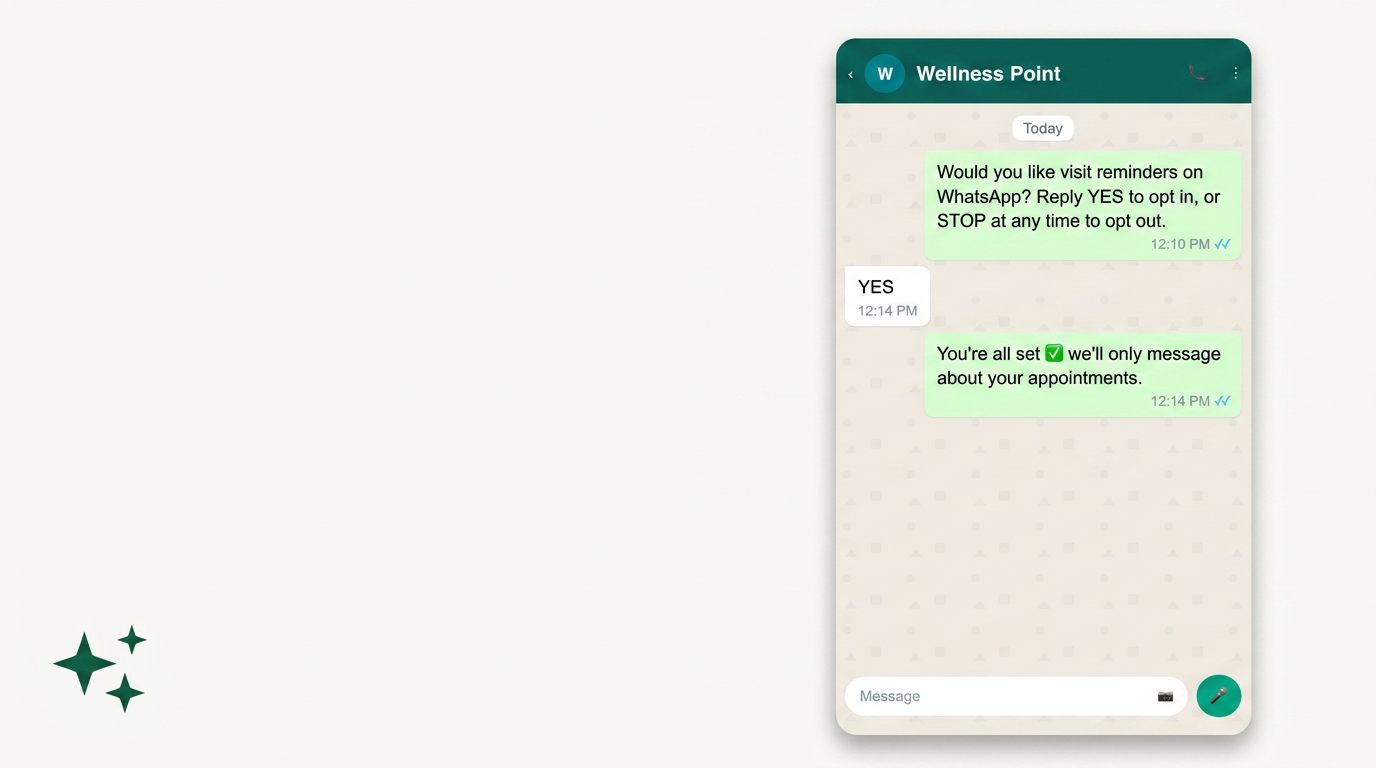
No-shows are the silent killer of viewing pipelines, and they're almost entirely preventable with one well-timed automated nudge. We schedule a reminder message roughly 24 hours before the appointment and another two hours before, both sent through whichever channel the prospect responded fastest to earlier in the sequence - for most UAE renters, that's WhatsApp by this stage, not Messenger. This is exactly where the channel handoff we mentioned earlier pays off: DM for capture and qualification, WhatsApp for the operational logistics of an actual appointment.
The nurture track for leads who aren't ready yet
Not every DM converts to a viewing this week, and treating every non-immediate lead as dead is how agencies leave money sitting in their own inbox. Leads with a 3-6 month or 6-12 month timeline get moved into a drip sequence - not a generic newsletter, but property-type-specific content triggered by what they told the bot they wanted. Someone who said "2BR, Marina, moving in 6 months" gets periodic messages when comparable units come to market, not a blanket "check out our new listings" blast. UAE case data on this kind of segmented drip nurture (built around a roughly 14-day cadence with personalized property matches) shows it's the difference between a lead going cold and a lead re-engaging the moment their timeline shortens.
One thing we tell every property management client during onboarding: the nurture list is not a lower priority than the hot list - it's just a different clock. As one leasing director told us candidly, "Half our 'good' leads that didn't book a viewing this month came back three months later. We just never had a system that remembered them for us." That's the whole point of automation here. It doesn't get tired, and it doesn't forget.
What this actually costs you if you don't do it
Run the math on your own portfolio. If your page gets even a modest trickle of after-hours DMs and half of them go unanswered until the next business day, you're not losing "some" leads - you're systematically handing your highest-intent inquiries to whichever competitor happened to reply first. In a market where over 65% of UAE developers are already deploying AI tools across their operations, an unattended Messenger inbox isn't a minor gap. It's a competitive disadvantage that compounds every single night.
If your DM inbox looks like a graveyard of half-answered questions and "sorry for the late reply" messages, that's not a staffing problem - it's a systems problem, and it's a fixable one. Let's walk through your current setup and show you exactly where the leaks are.