You answer your WhatsApp within the hour. Your front desk picks up on the third ring during opening hours. Parents get a confirmation the moment a session is booked. That should be enough, and you are entitled to be irritated at anyone who suggests otherwise.
Except the no-shows keep happening. And when we sit down with tutoring centre owners and read the message threads line by line, the failure is almost never a missed message. It is a mother who replied to the confirmation with a question at 9:40pm, got a good answer at 10:15am the next morning, and had already told her son the night before that he was not going. It is a father who wanted to move Thursday to Saturday, found no way to do it inside the chat, decided he would call later, and never called. The hour-long response time was fine. The moment had gone.
That gap between fast and timely is where a tutoring centre's schedule quietly leaks.
The centre in this piece, and what the empty chairs were doing to it
A note on what follows, because it matters. The centre described here is an illustrative composite assembled from our education-sector work, not a single audited client, and we are not attaching measured percentages to it. Everything about the situation, the tactics, and the mechanics is real practice. The outcomes are described qualitatively, because that is what we can honestly stand behind in a piece like this.
Picture one location, six tutors, a mix of one-to-one sessions and small group classes running from mid-afternoon until late evening, with traffic spiking in the weeks before school exams. Two people on the desk, both good with parents, both simultaneously handling walk-ins, payments, tutor handovers, and printing worksheets.
The problem was never lead generation. Parents were finding them. The trouble sat in the back half of the funnel: booked sessions that did not happen, trial classes where the child never arrived, and rescheduling requests that landed in WhatsApp and died there because nobody had a spare three minutes to open the calendar, check which tutor covered that subject, and reply while the parent was still holding the phone.
An AI receptionist for tutoring centers is an automated front desk that answers calls and WhatsApp messages around the clock, confirms and reschedules sessions against the centre's live calendar, and sends reminders timed to when parents actually make decisions. In tutoring specifically, it prevents missed sessions by covering the after-hours enquiries and last-minute changes a daytime-only desk cannot reach, and by making sure no call goes unanswered while the desk is mid-conversation with a parent standing in front of it. The technology is the easy half. The tone it speaks in decides whether parents trust it enough to reply.
A plain ledger of what the no-shows cost
We run this exercise with every client before we install anything, because owners consistently underestimate one column and overestimate another. There are no percentages here, because we do not have audited ones to give you. Read it as an accounting frame you can fill in with your own numbers by Friday.
- The empty slot itself. A one-to-one hour that does not happen is gone. The tutor is on site, paid, and idle. Nothing recovers that hour later in the week, because the week is already full at peak times and thin at off-peak times. This is why we hold the internal position that reducing no-shows is the fastest return available in appointment-based automation: the slot has no salvage value, and a well-timed reminder sequence costs almost nothing to send.
- The chase. Desk staff spend part of every afternoon calling parents about sessions that are two hours away. Unscheduled work, landing exactly when the desk is busiest with arrivals.
- The reschedule that never closed. Every unanswered request to move a session is an hour that was willing to happen. Parents in this category are not leaving. They are waiting.
- The trial class that decides a whole term. A no-show on a first session usually ends the relationship before it starts. The loss is a term of sessions that were never booked, and neither the owner nor the tutor ever learns the reason.
- The invisible column. Calls that arrived after 8pm, during a parent-teacher rush, or while both desk staff were on other lines. It is a rare day when we meet an operator who knows this number before we start logging it, and it is almost always the column that changes their mind.
None of this is the technology problem owners expect. Nobody needs a better calendar. They need the calendar to be reachable at the moment a parent is thinking about it.
What we changed, and why in that order
We did not start with automation. We started with how the centre sounded.
Rewriting the voice so it belonged to the centre
The messaging they had built themselves before we arrived read like a booking terminal. Reference numbers. The word "appointment". A confirmation that stated a time and offered nothing else. Parents ignored it, which is a reasonable response to a message that clearly does not expect a reply.
We rebuilt the language around three rules that now apply to every education client we set up:
- Name the child, not the booking. Parents do not have appointments; their children have sessions. A message that references the child by name and the subject being covered reads as though a person who knows the family wrote it. A booking ID does the opposite.
- Say the tutor's name. In tutoring, trust sits with the individual rather than the brand. Naming the tutor turns an administrative ping into a small social commitment, the same way a parent would not casually skip a session with someone they can picture.
- Offer the alternative in the same breath as the reminder. Instead of asking parents to confirm, the message offers two other times this week. Silence stops being the path of least resistance, because the parent no longer has to initiate anything to move a session.
We also cut the exclamation marks and the emoji, and made the AI receptionist ask clarifying questions the way a patient person does: one at a time, in the parent's own language, with no requirement to hit particular keywords. Parents in the UAE write to a centre in English, in Arabic, and in a mix of both inside a single message. Whatever answers has to absorb that without asking anyone to rephrase themselves, and it has to hold the child's name, level, and subject steady across the language switch. Get that wrong and a parent concludes, fairly, that the centre does not know who their child is.
Moving the reminder to when the decision is actually made
Their old reminder went out on the morning of the session. Sensible-sounding, and the wrong time. Household logistics for an afternoon session get settled the night before, when a parent is looking at tomorrow, or in the hour after school ends, when whoever is driving decides what happens next.
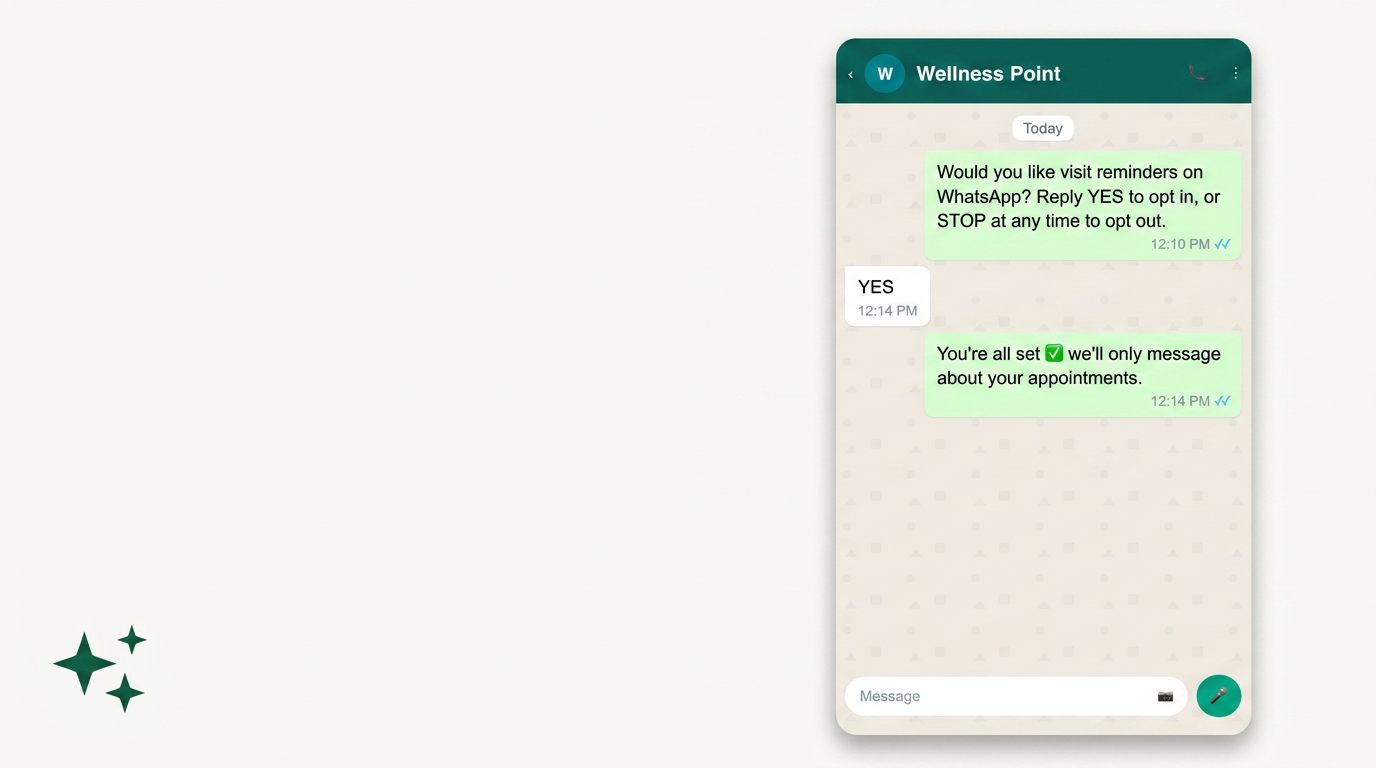
The sequence became: a confirmation at the moment of booking, a reminder the evening before that names the child and tutor and offers two alternatives, and a short pre-session note a couple of hours out with location and parking detail. Three touches, none of them nagging, each with a reply path that does something.
Exam season gets its own treatment. In the weeks before school exams the same centre suddenly has parents asking for extra sessions, doubling up subjects, and moving times week by week. That is when a morning-of reminder is least useful and when an unanswered evening message costs the most, because a parent scrambling for revision hours will book with whoever replies first.
Letting the reschedule complete itself inside the chat
This was the structural fix. Previously, a request to move to Saturday started a chain: read the message, open the calendar, check which tutor covers that subject on Saturday, check group capacity, reply, wait, confirm. Six steps across two people and often two hours.
Now the AI receptionist reads the request, checks tutor availability with subject and level matching, and offers real slots in the same conversation. Parents accept one and are done. The desk sees the outcome rather than the negotiation.
The way we explain this to owners borrows from taxi fleet dispatching. An old radio room worked because one dispatcher held every car's position in their head and could hand a job to the right driver instantly. Once the fleet grew past what one head could hold, the delay was not lazy dispatchers, it was information sitting in the wrong place. Your tutor availability is that fleet map. If it only exists on the desk's screen during working hours, every request queues for the desk. Put the map where the conversation is happening and the job gets assigned while the passenger is still on the line.
Bringing the desk staff in before anything went live
We spend more time here than clients expect, and we are unapologetic about it. Change management decides most of whether an implementation succeeds, and it routinely receives a fraction of the budget. Front-desk staff at a tutoring centre carry a specific and legitimate fear: that automating the phone is the first step to removing them.
So we framed it as a dispatch change rather than a headcount change. The AI receptionist absorbs the repetitive traffic: what time is the Grade 9 physics group, do you have Saturday availability, can we move Thursday, how much is a package of ten. The humans keep the conversations that need judgement: an anxious parent whose child is failing a subject, a complaint, a fee negotiation, a tutor match that needs a person to think about personality. Within a few weeks the desk staff were the ones telling us which phrasings parents reacted badly to. Staff who understand why the system helps them will train each other. Staff who suspect it is aimed at them will find a hundred quiet ways to route around it, and no configuration survives that.
What changed afterwards
The clearest movement in centres that make these changes is in the mix rather than the total. Sessions that would previously have been logged as no-shows turn into reschedules, because the evening-before message with two alternatives gives a parent somewhere to go other than silence. Those hours are not lost, they move, frequently into off-peak slots that were sitting empty anyway. Group classes hold up better than one-to-one, which we expect: peer commitment does some of the work a reminder otherwise has to do alone.
Two secondary effects owners rarely ask for. After-hours enquiries stop disappearing, because something patient is answering at 10pm when a parent finally sits down to sort out tutoring, which is the whole point of 24/7 handling as the case for AI receptionists in education is usually put. And the desk gets its afternoons back, which shows up not as a metric but as the fact that nobody is making reminder calls during the arrival rush any more.
The part reminders cannot fix
We want to be straight about the ceiling, because this is where centres get oversold. A share of absences will not respond to any messaging at all: illness, family travel abroad, a child who simply refuses to go that day. No reminder sequence touches those, and anyone promising otherwise is selling you something. Fee-related drop-off is its own problem too, and automation mostly surfaces it faster rather than solving it.
What these changes address is the friction category: forgotten sessions, reschedule requests that never closed, and after-hours questions answered too late to matter. Whether that category is large or small in your centre is an empirical question you can answer from your own message history in an afternoon, and we have yet to meet an owner who guessed it correctly beforehand.
What transfers to your centre
Most of this is not software configuration, which is the good news, because you can start on the language before you buy anything.
Read your last fifty parent conversations end to end. Not the outcomes, the actual threads. Mark every message where a parent asked something and the reply came more than twenty minutes later, and every request to change a time that was never resolved in writing. That count is your real problem, and it is usually a different problem from the one owners describe to us on the first call.
Then check whether your reminders speak like your best tutor or like a scheduling system. A reminder that names the child, names the tutor, and offers two alternative times gives a hesitating parent a way to move a session instead of skipping it, which a bare confirmation request cannot do. That is a copywriting change with no integration attached.
Only then do the mechanics matter: tutor availability visible to whatever answers your messages, subject and level matching so the system never offers a slot with the wrong tutor, group capacity respected, bilingual handling that holds context across a language switch, and a clean handover to a person the moment a parent's tone suggests they need one. We walk through how those pieces get wired in our receptionist configuration walkthrough. At Learnmind, a Dubai firm that wires AI into the front desks of service businesses, education clients are where we see the tightest link between tone of voice and attendance, because a parent is not booking for themselves; they are deciding on behalf of a child, and they need to feel that whoever is replying knows which child.
What people ask us
Will parents know they are talking to an AI receptionist?
Many will, and that is fine as long as the system is patient, accurate, and hands over to a person when the conversation needs one. What parents object to is being made to repeat themselves or answered with something that ignores what they asked.
Can an AI receptionist handle rescheduling across multiple tutors and subjects?
Yes, provided it reads live tutor availability with subject and level matching, so it never offers a slot covered by a tutor who does not teach that subject. Without that connection it will offer times you cannot honour, which damages trust more than a slow reply does.
What does an AI receptionist for a tutoring center actually reduce?
It reduces friction-driven absences: forgotten sessions, unresolved reschedule requests, and after-hours enquiries that sit unanswered until the next morning. It does not reduce absences caused by illness, travel, or a child refusing to attend.
Start this week by rewriting one message: replace your reminder text with a version that names the child, names the tutor, and offers two alternative times, then watch what happens to your reschedule requests. If you would rather have the full sequence and the calendar connection built and tuned around your subjects and tutors, that is the work we do at Learnmind, and a short conversation is enough for us to say whether it is worth it in your case.