A parent scrolling through tutoring options at 9:40pm after helping their child with homework is not a marginal lead. They are, in that moment, the single most motivated prospect your business will see all week. They just discovered a problem — a weak grade, a looming exam, a teacher's comment — and they are actively searching for a fix right now. The tutoring center that replies first, with something more useful than "we'll get back to you during business hours," gets the enrollment. The one that replies eighteen hours later is often replying to a parent who already booked a trial session somewhere else.
This is not a hypothetical risk. It is the structural reality of how education enquiries behave in the UAE, where a large share of parent research happens in the evening, on weekends, and during school holidays — precisely the hours when most admissions desks are unstaffed. The centers quietly pulling ahead of their competitors in Dubai, Abu Dhabi, and Sharjah right now are not necessarily the ones with better tutors or nicer facilities. They are the ones who stopped losing leads to silence.
Understanding the Enrollment Window Problem
Every tutoring center runs on a lead-response clock it rarely measures. A parent fills out a website form, sends a WhatsApp message, or calls about after-school math support. From that moment, a countdown starts. The parent is comparing three or four centers simultaneously — this is standard behavior, not an edge case. Whoever responds first with relevant, specific information usually wins the trial booking, and the trial booking usually wins the enrollment. The problem is that most tutoring centers are staffed for daytime operations: a front desk person or two, working hours that align with office norms, not with when parents actually make decisions. Evenings, weekends, and the run-up to exam season — the exact periods when enquiry volume spikes — are also the periods when response capacity is thinnest.
Why This Hits Tutoring Centers Harder Than Other Businesses
Retail and hospitality businesses can survive a slow response because the customer is often still shopping when they enquire. Education enquiries are different in one important way: they are almost always triggered by an emotional event — a bad test result, a parent-teacher meeting, a sibling's exam stress spilling over. The urgency is real, and it decays fast. A parent who is anxious about their child's grade tonight is unlikely to still be anxious with the same intensity next week, once the school issues extra homework or another center replies first. The emotional window that converts an enquiry into an enrollment is measured in hours, not days.
Why Manual Follow-Up Keeps Failing, Even With Good Staff
This isn't a training or effort problem. Admissions coordinators are frequently juggling walk-ins, phone calls, WhatsApp threads, and paperwork simultaneously during the day, then going home in the evening — which is exactly when the enquiry volume from parents peaks. Even a highly committed team cannot staff around the clock without significant added headcount, and most centers, understandably, are not going to hire a night-shift admissions person to answer occasional WhatsApp messages. The result is a structural gap, not a performance issue, and structural gaps require structural fixes.
What an AI Receptionist Actually Does in a Tutoring Context
The term "AI receptionist" gets used loosely, so it's worth being precise about what it means for an education business specifically. This is not a chatbot that recites a course catalog. A properly configured AI receptionist for a tutoring center handles the full arc of a first enquiry: it answers instantly across WhatsApp, website chat, or voice; it asks the right qualifying questions; it gives a personalized, accurate answer; and it either books a trial session directly or hands off a warm, fully-briefed lead to a human counselor.
Instant, Personalized Response — Not a Generic Auto-Reply
The difference between "thanks for your message, we'll respond within 24 hours" and a response that says "Hi Sarah, thanks for asking about Grade 9 IGCSE Math support — here's how our program works, and here are two trial slots this week" is the difference between a lead that goes cold and one that books. A well-trained AI receptionist can be configured with the center's course catalog, pricing structure, and current availability, so its first reply reads like it came from someone who actually knows the business — because effectively, it does.
Qualifying Leads Before a Human Ever Gets Involved
Not every enquiry is equally serious. Some parents are price-shopping months in advance; others need a tutor booked for next week. An AI receptionist can ask a short set of intake questions — grade level, subject, timeline, curriculum (British, American, IB) — and use that information to route the lead appropriately. A parent asking about urgent exam prep for next week should reach a human counselor within minutes. A parent casually browsing for next term can be nurtured on a slower cadence. This triage happens automatically, which means your admissions team spends their limited hours on the conversations that are actually ready to convert.
Booking Trials Without a Phone Tag Loop
One of the quieter frictions in tutoring admissions is the back-and-forth required just to schedule a trial lesson. Parents are busy, tutors have fixed slots, and phone tag can burn two or three days before a time is even confirmed — days during which the parent may have already tried a competitor. Integrating the AI receptionist with a live calendar allows a parent to see open trial slots and book one directly inside the same WhatsApp or chat conversation where they first asked their question. No callback needed.
Building the System: A Practical Rollout
Centers that get real value from this technology tend to follow a similar sequence, whether they realize it or not. Skipping steps is usually where implementations underdeliver.
Start With the Question Bank, Not the Technology
Before touching any software, write down the twenty questions parents actually ask — curriculum coverage, pricing per subject, group versus one-on-one, tutor qualifications, makeup class policy, holiday scheduling. This question bank becomes the training material for the AI receptionist. Centers that skip this step end up with a system that sounds generic, which defeats the entire purpose.
Map the Handoff Points Clearly
Decide, explicitly, when the AI should stop and route to a human. Common triggers include a parent asking about a discount or custom package, a complaint, a request to speak with a specific tutor, or simply a parent typing something the system doesn't confidently understand. The goal isn't to remove humans from the process — it's to make sure humans are only pulled in for conversations where their judgment actually adds value, while the AI absorbs the repetitive, answerable-in-seconds volume.
Connect It to Where Parents Already Are
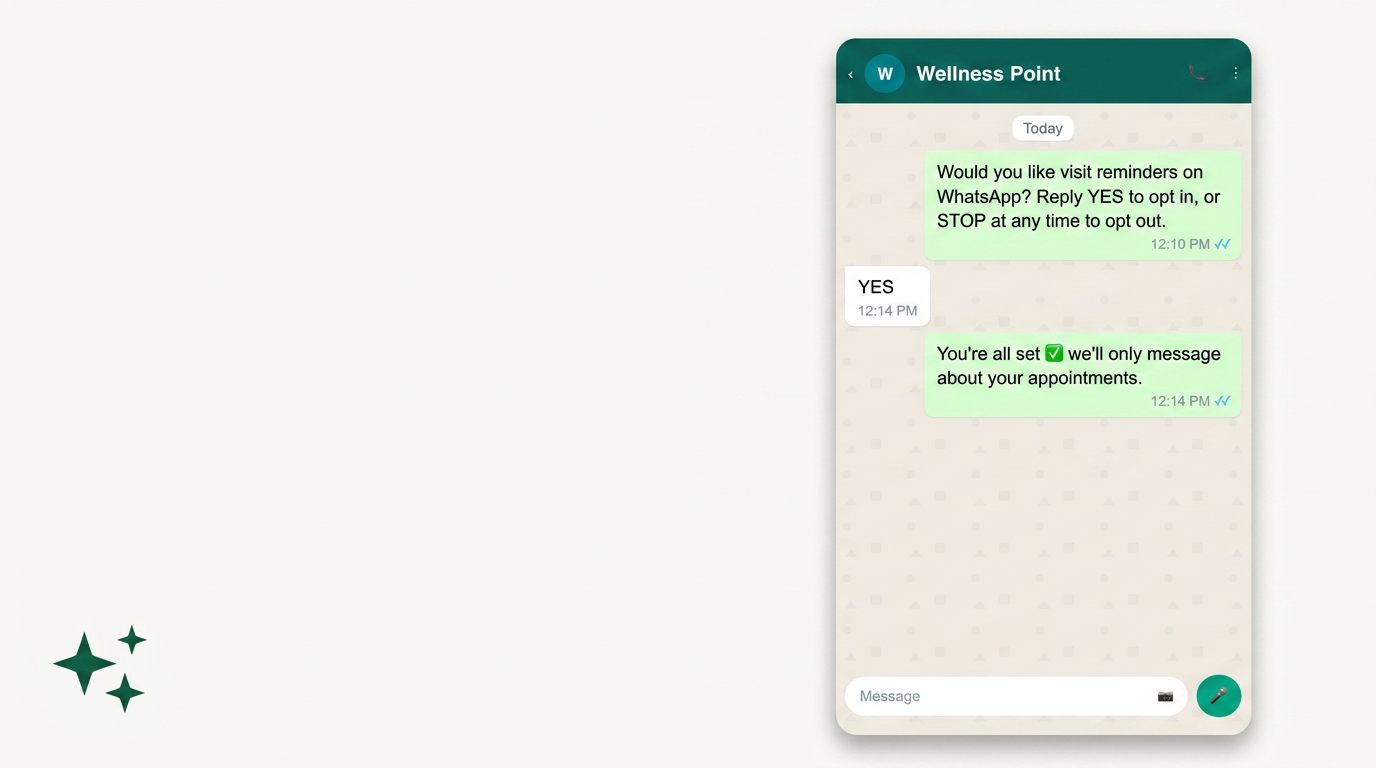
In the UAE, WhatsApp is often the primary channel parents use to reach schools and tutoring centers — more so than email, and often more than phone calls for an initial enquiry. An AI receptionist that only lives on a website contact form is solving half the problem. The deployment that actually closes the enrollment window needs to meet parents on WhatsApp, respond to missed calls with an instant text follow-up, and stay consistent across every channel a parent might use.
Layer in the Nurture Sequence for Slower Leads
Not every enquiry is ready to book immediately, and that's fine — as long as it isn't forgotten. A structured follow-up sequence (a helpful resource a day or two later, a reminder about an upcoming intake deadline, an invitation to an open house or diagnostic assessment) keeps the center visible without requiring manual effort from staff. This is where automation earns its keep over the following weeks, not just in the first five minutes.
What Changes Operationally Once This Is in Place
The visible change is faster response times. The less visible, and arguably more important, change is what it does to the admissions team's day. Instead of splitting attention across dozens of low-intent enquiries and a handful of serious ones, the team's calendar fills with pre-qualified conversations — parents who already know the pricing, already know the schedule, and are already leaning toward enrolling. That's a fundamentally different, higher-conversion conversation than a cold "tell me more about your programs" message. Centers running this model also start to see enrollment less as a funnel that leaks constantly and more as a system with a measurable, defensible response time — something that used to depend entirely on which staff member happened to be free when the message came in.
Where the UAE Market Context Makes This More Urgent, Not Less
The UAE's broader push toward AI-enabled public and private services isn't background noise for this conversation — it's shaping parent expectations directly. Households in the Emirates are among the most digitally engaged in the world, and expectations for instant, digital-first service extend naturally from banking and retail into how they expect to interact with schools and tutoring centers. A parent who gets an instant, useful WhatsApp reply from their bank and their salon is unlikely to tolerate radio silence from a tutoring center they're paying a premium for. At the same time, this year's introduction of AI as a formal subject in UAE school curricula means today's parents are raising children who will grow up fluent in AI tools as a matter of course. A tutoring center that still runs its front desk exclusively on business-hours phone calls risks looking dated to precisely the audience it's trying to attract.
Getting Started Without Overbuilding
The temptation with any AI project is to try to automate everything at once. For a tutoring center, the highest-leverage starting point is narrower: get instant, accurate responses to the most common enquiry types working reliably on WhatsApp and website chat, connect it to your booking calendar, and set clear handoff rules for anything the system shouldn't handle alone. Everything else — deeper nurture sequences, CRM integration, multi-language support for a diverse parent base — can be layered in once the core response gap is closed. The centers seeing the strongest results aren't the ones with the most elaborate AI setup. They're the ones that closed the single biggest hole first: the hours between a parent's enquiry and a human's reply, where enrollments have quietly been lost for years without anyone tracking exactly how many.